
If you've typed "how to identify a cedar tree" into a search bar, you want quick, reliable visual cues you can use outdoors—needles vs. scales, cone shape, bark texture, typical height, and where to look. This guide treats cedar identification like a naturalist: precise, practical, and field-ready. It covers true cedars (Cedrus), the various North American trees commonly called "cedar" (Juniperus, Thuja, Calocedrus), and how to tell cedars apart from look‑alikes such as cottonwood and cypress. Use this with a tape measure, a hand lens, or an AI camera tool like Orvik to speed identification on the trail.
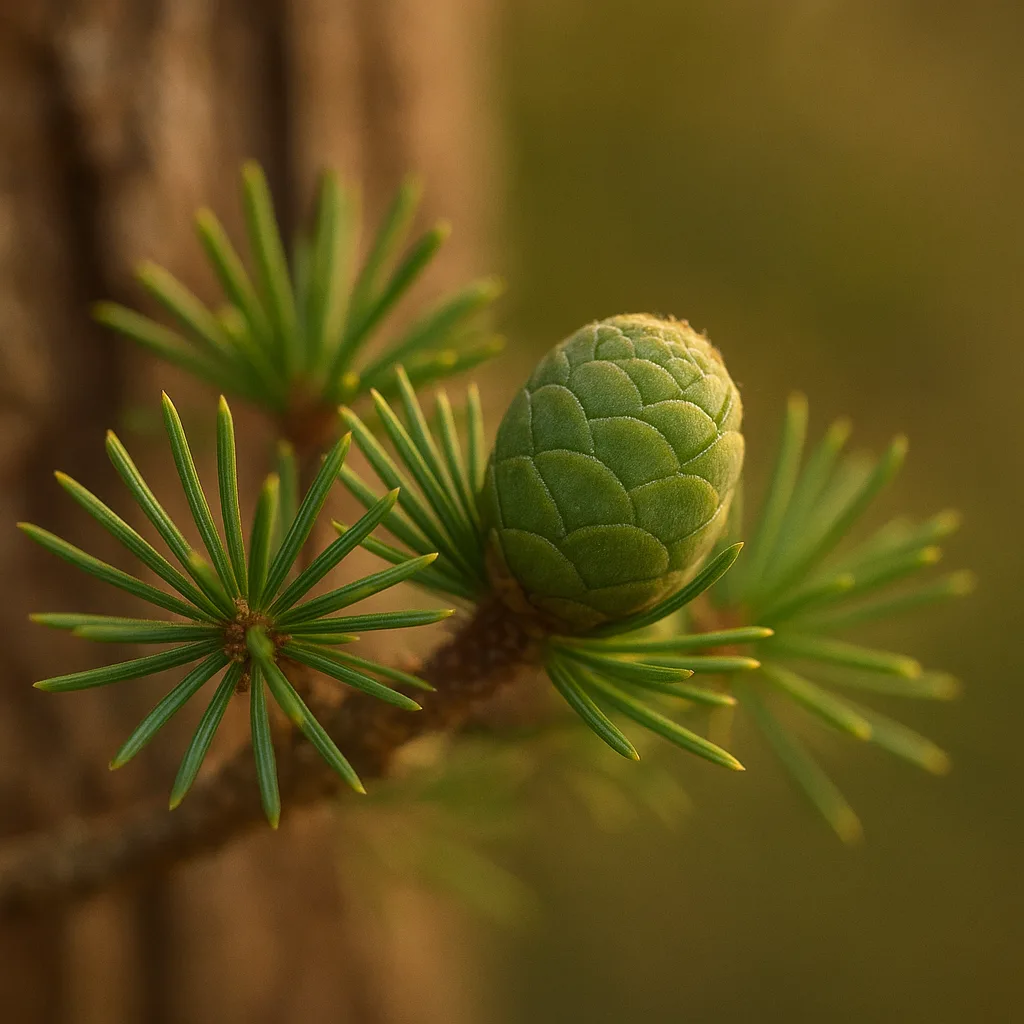
1. What people mean by “cedar” — true cedars and common cedars
The word "cedar" is used in two ways. Botanically, "true cedars" belong to the genus Cedrus (family Pinaceae). But in everyday North American usage, several unrelated trees are called cedars because of aromatic wood or similar appearance: eastern red cedar (Juniperus virginiana), western red cedar (Thuja plicata), incense cedar (Calocedrus decurrens), and others.
- True cedars (Cedrus) — Genus: Cedrus. Native to the Mediterranean and Himalayan regions (e.g., Cedrus libani, C. atlantica, C. deodara).
- Juniper/Red cedar — Genus: Juniperus. Not a true cedar; often called "red cedar" in eastern North America.
- Thuja and Calocedrus — Members of the Cupressaceae family often called cedars because of scent and wood use.
Knowing which "cedar" you’re dealing with is the first step to accurate identification.
2. Key visual features: what to examine first
When asking "how do I identify a cedar tree?" focus on a few high‑value features you can check in seconds: leaf type (needle vs. scale), leaf arrangement, cones, and bark. Together these narrow most possibilities rapidly.
Quick field checklist
- Are the leaves needles (single, clustered, or spiraled) or flattened scales?
- What do the cones look like—barrel, berry‑like, or tiny rounded scales?
- Is the tree evergreen year‑round or seasonal (deciduous)?
- What is the bark like—furrowed, plate-like, stringy, or smooth?
- Where is it growing—dry slope, moist valley, wetland, or cultivated park?
- Needle length: measure with a ruler—needles 2–5 cm point to a true cedar (Cedrus).
- Cones: upright barrel cones (6–12 cm) = true cedar; flattened scaly cones or berry cones = non‑cedar Cupressaceae/Juniperus.
- Bark: thick, fissured, often peeling in strips on old true cedars; thin, fibrous and red‑brown on eastern red cedar.
3. Detailed identification: needles, cones, bark, and form
Here are the diagnostic characters you should record and exact visual cues to look for.
For more on this topic, see our guide on Field Guide to Flower Names.
Needles / foliage
- True cedars (Cedrus): Needles are single, linear, stiff, 2–5 cm long (20–50 mm), glossy green to bluish, borne in dense clusters on short shoots or arranged singly on long shoots. Needles persist for 3–4 years before dropping.
- Juniperus (eastern red cedar): Juvenile leaves are awl‑shaped, 5–10 mm; mature leaves are scale‑like, 1–3 mm. Foliage often aromatic when crushed.
- Thuja/Calocedrus (cedars in Cupressaceae): Leaves are flattened, opposite, scale‑like, typically 1–5 mm, forming flattened sprays.
Cones and fruit
- True cedars: Barrel‑shaped cones, upright on branches, 6–12 cm long. Mature cones disintegrate on the tree to release winged seeds (not berry‑like).
- Junipers: Female cones look like fleshy blue‑purple berries 4–12 mm in diameter; male cones are small pollen cones. Berry cones may take 1–2 years to mature.
- Thuja / Chamaecyparis: Tiny, woody, rounded cones, 6–14 mm across, often in clusters; not fleshy.
Bark and trunk
- Cedrus: Mature bark thick, gray to brown, deeply fissured and plated or peeling in strips with age; trunk often massive with broad, flat crown.
- Juniperus virginiana: Reddish brown, fibrous, peeling in long strips; trunk often narrow and columnar in dense stands.
- Thuja plicata: Stringy, fibrous bark, often reddish to cinnamon brown; buttresses common on old coastal trees.
Tree form and size
- True cedars: Mature height commonly 20–40 m (65–130 ft); broad, flat, often spreading crown; lower branches horizontal.
- Eastern red cedar: 6–20 m (20–65 ft); narrow, conical to columnar form in open grown trees.
- Western red cedar: Thuja plicata can reach 50–70 m (160–230 ft) in optimal Pacific Northwest sites; broadly conical with drooping branchlets.
4. Regional species you’ll commonly encounter
Below are common species called "cedar" in different regions, with the essential ID notes and ranges.
- Cedrus libani (Lebanon cedar) — Mediterranean and eastern Mediterranean mountains; needles 2–3.5 cm, cones 6–9 cm, mature height 20–40 m. Often planted in parks across Europe and North America.
- Cedrus atlantica (Atlas cedar) — native to Atlas Mountains (Morocco/Algeria); blue or green needles 2–3 cm; grows 20–45 m.
- Cedrus deodara (Deodar cedar) — Himalayan native; needles longer (2–5 cm) and drooping branch tips; height 30–50 m.
- Juniperus virginiana (Eastern red cedar) — eastern North America; 6–20 m tall, aromatic wood, berry‑like cones 4–12 mm; common in old fields and limestone soils.
- Thuja plicata (Western red cedar) — Pacific Northwest; 30–60 m typical, stringy bark, flattened sprays of scale leaves.
- Calocedrus decurrens (Incense cedar) — western U.S.; aromatic wood, fibrous bark, scale leaves in flattened sprays, cones small (1–2 cm).
5. Cedars vs lookalikes: practical comparisons
Searchers often confuse cedars with cottonwoods, cypresses, and other conifers. Here are side‑by‑side differences so you can answer "how do you identify a cottonwood tree" or "how to identify a cypress tree" when you’re in the field.
Cedar vs Cottonwood (Populus spp.)
- Leaves: Cottonwoods are deciduous broadleaf trees with triangular/ovate leaves (Populus deltoides leaves 7–15 cm wide); cedars have needles or scale leaves and are usually evergreen.
- Cones/fruit: Cottonwoods produce long catkins in spring and seed capsules that release cottony hairs; cedars produce woody cones or berry‑like cones (junipers).
- Bark: Cottonwood bark becomes deeply furrowed and blocky on old trees, often with lighter, flaky patches; cedar bark varies but is typically fibrous or plated depending on species.
- Habitat: Cottonwoods favor riparian (river/stream) soils and floodplains; many cedars prefer drier slopes, rocky soils, or well‑drained uplands (exceptions exist).
Cedar vs Cypress (e.g., Taxodium distichum)
- Leaves: Bald cypress (Taxodium) has deciduous, feathery, pinnate leaves (2–3 cm long) that turn orange‑brown and fall in winter—cedars remain evergreen in most species.
- Cones: Cypress cones are small, round 2–5 cm woody balls that persist on the tree; true cedar cones are barrel‑shaped and disintegrate when mature.
- Habitat: Bald cypress grows in swamps and wet soils and often has "knees" (pneumatophores) from roots—cedars are not swamp specialists.
Cedar vs Juniper/Red cedar (true confusion)
- Juniperus (called "red cedar") produces small, berry‑like cones (juniper berries) and scale or awl leaves; true cedars (Cedrus) have long needles and large upright cones.
- If the crown smells strongly of resin or the male cones produce copious pollen in spring, you may be looking at a juniper, not a true cedar.
6. Habitat, distribution, and seasonal behavior
Knowing where a tree naturally grows will often answer "how do I identify a cedar tree" faster than any single physical trait.
You may also find our article on Identify Any Plant: Field Guide & Expert Tips helpful.
- True Cedrus: Native to Mediterranean mountains and the Himalaya; in their native ranges they occupy well‑drained mountain slopes from ~1,200 to 3,000 m elevation. In cultivation, you'll find them in parks and arboreta worldwide.
- Juniperus virginiana: Tolerates poor limestone soils, old fields, and fence rows across eastern and central North America; often an early colonizer of disturbed sites.
- Thuja plicata: Native to coastal and montane rainforests of the Pacific Northwest; prefers moist, well‑drained soils, valley bottoms, and riparian corridors.
- Seasonal cues: Cedrus retains needles year‑round; Juniper berry cones often ripen in late summer to winter; cypress (Taxodium) drops needles in autumn—watch for these seasonal changes.
7. Safety, toxicity, and human uses
Cedars and cedar‑called trees have long been used for timber, fence posts, and aromatic oils. They also have a few safety considerations.
- Wood and dust: Cedar wood is aromatic and widely used for closets and chests. Cedar dust can irritate eyes and respiratory tract in sensitized people—use a mask when sanding.
- Toxicity: Many junipers have volatile oils and compounds that can be toxic to livestock if large quantities are eaten; some species’ berries are used in flavoring (e.g., Juniperus communis for gin), but not all juniper berries are safe to consume. When in doubt, consult local extension or toxicology resources before ingesting plant parts.
- Allergens: Cedar pollen can be a significant allergen (notably in some regions where cedars pollinate heavily in late winter/early spring).
- Wildlife: Juniper berries feed birds and mammals; cedars provide winter shelter and nesting sites for wildlife.
8. Field protocol: step-by-step identification and using Orvik
Here is a reproducible process you can use on any walk. Keep a note app, camera, tape measure, and optionally the Orvik app to speed identification by photo.
Looking beyond this category? Check out AI Field Guide: Identify Birds Fast.
- Observe overall form from a distance: conical, broad‑crowned, spreading, columnar. Note height (estimate or measure) and habit.
- Examine foliage: are leaves needles or scales? Measure a needle or scale with a ruler. Note arrangement (clusters, spirals, opposite pairs).
- Look for reproductive structures: cones or berries. Measure cone size and shape and whether cones sit upright (true cedars) or hang down.
- Inspect bark: color, texture, peeling pattern, presence of buttresses.
- Record habitat and substrate: riparian, dry slope, cultivated lawn, forest understory.
- Take clear photos of the whole tree, a closeup of foliage, cones, and bark. Upload to Orvik for rapid visual ID confirmation; Orvik's AI compares your photos to regional species to suggest likely matches.
- Tip: Photograph a single leaf/needle on a plain background and a cone or berry next to a coin for scale. Orvik performs better with scale and multiple angles.
- Tip: If you suspect cottonwood, palpate a leaf for the cottony hairs or search for catkin remnants in spring.
Orvik can be a useful second opinion after you collect the field cues: use your own measurements to confirm AI suggestions and to learn species‑specific traits over time.
Related reading: Mastering Plant ID with AI: A Field Guide.
9. Common mistakes and troubleshooting
Here are pitfalls that throw off identifications and how to avoid them.
- Mistaking juvenile foliage: Many junipers have two foliage phases—juvenile awl leaves and adult scales. Always check multiple branches at different heights.
- Assuming evergreen = cedar: Many evergreens (pines, spruces, firs, yews) can look cedar‑like to a casual observer. Check cone morphology and needle arrangement.
- Ignoring habitat: If you find a "cedar" in a swamp with knees and deciduous feathery leaves, you’re likely looking at bald cypress (Taxodium), not a cedar.
- Relying on scent alone: Aromatic wood can signal many genera; combine scent with physical traits before concluding.
10. Conclusion
Answering "how to identify a cedar tree" is about a handful of reliable cues: leaf form (needles vs. scales), cone type (barrel vs. berry vs. tiny woody), bark texture, and habitat. True cedars (Cedrus) have distinctive 2–5 cm needles in dense clusters and upright barrel cones 6–12 cm long. Many North American "cedars" are actually junipers or members of the Cupressaceae and have small scale leaves and different cone types. For quick confirmation in the field, combine visual checks with a photo identification tool like Orvik and compare your observations to the species notes in this guide.
Happy identifying—measure a needle, photograph a cone, and enjoy the close observation that turns casual walkers into confident field naturalists.
Frequently Asked Questions
- How can I tell a true cedar from an eastern red cedar?
- True cedars (genus Cedrus) have long needles (20–50 mm) in dense clusters and upright, barrel‑shaped cones 6–12 cm long. Eastern red cedar (Juniperus virginiana) has small scale or awl‑shaped leaves (1–10 mm) and fleshy, berry‑like cones 4–12 mm across.
- How do I identify a cottonwood tree compared to a cedar?
- Cottonwoods (Populus spp.) are deciduous broadleaf trees with triangular/ovate leaves 7–15 cm and produce cottony seeds from capsules; cedars are conifers with needles or scale leaves and produce cones or berry‑like cones (junipers). Habitat helps: cottonwoods prefer riparian sites.
- What are the key differences between cedar and cypress trees?
- Bald cypress (Taxodium) is a deciduous conifer with feathery, pinnate leaves that turn orange and fall in autumn, and round woody cones. Most cedars are evergreen; true cedars have clustered needles and upright barrel cones, while Cupressaceae cedars have scale leaves and tiny rounded cones.
- Can cedar trees be poisonous to pets or livestock?
- Some juniper species (often called red cedar) contain compounds that can be toxic to livestock if consumed in large amounts. Cedar wood dust can irritate people. For any ingestion or severe exposure, consult a veterinarian or poison control center and local extension services for species‑specific advice.
- What time of year is best to identify a cedar?
- Evergreen cedars can be identified year‑round by foliage and bark. Cone and berry appearance is seasonally helpful: true cedar cones mature and disintegrate within a year; juniper berries often ripen late summer to winter. Spring pollen or cotton from cottonwoods also gives seasonal clues.
- How tall do cedar trees grow?
- True cedars (Cedrus) typically reach 20–40 m (65–130 ft); Thuja plicata (western red cedar) can reach 50–70 m (160–230 ft) in optimal sites; eastern red cedar usually grows 6–20 m (20–65 ft). Heights vary by species, site, and age.
- Will Orvik correctly ID a cedar from my photo?
- Orvik's AI performs well when you submit clear photos showing foliage, cones/fruit, and bark, ideally with a scale object. It gives quick suggestions, which you should cross‑check with field traits (needles, cone shape, habitat) for confirmation.