
Identifying a tree by its fruit is one of the fastest ways to a reliable name. Whether you find a cluster of tiny black berries on a roadside tree or red fruits studding a yard shrub, the combination of berry color, size, arrangement and supporting leaves often gives the species away. This guide reads like a field notebook: precise measurements, clear visual cues, habitat notes and safety warnings so you can confidently identify berry-bearing trees and shrubs. Use Orvik or any identification app to confirm by uploading close-up photos of fruit and leaves, but first learn what to look for in the field.
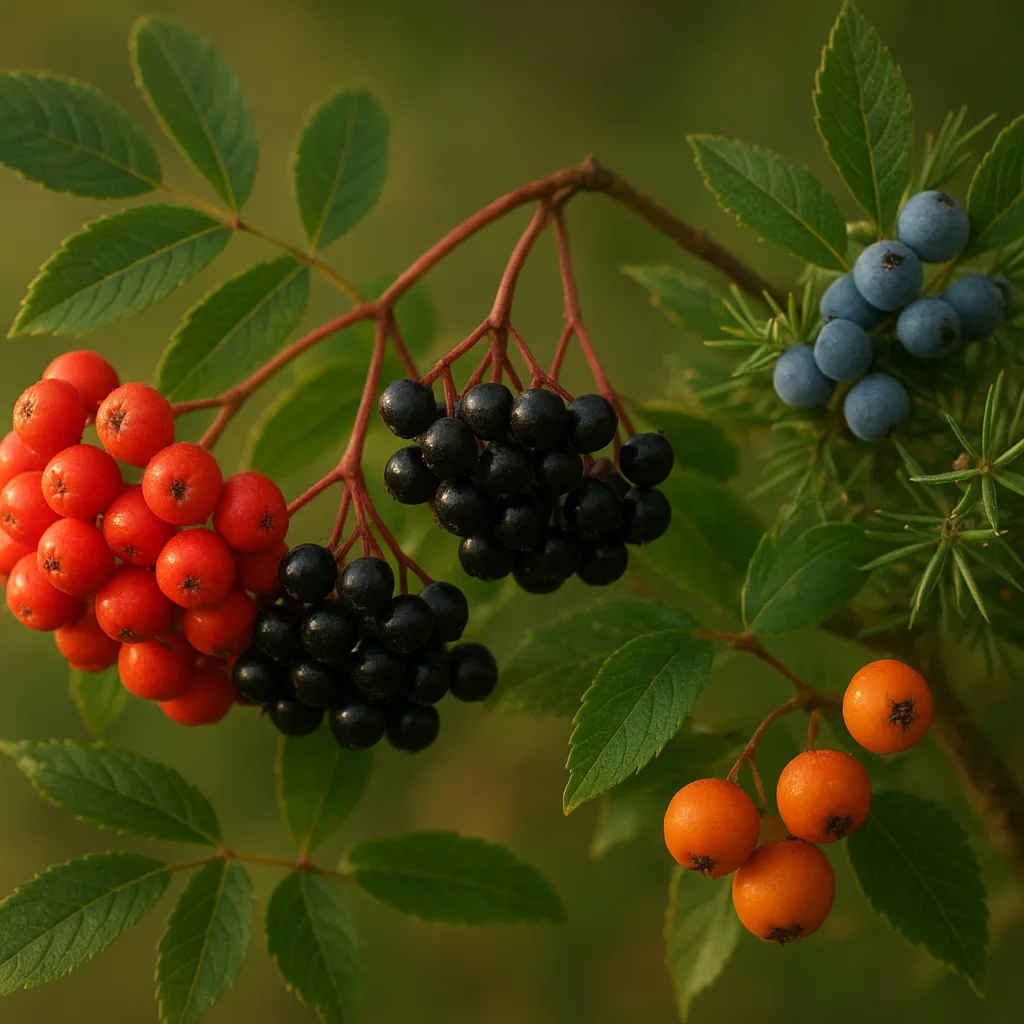
Why identifying berry trees matters
People search “identify berry tree” for many reasons: for foraging, safety, landscaping, wildlife study or simply curiosity. Recognizing a tree from its berries helps you:
- Determine edibility or toxicity before tasting (many tree berries are poisonous raw).
- Understand local wildlife food sources (birds, mammals, insects).
- Make informed pruning or removal decisions for invasive species.
- Improve landscaping choices based on fruit drop and seasonal interest.
Below are practical identification tools and species you will commonly encounter in North America and Europe. If you have a photo, Orvik’s AI can speed identification by comparing key visual markers to reference collections.
Key visual features to inspect
Start by recording the following features; quantify when you can. Numbers and measurements help separate lookalikes.
Essential checklist (take photos of each)
- Fruit: color, diameter (mm or cm), shape (round, ovoid, aggregate), and whether fruits are single or clustered.
- Leaves: arrangement (opposite vs alternate), simple vs compound, leaf length (cm), margin type (entire, serrated), leaf hairiness.
- Bark: color, texture (smooth, flaky, furrowed), and any lenticels or stripes.
- Flowers (if present): size (mm), color, bloom arrangement (panicle, raceme, umbel).
- Growth form and height: tree vs shrub, approximate mature height (meters or feet).
- Habitat and location: wetland, roadside, forest edge, urban yard; and geographic region.
Fruit types and what the terms mean
- Drupe: single-seeded fruit with stone (e.g., cherries, Prunus spp.).
- Berry (botanical): fleshy fruit from a single ovary with multiple seeds (e.g., grapes). Colloquially used for small edible fruits.
- Aggregate fruit: many small units joined together (e.g., mulberry, Morus spp.).
- Accessory fruit (fig/ficus): syconium—an enclosed inflorescence that appears as a small rounded fruit.
Common berry-bearing trees and shrubs: visual profiles
Below are species frequently reported in backyard and wild settings. Each entry lists the most diagnostic cues: berry size and color, leaf arrangement, bark, habitat and edibility/toxicity.
For more on this topic, see our guide on Identify Trees from Photos: Expert Guide.
Elderberry (Sambucus nigra / Sambucus canadensis)
- Fruit: clusters (umbels) of small, glossy black-purple berries 3–5 mm diameter; ripen late summer to early fall.
- Leaves: opposite, pinnate 15–30 cm long with 5–7 serrated leaflets; leaflets 5–10 cm.
- Form: multi-stemmed shrub or small tree 2–8 m tall.
- Habitat: moist soils, stream banks, hedgerows across much of temperate North America and Europe.
- Edibility: ripe berries are edible when cooked (jams, syrups); raw berries, leaves and stems contain cyanogenic glycosides—can cause nausea.
Search intent: If you asked “what does an elderberry tree look like,” look for the flat-topped white flower clusters in spring and the dense dark berry umbels in late summer—paired with opposite pinnate leaves.
Black cherry (Prunus serotina)
- Fruit: clusters of round drupes 6–12 mm diameter; green → red → glossy black as they ripen in late summer.
- Leaves: alternate, simple, 6–12 cm long, finely toothed, often with rusty hairs on midrib underside.
- Bark: young trees smooth with lenticels; mature bark becomes dark and scaly, sometimes called “burnt potato chip.”
- Form: medium to large tree 10–30 m tall in forests; common in eastern North America.
- Edibility/toxicity: fruits eaten by birds; seeds contain cyanogenic compounds—avoid crushing pits for consumption.
Prunus species with small black berries (chokecherry, blackthorn/sloe)
- Chokecherry (Prunus virginiana): 6–8 mm black drupes in elongated clusters; leaves alternate, serrated; bark smooth when young; tolerant of disturbed sites.
- Blackthorn / Sloe (Prunus spinosa): round blue-black fruit 9–12 mm; dense thorny shrub 2–4 m high; flowers in early spring before leaves (Europe).
Privet (Ligustrum spp.)
- Fruit: small, glossy black or dark-blue berries 4–8 mm in tight clusters; ripen in late summer to fall.
- Leaves: opposite, simple, 2–10 cm long depending on species.
- Form: dense shrub used for hedges; can naturalize and invade woodlands in many regions.
- Toxicity: moderately toxic to humans; berries can cause vomiting and diarrhea if ingested.
Mulberry (Morus rubra, Morus alba)
- Fruit: elongated aggregate fruits 1–3 cm long, composed of many small drupelets; color varies from red to dark purple-black when ripe.
- Leaves: alternate, simple, 7–15 cm, serrated or lobed, rough texture on some species.
- Form: medium tree 8–15 m; often planted near homes; fruit stains sidewalks and clothes.
- Edibility: ripe mulberries are sweet and edible raw; unripe fruits can be astringent.
Holly (Ilex spp.)
- Fruit: bright red to orange berries 6–10 mm diameter, usually persisting into winter.
- Leaves: evergreen or deciduous depending on species; often glossy with spiny margins.
- Form: shrubs or small trees 2–12 m tall; female plants produce berries but only if a male pollinator is nearby.
- Toxicity: berries are moderately toxic to humans and pets—cause vomiting and diarrhea.
Bayberry (Myrica pensylvanica)
- Fruit: waxy, grayish clusters of small drupes ~3–4 mm; persist into winter and were historically used to make bayberry candles.
- Leaves: alternate, evergreen in mild climates; aromatic when crushed.
- Habitat: coastal dunes, sandy soils in eastern North America.
Ficus (common indoor/outdoor fig trees)
- Fruit: small fig-like structures (syconia) 5–15 mm depending on species; often green, turning purple or black in some varieties.
- Leaves: simple, alternate; many cultivars have glossy, leathery leaves.
- Form: shrubs to large trees; many Ficus species are common houseplants and street trees in warm climates.
- What are the berries on my ficus tree?: These are not true berries but figs—clustered internal flowers make the small fig fruit. Most are edible in some species, but ornamental varieties may be unpalatable and can stain.
Identification: small round black berries on a tree — likely candidates
When you find small round black berries on a tree or large shrub, narrow the options by measuring size and checking leaf arrangement. Here are the most common tree/shrub species that produce small black fruits:
- Black cherry (Prunus serotina): 6–12 mm, alternate simple leaves.
- Privet (Ligustrum spp.): 4–8 mm, opposite leaves, tight clusters.
- Elderberry (Sambucus spp.): 3–5 mm, compound opposite leaves, flattened clusters.
- Chokecherry (Prunus virginiana): 6–8 mm, clusters along racemes.
- Mulberry (Morus spp.): aggregate, elongated rather than perfectly round.
- Holly (Ilex spp.): round 6–10 mm, persistent into winter; often bright red but some cultivars darken.
Tip: Measure fruit diameter with a ruler or compare to a penny (USA penny ≈ 19 mm) to estimate size. Photograph leaves and fruit next to a scale for Orvik to analyze more accurately.
X vs Y: How to tell lookalikes apart
Elderberry vs Privet vs Chokecherry
- Cluster type: Elderberry—flat-topped umbels; Privet—dense tight clusters; Chokecherry—elongated racemes.
- Leaf arrangement: Elder—opposite pinnate leaflets; Privet—opposite simple leaves; Chokecherry—alternate simple leaves.
- Berry size: Elder ~3–5 mm; Privet ~4–8 mm; Chokecherry ~6–8 mm.
Blackberry (Rubus spp.) vs Mulberry (Morus spp.) vs Black Cherry
- Blackberry: is not a tree but a cane shrub; fruit is aggregate composed of drupelets that detach from the plant on picking; leaves usually pinnate with 3–5 leaflets.
- Mulberry: aggregate fruit remains on tree and is elongated; leaves are alternate and often lobed.
- Black cherry: single drupes in clusters and not aggregate—individual fruit has a single stone.
Understanding whether the fruit is an aggregate or a drupe (single pit) is central to differentiating these common confusions.
You may also find our article on Understanding Pine Trees: Latin Names Explained helpful.
Practical field ID steps and photo tips
Use this step-by-step protocol in the field. These actions make automated ID (like Orvik) and expert verification much faster and more accurate.
- Photograph the whole plant to capture form and size (stand 5–10 meters away depending on tree height).
- Take close-ups of fruit: front, side, and cluster context. Include a coin or ruler for scale.
- Photograph leaves: top and underside if possible, showing attachment point and margin.
- Photograph bark and twigs—young twigs often show lenticels or hairiness useful for ID.
- Note habitat and GPS or at least region—many species have geographic ranges that limit possibilities.
Orvik’s image recognition is most reliable when you provide multiple angles, a scale reference and leaf detail. If an app suggests multiple possibilities, cross-check with the leaf arrangement and fruit type rules above.
Seasonal behavior, wildlife and distribution
Berries appear in predictable seasonal windows. Knowing when a fruit ripens helps identify it.
You might also be interested in Dolphin Diets: What They Eat and Why.
- Spring flowers: blackthorn (Prunus spinosa) flowers before leaves; serviceberry (Amelanchier) blooms early with white flowers.
- Summer ripeners: mulberries and black cherries commonly ripen mid to late summer (June–August depending on latitude).
- Late summer to fall: elderberries and many Privet berries ripen late summer into early autumn (August–October).
- Winter persistence: holly and bayberry fruits often persist into winter and are visible on bare stems, helping ID in dormant seasons.
Birds are major dispersers of many tree berries. Heavy bird use can help indicate edible species; however, bird preference alone is not a reliable guide for human edibility.
Related reading: Mastering Oak Leaves: Identify Trees in the Field.
Safety, edibility and common cautions
When someone searches “identify berry tree” they often want to know whether berries are safe to eat. Safety rules:
- Never taste a berry until you are 100% certain: Many Prunus seeds/pits and raw elderberries contain cyanogenic compounds.
- Cook before eating when advised: Elderberries and chokecherries are commonly processed (jams, syrups) to remove toxins and improve flavor.
- Watch pets and children: Privet, holly and many ornamental berries cause vomiting and diarrhea if ingested.
- Beware of lookalikes: Several toxic Solanum species (nightshade family) produce glossy black berries but are low-growing herbs, not trees—still, beware where shrubs mimic tree seedlings.
If in doubt, photograph and use Orvik to get an ID, then consult a local extension service or toxicology resource before using any wild fruit.
Conclusion
Identifying a berry tree is an exercise in pattern recognition: fruit type, size, cluster form, leaf arrangement and habitat together usually yield a confident ID. Start with the checklist above—measure, photograph and note habitat—then use tools like Orvik to compare your observations to regional reference images. Remember safety first: many appealing berries are only edible when properly prepared, and some are toxic raw. With practice you'll move from uncertain curiosity to confident identification in the field.
Frequently Asked Questions
- What does an elderberry tree look like?
- Elderberry (Sambucus) is a multi-stemmed shrub or small tree 2–8 m tall with opposite pinnate leaves (5–7 leaflets), flat white flower clusters in spring and dense umbels of dark berries 3–5 mm in summer–fall.
- What berries grow on a tree?
- Trees can bear drupes (cherries), aggregates (mulberries), syconia (figs), and small fruits commonly called berries such as holly, privet and elderberry; botanical definitions vary.
- What do blackberry trees look like?
- Blackberries are not trees but cane shrubs (Rubus). They have arching canes, compound leaves with 3–5 leaflets and aggregate fruits formed of many small drupelets.
- How to identify a tree with small round black berries?
- Measure berry size, note cluster shape (umbel, raceme, tight cluster), check leaf arrangement (opposite vs alternate) and bark. Likely candidates include black cherry, privet, elderberry, chokecherry and mulberry.
- What are the berries on my ficus tree?
- Ficus produces small fig-like structures (syconia) 5–15 mm across. They are the tree’s enclosed inflorescences and vary by species; many ornamental figs have unpalatable fruits.
- Are wild berries safe to eat?
- Not always. Some, like ripe mulberries, are edible raw; others (e.g., raw elderberries, privet, some Prunus seeds) contain toxins. Always positively identify species and follow preparation guidelines or consult experts.
- Can Orvik identify my berry tree from a photo?
- Yes—Orvik’s AI compares your photos to reference data and provides likely matches quickly, especially if you include clear shots of fruit, leaves and a scale reference; verify results with field traits.