
Why people search to identify mushrooms
When someone types "what mushroom is this" or uploads a photo for "mushroom picture identification," they want more than a name: they want to know if a fungus is common or rare, edible or dangerous, and where it belongs ecologically. This guide gives practical, field-tested methods for anyone who needs to identify mushrooms in the wild or the yard — from lawn mushroom identification pictures to oak tree fungus identification and leaf fungus identification. It also explains how tools such as Orvik, an AI-powered visual identifier, can speed accurate identifications when used with good photos and field notes.
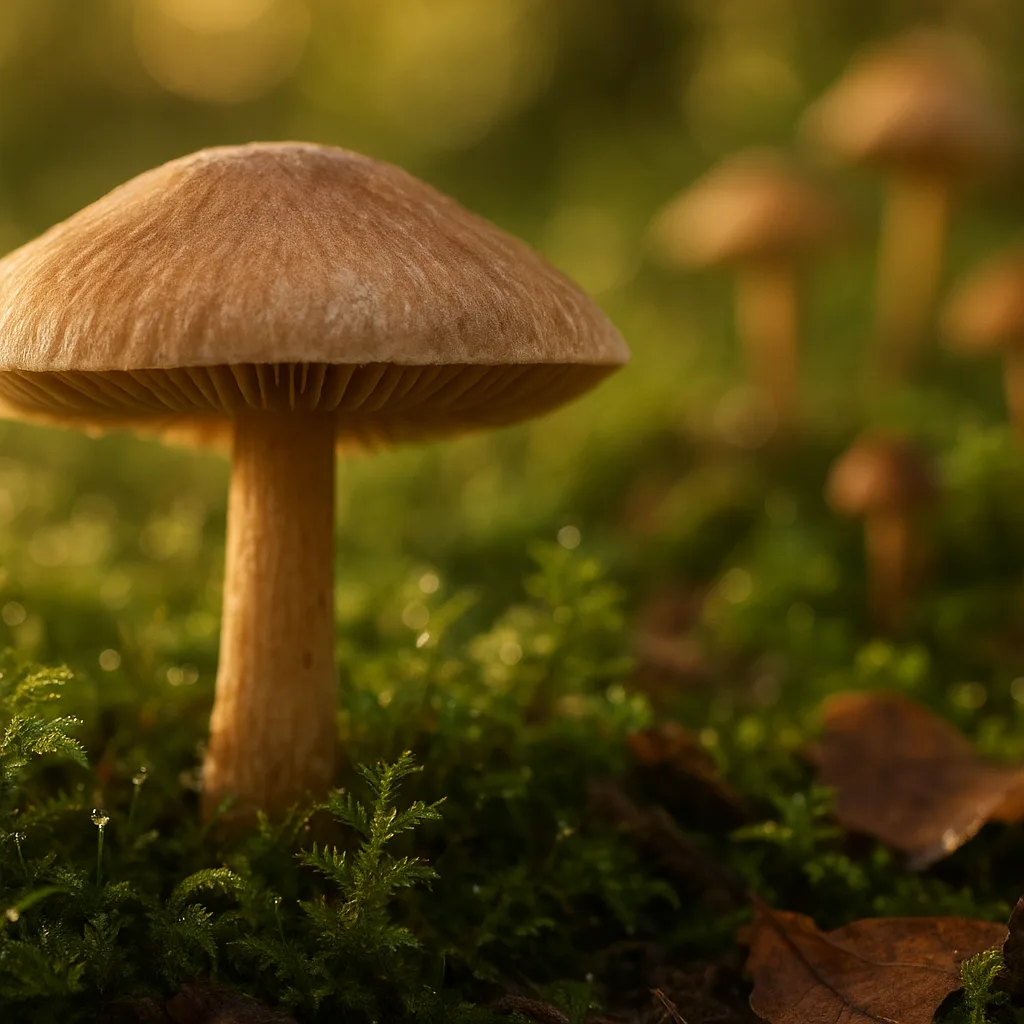
Visual ID fundamentals: the traits experts trust
Successful mushroom ID uses a combination of visible characters, context, and sometimes simple tests. No single trait is decisive; reliable identification relies on a checklist approach.
Key visual features to record
- Cap — color, diameter (cm), shape (conical, convex, umbonate, flat), surface texture (smooth, scaly, sticky). Example: Amanita muscaria caps often 5–20 cm, bright red with white warty patches.
- Gills/pores/spines — attachment (free, adnate, decurrent), color, spacing, bruising reactions. Boletes have pores rather than gills.
- Stem (stipe) — length and thickness, presence of a ring (annulus) or cup (volva), surface texture (scaly, fibrillose), color changes when cut.
- Spores — spore print color is critical (white, pink, brown, black, olive-green, etc.).
- Odor and taste — anise, radish, foul, or mild; taste should be tested only by trained foragers and not swallowed for unknown species.
- Bruising/staining — color change when cut or handled (blue, red, brown), especially important for boletes and certain Inocybe species.
Context: habitat, substrate, and season
- Substrate: soil, lawn, conifer duff, hardwood logs, leaf litter. Pleurotus ostreatus (oyster) grows on dead hardwood; Suillus species associate with pines.
- Tree associations: Some species form mycorrhizae with a specific genus (oaks, pines, birches). Noting nearby trees is essential.
- Season: Morels (Morchella) appear in spring (April–May temperate zones); many boletes and honey fungus (Armillaria mellea) fruit in autumn (August–November).
- Geography: Species ranges vary. For example, Amanita phalloides (death cap) is native to Europe but established in parts of North America.
Lawn mushroom identification: common species and pictures to know
Lawn fungi are among the most commonly photographed for identification. They range from harmless saprotrophs to toxic lookalikes.
- Panaeolus foenisecii (mower's mushroom): cap 1–3 cm, brown to tan, gills darkening with age; common on mown lawns in summer/fall.
- Agaricus campestris (field mushroom): cap 3–7 cm, white to cream, gills pink then brown; edible but may be confused with Amanita species when young.
- Chlorophyllum molybdites (green-spored parasol): cap 5–30 cm, white with brownish scales; produces green spore print — the most common cause of lawn mushroom poisoning in North America.
- Marasmius oreades (fairy ring mushroom): small 1–4 cm, tan, often in rings; tough when dry and revives when wet.
- Coprinus comatus (shaggy mane): 5–20 cm tall, white shaggy cap that autodigests to black ink; edible when very fresh.
Photographing lawn mushrooms for ID
- Get a scale (a ruler or coin) and show cap, gills and underside, stem base.
- Photograph top, side, and underside; include a shot of the surrounding turf and any rings in the grass.
- Note time of year and recent weather (drought, heavy rain) — these affect fruiting.
Tree, leaf, and oak fungus identification
Fungi that grow on trees or leaves include saprotrophs (decomposers) and pathogens. Distinguishing these is important for forest health and urban tree care.
For more on this topic, see our guide on Field Guide to Flower Names.
Common wood and bracket fungi
- Ganoderma applanatum (artist's conk): perennial, woody bracket up to 30–60 cm across, brown varnished surface; causes white rot in hardwoods.
- Inonotus dryadeus (oak bracket): fruiting near the base of oaks, causes butt rot; brownish poroid surface with white context.
- Trametes versicolor (turkey tail): thin, zoned, multi-colored brackets 2–8 cm across on dead hardwood.
- Armillaria mellea (honey fungus): clustered honey-colored caps 3–10 cm on roots or stumps; mycelial rhizomorphs under bark indicate pathogenic infection.
Leaf fungus identification (leaf spots, rusts, mildews)
- Leaf spot fungi (e.g., Septoria, Alternaria): small necrotic spots with concentric rings; check underside for fruiting bodies.
- Rusts (Pucciniales): often bright orange, yellow or brown pustules on underside of leaves; many rusts are host-specific.
- Powdery mildew: white powdery mycelial layer on leaf surfaces, common in dry, humid nights with dry days.
Oak tree fungus identification
Oak trees host a specific set of fungi, some benign saprotrophs and some dangerous pathogens. Key signs of pathogenic infection include fungal conks at the trunk base, a progressive thinning canopy, and wood decay.
- Ganoderma spp.: large conks, perennial, cause root and butt rot; fruiting bodies typically at or near soil line.
- Inonotus and Phellinus: dark, hoof-shaped brackets, often causing interior decay.
- Diplodia / Botryosphaeria can cause twig dieback with small fruiting bodies on dead twigs.
If you need to identify oak tree fungus for safety or tree management, photograph the conk, the trunk base, and cross-sections of affected wood when possible, and consult an arborist if the tree has structural concerns.
You may also find our article on Identify Any Plant: Field Guide & Expert Tips helpful.
Key comparisons: telling lookalikes apart
Many identification errors come from confusing similar species. These comparison checks focus on decisive features to separate common pairs.
Morel (Morchella) vs false morel (Gyromitra)
- Morels: honeycomb cap with deep pits and ridges, cap fully attached to stem, hollow interior from apex to base when cut longitudinally; fruit in spring.
- False morels: brain-like or lobed cap, chambered or cottony interior, often reddish-brown; some contain gyromitrin, a toxin that can be fatal or carcinogenic.
- Tip: Always slice suspicious specimens lengthwise. Hollow interior points strongly toward true morel.
Amanita vs Agaricus: safe vs potentially deadly
- Amanita: often has a universal veil leaving a volva (cup) at the base, a free gill attachment, white spore print, and sometimes a ring on the stem. Many deadly species (A. phalloides, A. ocreata) look innocuous when young.
- Agaricus: gills pink to chocolate-brown with brown spore print; usually no volva. Many Agaricus are edible (e.g., A. bisporus), but some cause gastric upset.
- Tip: For any brown-spored mushroom (Agaricus-type), check spore print color. For white-spored mushrooms, carefully excavate the base to check for a volva; if present and you are not 100% sure, do not eat.
Puffball vs young Amanita
- True puffballs (Lycoperdon, Calvatia): generally round, solid white interior when young; spore-producing chamber develops later. Cut puffballs in half — a pure white, uniform interior is a good sign.
- Young Amanita: may be enclosed in a universal veil and appear as a white egg; interior will show developing cap and stem structures if sliced longitudinally.
- Tip: Never eat a puffball unless the interior is uniformly white with no embryonic gills or stem structures.
Boletes: edible boletes vs poisonous blue-staining boletes
- Boletes have pores instead of gills. Key ID traits: pore color, bruising reaction, cap texture, stem reticulation (net-like pattern), and taste.
- Blue-staining on cut flesh is common in many genera; some blue-staining boletes are edible, others are bitter or mildly toxic. Note that Boletus edulis (king bolete) has white to yellowish pores that bruise little and a robust brown cap 7–30 cm across.
- Tip: Avoid boletes with red pores and immediate strong blue staining unless you are expert; consult a reliable guide or Orvik before tasting.
How to use technology and Orvik for mushroom identifier by picture
AI identification tools like Orvik can accelerate ID by comparing your photos to large image libraries and biological databases. They perform best when you provide complete, high-quality images and contextual data.
Looking beyond this category? Check out Goji Berries: A Field Guide to the Red Superfruit.
Best practices when using a mushroom identifier by picture
- Take multiple photos: cap top, cap edge, gills/pores, stem base, stem surface, overall cluster and surrounding habitat.
- Include a scale object (ruler, coin) to show size — many AI systems use relative scale to improve confidence.
- Note location (country, ecoregion), substrate (oak log, lawn, pine needle bed), and date — seasonal and geographic data matter.
- Upload clear, well-lit images without heavy blur; early morning dew or rain can obscure surface features, so a quick dry with a tissue is okay for photos.
Orvik and similar apps provide a likely ID and confidence score, but they are not infallible. Use AI as a second opinion and always cross-check critical features (spore print, volva, bruising) when edibility or human/animal safety is at stake.
Related reading: Mastering Plant ID with AI: A Field Guide.
What AI can and cannot do
- AI excels at matching common species photographed from standard angles and lighting.
- AI struggles with cryptic species, species complexes that require microscopic analysis (spore ornamentation, basidia), and juvenile fungal stages that conceal diagnostic traits.
- Always treat AI outputs as probabilistic. For life-or-death decisions (eating a wild mushroom), rely on multiple human expert confirmations or laboratory analysis.
Spore prints, simple field tests, and safety handling
Field tests and safe handling practices provide additional data and reduce risk.
How to take a spore print
- Remove the stem and place the cap, gill-side down, on white paper for light-colored prints and dark paper for dark prints (or half-and-half paper).
- Cover with a bowl or jar to prevent air currents and wait 4–24 hours depending on moisture and species.
- Note spore print color: white, cream, pink, brown, black, olive, or green are typical categories and narrow down genera.
Other useful field tests
- Bruising: note color changes on cut flesh (blue, red, brown). Some toxins cause rapid bruising reactions.
- Ammonia or KOH: a drop of household ammonia or 3–10% potassium hydroxide on cap or flesh can cause color changes used in keys (requires care and eye protection).
- Odor: anise, almond, iodine, or foul chemical odors can be diagnostic.
Safety and handling
- Never eat a wild mushroom unless you are 100% certain of its identity and edibility; some mortal toxins (amatoxins) can cause delayed liver failure.
- Wash hands after handling unknown mushrooms and keep pets and children away from foraging finds until identified.
- When in doubt, photograph, document, and discard rather than taste. If ingestion occurs, keep a sample (in a sealed plastic bag) and seek immediate medical help — identification aids treatment.
- For urban trees showing fruiting bodies, consult an arborist before assuming the tree is safe. Bracket fungi at the base often indicate internal decay and structural risk.
Conclusion
To identify mushrooms reliably, combine careful observation of visible traits (cap, gills, stem, spore print), context (substrate, season, associated trees), and simple field tests. AI tools like Orvik can greatly speed identification from photos, but they are most effective when fed comprehensive images and complemented by traditional methods. Always prioritize safety: when a mushroom’s identity affects edibility or tree health, seek multiple confirmations from trusted guides or experts.
Frequently Asked Questions
- Can I identify mushrooms from a single photo?
- A single good photo can often suggest a genus, but species-level accuracy usually requires multiple angles, habitat notes, and sometimes a spore print or microscopic features.
- How long does it take for a spore print?
- Most spore prints develop within 4–24 hours; delicate species may need longer but rarely more than 48 hours.
- Are mushroom ID apps accurate?
- Apps like Orvik are accurate for many common species when images are clear and complete, but they are not a substitute for expert verification, especially for edible mushrooms.
- What’s the safest way to tell a puffball from a young Amanita?
- Slice the specimen lengthwise — puffballs have a uniformly white interior when young, whereas young Amanita will show early cap and stem structures.
- How do I identify fungi on my oak tree?
- Photograph conks, assess canopy health, note bracket location, and consult an arborist; some oak pathogens cause structural risk and need professional management.
- Can leaf fungus identification be done from photos?
- Many leaf spots and rusts can be tentatively identified from high-resolution photos showing both leaf surfaces and fruiting structures, but lab confirmation is needed for precise pathogen ID.
- Is spore print color enough to ID a mushroom?
- Spore print color is a powerful clue that can eliminate many genera, but it must be used with macroscopic characters and habitat information.
- What should I photograph for the best mushroom ID?
- Cap top, cap margin, gills/pores, stem base, cluster context, substrate, and any bruising or latex. Include a scale object in at least one photo.