
Why people search "identify that plant"
When someone types "identify that plant" into a search bar, they usually want a fast, reliable answer: what species is this, is it safe, and what can I do with or about it? They may have a single photo, a clipping, or a whole plant in the yard. The intent ranges from curiosity (what flower bloomed?) to safety (is this poisonous?) to management (is this invasive?).
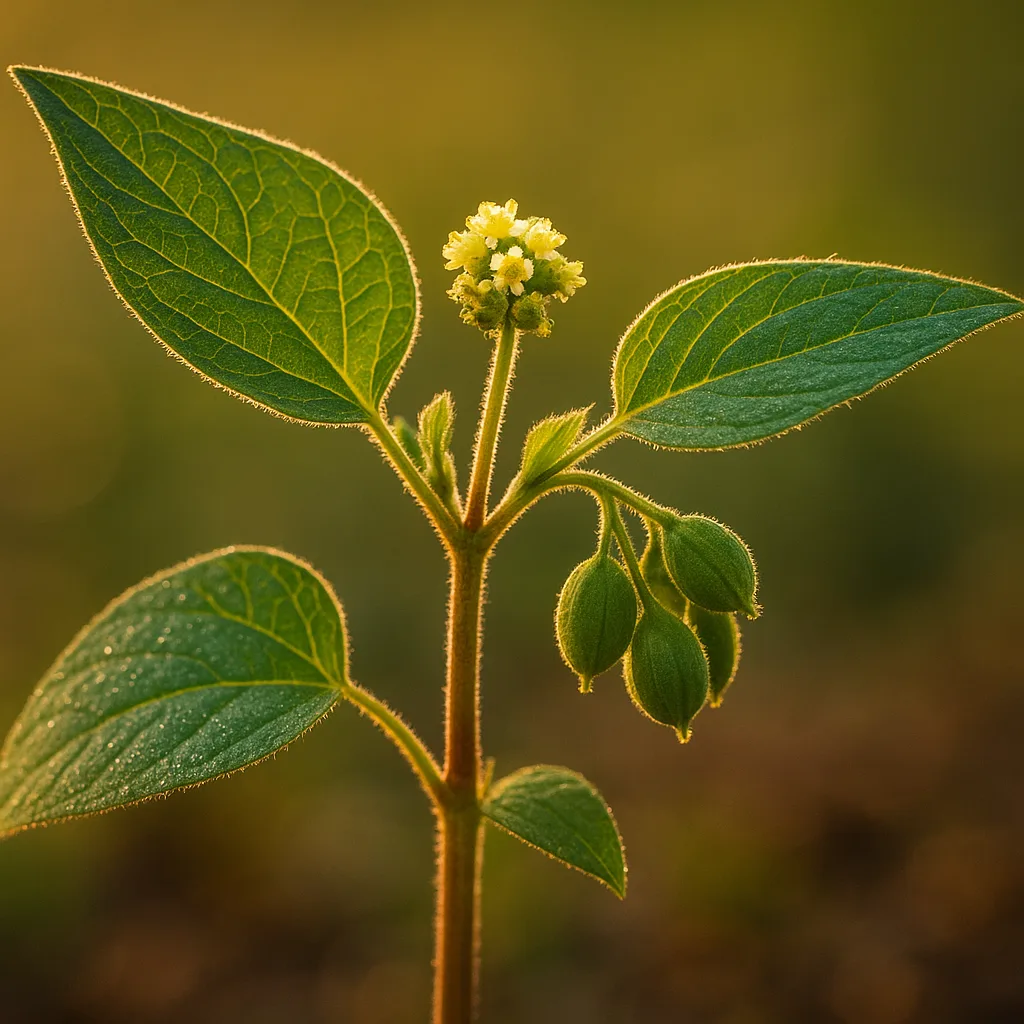
- Immediate needs: safety (toxic vs safe), gardening decisions, foraging
- Scientific needs: genus/species, range, seasonal behavior
- Practical needs: how to remove or care for it, legal restrictions
Tools such as Orvik provide a fast first-pass identification from a photo, but combining a visual ID with habitat clues and seasonal timing produces the most reliable result.
How visual plant identification works
Identifying a plant from a photo depends on observable characters, the quality and angle of the image, and contextual data (location, date, habitat). Modern identification uses a blend of morphological keys, image recognition algorithms, and human expertise.
- Algorithmic recognition: pattern matching on leaves, flowers, bark, fruit
- Field keys: sequential choices (leaf arrangement, flower symmetry)
- Expert verification: cross-checking with herbarium specimens and literature
Orvik, as an AI-powered visual identification app, combines convolutional neural networks with user-supplied metadata (GPS, date) and reference libraries to suggest likely matches. It’s a great starting point — but remember to verify important IDs (edible or toxic plants) with multiple sources.
Step-by-step: Identify a plant from a photo
Follow a systematic process whether you use Orvik or a field guide. Good photos and notes dramatically increase accuracy.
For more on this topic, see our guide on Identify Plants Fast: Field-Proven Photo ID Guide.
- Take multiple photos: whole plant, close-up of leaf, underside of leaf, flowers, fruits, bark or stem.
- Record context: GPS or nearest city, habitat type (woodland, roadside, wetland), and date.
- Note size: estimate height, leaf length in cm, flower diameter in mm.
- Check arrangement: leaves alternate/opposite/whorled, simple/compound.
- Upload to Orvik or a field key and compare suggested matches against your observations.
- Confirm with a secondary source: regional flora, herbarium images, or a local botanist.
Photo tips that improve ID accuracy
- Include a scale: a coin (~24 mm), ruler, or a finger helps estimate size.
- Shoot in natural light: avoid heavy shadows; capture texture and color faithfully.
- Show diagnostic parts: flower shape, leaf margin, stipules, fruit type.
- Take images from multiple angles: top, side, and underside of leaves; root crowns if permitted.
Key visual traits to check (and why they matter)
Experienced botanists reduce the universe of possibilities by checking a handful of diagnostic characters. Below are the high-value traits and how to measure them.
Leaf shape, size, and arrangement
- Arrangement: alternate vs opposite leaves—opposite leaves often indicate families like Oleaceae (Fraxinus, Ligustrum) or Caprifoliaceae.
- Type: simple vs pinnate/compound—Aesculus hippocastanum (horse chestnut) has palmate compound leaves; Fraxinus americana (white ash) has pinnate leaves with 7–9 leaflets.
- Measurements: leaf lengths in cm—e.g., Acer saccharum (sugar maple) leaves 7–16 cm across.
- Margins: entire, serrate, dentate, lobed—lobed margins can point to Quercus (oaks) or Acer (maples).
Flowers and inflorescences
- Symmetry: actinomorphic (radial) vs zygomorphic (bilateral).
- Size: flower diameter in mm—Taraxacum officinale (common dandelion) head ~20–40 mm.
- Inflorescence type: panicle, raceme, umbel, capitulum—Apiaceae (umbel) vs Asteraceae (capitulum).
- Color and number of petals/sepals: note unique patterns like nectar guides or color zones.
Fruit, seed, and dispersal structures
- Fruit type: capsule (Papaveraceae), berry (Solanaceae), drupe (Prunus), samara (Acer).
- Seed size and structure: a samara’s wing length (e.g., Acer platanoides wings 2–3 cm).
- Timing: fruiting season narrows candidates (e.g., blackberry Rubus spp. fruits mid-summer).
Bark, stems, and growth form
- Bark texture: smooth, fissured, peeling—Betula papyrifera (paper birch) peels in thin white sheets.
- Stem features: presence of hairs, thorny structures (Rosa vs Rubus).
- Growth habit: herbaceous, shrub (0.5–4 m), small tree (4–10 m), large tree (>10 m).
Texture, scent, and microscopic cues
- Scent: crushed leaf aroma—Mentha spp. are strongly aromatic due to essential oils.
- Surface: glossy, pubescent (hairy), glandular—leaf hairs can be diagnostic in genera like Salvia.
- Microscopic: stomatal pattern or pollen—useful for research-level ID but not required for photo IDs.
Habitat, geographic distribution, and seasonality
Ecology often resolves ambiguous visual matches. Species have typical habitats and seasonal windows when diagnostic features appear.
- Habitat types: riparian, wetland, grassland, upland forest, urban sidewalk.
- Geographic range: consult regional floras—Eupatorium perfoliatum (boneset) is widespread in eastern North America; Elymus repens (quackgrass) is common in temperate Eurasia and N. America as an introduced grass.
- Phenology: flowers in spring vs summer vs autumn—knowing a plant flowers in March vs July is decisive.
For example, if you photograph a herb with bright orange tubular flowers in a wet meadow in late summer in the northeastern U.S., Impatiens capensis (jewelweed) becomes a strong candidate due to habitat and timing.
You may also find our article on Identify Any Plant from a Photo: Practical Field Guide helpful.
Common look-alikes: X vs Y — How to tell them apart
Many mistakes stem from confusing similar species. Below are practical comparisons with clear visual cues.
Poison ivy (Toxicodendron radicans) vs Virginia creeper (Parthenocissus quinquefolia)
- Toxicodendron radicans: leaves grouped in threes ("Leaves of three, let it be"), leaflets 5–15 cm, margins sometimes lobed; vine with aerial roots or woody base. Causes allergic contact dermatitis—urushiol oil.
- Parthenocissus quinquefolia: pinnate leaves with five leaflets, each 4–9 cm long; adhesive discs on tendrils; not urushiol-bearing though can irritate some people.
Black oak (Quercus velutina) vs Red oak (Quercus rubra)
- Q. velutina: lobes more irregular with deeper sinuses; bark darker with blocky plates; acorns with shallow cups. Height 20–30 m.
- Q. rubra: lobes more uniform and pointed; bark ridged and furrowed with long plates; acorn cups scaly. Leaves 12–22 cm long.
English ivy (Hedera helix) vs Boston ivy (Parthenocissus tricuspidata)
- Hedera helix: leaves are evergreen, leathery, often lobed (3–5 lobes) on climbing stems with rootlets; juvenile vs adult leaf forms differ.
- Parthenocissus tricuspidata: deciduous, three-lobed to three-pointed leaves, adhesive pads on tendrils; red fall color.
Common dandelion (Taraxacum officinale) vs Cat’s-ear (Hypochaeris radicata)
- T. officinale: single flower head per hollow scape, 20–40 mm across, leaves are deeply toothed (dentate) forming a basal rosette.
- H. radicata: multiple flower heads per stem, leaves less deeply lobed, stems often hairy; both are Asteraceae but differ in scape and hairiness.
Safety, toxicity, and ethical considerations
Identifying a plant often relates to safety: is it edible, medicinal, poisonous, or protected? Handle uncertainty conservatively.
- Assume danger when unsure: many plants (e.g., Cicuta maculata, water hemlock) are highly toxic and can be fatal if ingested. Water hemlock stems have purple blotches and pith chambers—do not taste for ID.
- Skin irritants: Toxicodendron species (poison ivy, poison oak) carry urushiol; wearing gloves and long sleeves is prudent when handling unknown vines or shrubs.
- Protected species: many orchids and certain wildflowers are legally protected—do not collect without permits.
- Invasive species: early detection matters—report species like Ailanthus altissima or Phragmites australis to local authorities rather than transplanting them.
When a plant could be ingested (for food or medicine), confirm identification with two independent expert sources. A single app suggestion should not be the final word for edibles or poisonous plants.
You might also be interested in Goji Berries: A Field Guide to the Red Superfruit.
Tools and next steps: verifying your ID
After a first-pass identification using Orvik or another app, strengthen your conclusion with layered evidence.
Related reading: Identify Any Plant: Field Guide & Expert Tips.
- Cross-check with regional floras and dichotomous keys (e.g., "Flora of North America", county-level guides).
- Use community resources: iNaturalist observations, local botanical societies, or university herbaria for expert verification.
- Preserve a voucher specimen: for scientific certainty, collect (when permitted) a pressed specimen including leaves, flowers, and fruit following herbarium protocols.
- Consider photos across seasons: winter twig and bud characters can be decisive for trees and shrubs.
- For critical cases, pursue lab methods: DNA barcoding (rbcL, matK genes) provides species-level confirmation, especially for cryptic taxa.
Orvik is particularly useful for quickly narrowing candidates and providing ranked suggestions with confidence scores. Combine that with habitat notes and a secondary source before taking action like foraging, planting, or eradication.
Practical examples and regional notes
Here are three short, practical case studies showing how to move from photo to confident ID.
- Urban volunteer tree: 6–8 m tall, pinnate leaves with 7–9 leaflets ~7 cm long, opposite leaf scars on twig—suggested ID: Fraxinus americana (white ash). Check: samara fruit 3–4 cm long in spring/summer confirms Oleaceae.
- Wetland herb: Basal rosette, bright yellow composite flower heads 25–35 mm, milky sap—if latex present and flower head single, suspect Senecio spp. or Taraxacum—note season, sap and pappus details to narrow down.
- Shade groundcover: Evergreen, lobed glossy leaves 2–5 cm with aerial rootlets on older stems—Hedera helix (English ivy) likely. Check for red/orange berries in winter for confirmation.
Conclusion
When someone wants to "identify that plant," they usually need a reliable, actionable answer quickly. Start with good photos and context, use Orvik or similar AI tools to generate candidate matches, then verify using morphological keys, habitat data, and at least one expert source. Pay attention to leaf arrangement, flower form, fruit type, and seasonal timing — these characters, combined with measurements and habitat notes, lead to accurate identifications. Above all, prioritize safety: when in doubt, do not ingest or handle potentially toxic plants without confirmation.
Frequently Asked Questions
- What is the fastest way to identify a plant from a photo?
- Take multiple clear photos (whole plant, leaves, flowers, underside of leaves), include a scale, note location/date, then upload to an app like Orvik and verify the top suggestions with a regional field guide.
- How reliable are AI plant ID apps?
- AI apps are useful for preliminary IDs and can be highly accurate for common species, but their suggestions should be verified for critical uses (food, medicine, poisonous plants) with two independent sources or experts.
- What key traits should I photograph for the best identification?
- Photograph leaf arrangement (alternate/opposite), leaf margin, flower structure and size, fruit/seed, bark or stem features, and include a scale for size estimation.
- Can I identify plants from a single leaf photo?
- Sometimes—distinctive leaves (e.g., Ginkgo biloba, Acer) can be identified from one image, but many species require floral or fruit characters plus habit and habitat for confident ID.
- How should I handle unknown plants that might be poisonous?
- Avoid ingestion or prolonged skin contact, wear gloves, and consult multiple reputable sources before assuming safety. If exposure occurs, seek medical help.
- When should I collect a specimen for verification?
- Only collect if permitted. If allowed, gather a voucher showing leaves, flowers/fruit, and roots where possible, press it properly, and deposit it in a local herbarium for expert confirmation.
- Does seasonality matter for plant identification?
- Yes. Flowering and fruiting times narrow down possible species. Many keys rely on seasonal characters, so noting the date improves accuracy.