
Why identifying trees by leaves matters
Leaves are among the most reliable field characters for identifying trees. They are present for much of the growing season, show species-specific shapes, margins, textures and venation, and often vary less than flowers or fruit. People searching to "identify tree by leaf" want quick, accurate answers — whether for backyard curiosity, urban forestry, foraging safety, or mapping biodiversity. This guide gives field-tested, scientific methods and visual cues you can use today.
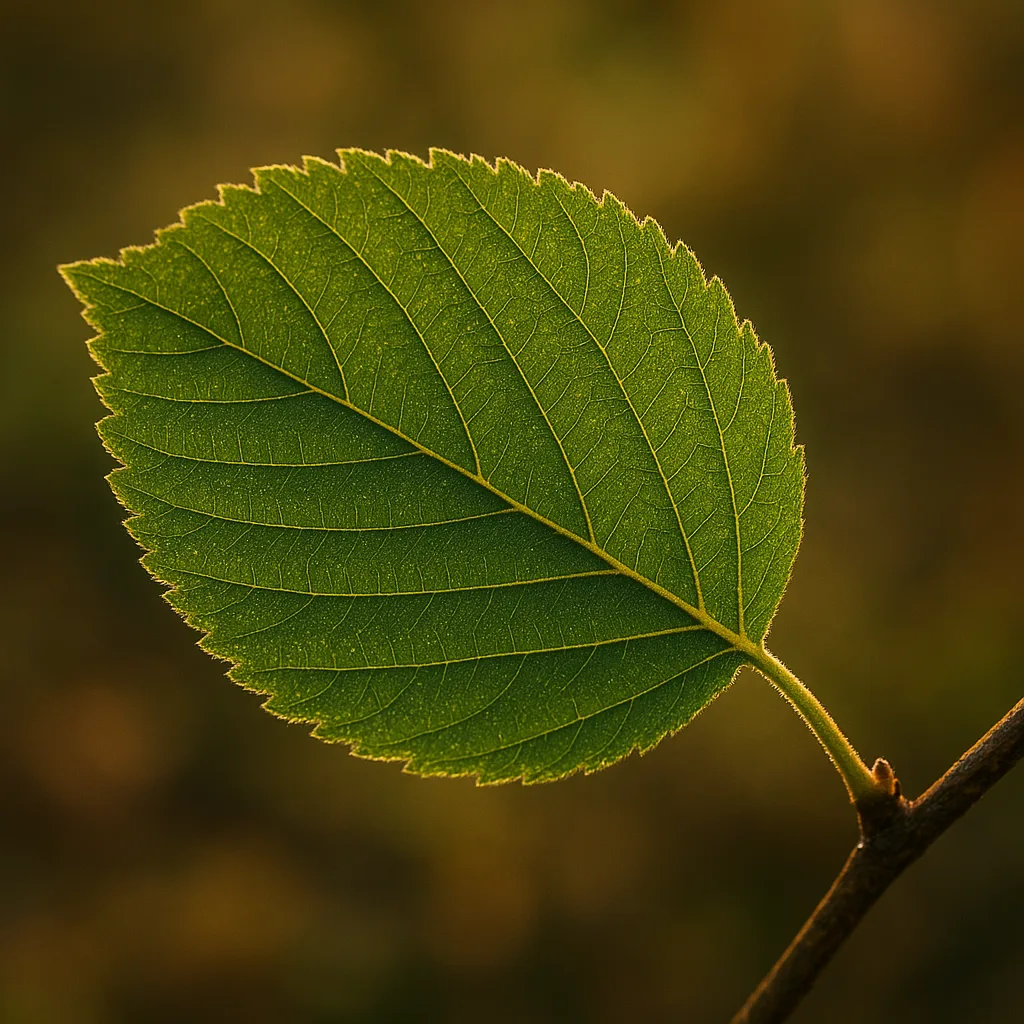
What you will learn
- How to observe leaf arrangement, shape, margin and texture
- Practical measurement techniques (cm and inches)
- Common lookalikes and how to tell them apart
- How apps like Orvik can speed identification
Key leaf features to observe (the ID checklist)
Before comparing species, gather consistent data. Use this checklist every time you examine a leaf.
Essential visual cues
- Arrangement: Are leaves opposite, alternate, or whorled on the stem?
- Type: Simple (single blade) or compound (blade divided into leaflets)?
- Shape: Ovate, lanceolate, cordate, palmate, pinnate, needle-like, etc.
- Margin: Entire, serrated, crenate, or lobed (deep or shallow).
- Venation: Pinnate (one midrib), palmate (several main veins), parallel (grasses, monocots).
- Size: Measure length and width; record in cm and inches.
- Surface: Glossy, pubescent (hairy), leathery, sticky, waxy.
- Petioles & stipules: Presence, length, and base shape—useful for maples, poplars, roses.
Measuring tips
- Measure the full leaf from base (where petiole meets blade) to tip; note units (cm/in).
- For compound leaves, measure the entire leaf from base of petiole to terminal leaflet tip and then individual leaflet lengths.
- Photograph top and underside; include a ruler or coin for scale.
Leaf types and common species examples
Below are common leaf forms with typical species, measurements, and distribution. These examples are focused on temperate regions of North America and Europe but include global notes where relevant.
Simple broad leaves
- Red Maple (Acer rubrum) — Palmately lobed, 7–12 cm (3–5 in) across, serrated lobes, opposite arrangement. Eastern North America; brilliant red fall color.
- Sugar Maple (Acer saccharum) — 7–15 cm (3–6 in), deeper sinuses than red maple, opposite. Northeastern North America; valuable for syrup.
- White Oak (Quercus alba) — Deeply lobed, rounded lobes, 12–20 cm (5–8 in) long, alternate arrangement. Eastern/central North America; slow growth, rounded crown.
Compound leaves
- Black Walnut (Juglans nigra) — Pinnate, 20–40 cm (8–16 in) with 15–23 serrated leaflets each 5–10 cm (2–4 in). Produces round drupes; allelopathic juglone chemical.
- Fraxinus (Ash spp.) — Opposite pinnate leaves with 5–9 lanceolate leaflets, each 7–15 cm (3–6 in); common in North America, susceptible to emerald ash borer.
- Horse Chestnut (Aesculus hippocastanum) — Palmately compound, 5–7 leaflets radiating from a central point, leaf span 30–50 cm (12–20 in). Widely planted in Europe as street tree.
Needles and scales (conifers)
- Pine (Pinus) — Needles in bundles (fascicles) of 2–5; length varies 5–25 cm (2–10 in) depending on species. Important: bundle number narrows species ID.
- Yew (Taxus baccata) — Flat needles 2–3 cm (0.8–1.2 in) long, arranged spirally but appearing flattened; all parts except the red aril are toxic.
- Spruce (Picea) — Single, four-sided needles attached to small peg-like projections; needles 1–4 cm long.
Step-by-step field method: identify a tree by its leaf
Follow this reproducible routine when you want to identify a leaf in the field or from a photo.
For more on this topic, see our guide on Practical Guide to PictureThis Plant ID.
Field sequence
- Observe stand-level characteristics: tree height, bark texture, branching habit, and habitat (wetland, roadside, forest edge).
- Record leaf arrangement: alternate, opposite, or whorled — this rule eliminates many species early.
- Determine leaf type: simple vs compound; count leaflets if compound.
- Measure and photograph: length, width, top and underside, margin detail; include scale.
- Note seasonality: budding, flowering, fruiting, fall color or retained dead leaves (marcescence).
- Cross-reference: use field guides, dichotomous keys, or an app like Orvik to compare visual features and get a confidence match.
Tips for better photos
- Place leaf on neutral background or photograph while attached; capture both surfaces.
- Get a close-up showing margin and veins; fill the frame with leaf details.
- Include contextual shots: bark, whole tree silhouette, fruits or buds.
Comparison: lookalikes and how to tell them apart
Many identification mistakes come from confusing species with similar leaves. Here are targeted comparisons with simple visual tests.
Red Maple (Acer rubrum) vs Sugar Maple (Acer saccharum)
- Vein pattern: Red maple veins extend to the tips of serrated lobes; sugar maple has smoother, deeper sinuses and fewer teeth.
- Margin: Red maple often has finely serrated margins; sugar maple has smoother edges between lobes.
- Fall color: Both turn color, but sugar maples often show orange-yellow gradients; red maples can be vivid red earlier in fall.
White Oak (Quercus alba) vs Red Oak (Quercus rubra)
- Lobe tips: White oak has rounded lobes; red oak has pointed lobes ending in bristle-tips.
- Acorn cups: White oak acorn cups are warty and knobby; red oak cups are scaly with a distinct shape.
- Bark: White oak bark peels in long, flaky strips; red oak bark has vertical ridges and furrows.
Ash (Fraxinus) vs Elm (Ulmus)
- Leaf arrangement: Ash leaves are opposite and pinnate; elm leaves are alternate and simple.
- Leaf base: Elm leaves are asymmetrical at the base; ash leaflets are symmetric and paired along a central rachis.
Habitat, geography and seasonal cues
Habitat and range dramatically narrow down options. Always combine leaf traits with where the tree grows and how it behaves through the seasons.
You may also find our article on Identify Any Plant from a Photo: Practical Field Guide helpful.
Habitat checklists
- Wetland and riparian trees: willows (Salix), alders (Alnus), cottonwoods (Populus) — often with simple elongated leaves and flattened petioles.
- Dry upland: many oaks (Quercus) and pines (Pinus) — thick, leathery leaves or needles.
- Urban/street plantings: species like Ginkgo (Ginkgo biloba), London plane (Platanus × acerifolia), and various maples are common; expect non-native cultivars.
Seasonal behavior
- Spring: Bud shape and arrangement (terminal bud present or absent) help: e.g., horse chestnut has large sticky buds.
- Summer: Full leaf form; best time for venation and margin study.
- Autumn: Color change and fruit maturity provide final ID confirmation (maples, oaks, liquidambar).
- Winter: Leafless ID relies on bud scars, twig arrangement, and bark—useful once you know likely species from seasonal range.
Safety, toxicity and ethical considerations
Correct identification can be a safety matter: some trees have toxic leaves, seeds or sap. Never taste unknown plant parts.
Common safety warnings
- Poison Ivy, Poison Oak, Poison Sumac (Toxicodendron spp.) — compound leaves often in threes; contact can cause severe dermatitis in sensitive people. Rule of thumb: "Leaves of three, let them be."
- Yew (Taxus) — all parts except the red aril are highly toxic if ingested; leave cuttings and clippings out of reach of children and pets.
- Black Walnut (Juglans nigra) — produces juglone, an allelopathic compound that can damage sensitive garden plants; not typically harmful to people but affects planting decisions.
- Manchineel (Hippomane mancinella) — found in Caribbean/Florida; extremely poisonous; DO NOT touch or bite fruit. Only relevant in its native range.
Ethical foraging and sampling
- Ask permission before collecting leaves on private land.
- Do not strip foliage from a single tree; take small samples from multiple individuals if needed for study.
- Report rare or protected species sightings to local conservation authorities.
Using technology: how AI and Orvik help
Photographic apps and AI make leaf identification faster, but they are tools to augment—not replace—field skills. Orvik is an AI-powered visual identification app that analyzes leaf photos and returns likely species matches with confidence scores, range maps, and notes on key distinguishing traits. Combining Orvik's suggestions with the checklist above gives the most reliable results.
You might also be interested in Mastering Coin Identification: A Field Guide.
Related reading: Identify Plants Fast: Practical Guide.
Best practices when using Orvik or similar apps
- Take clear photos of both leaf surfaces, the petiole, and a scale object (coin or ruler).
- Include context shots: whole tree, bark, fruit or buds, and habitat.
- Use the app’s suggestions as hypotheses: confirm with additional features like arrangement, fruit, or bark.
Limitations of automated ID
- Hybrid cultivars, juvenile leaves and seasonal variation can confuse AI models.
- Similar species with minor differences (e.g., many oak species) may require fruit or acorn examination for final confirmation.
- Always cross-check unusual or critical identifications before acting (e.g., for foraging).
Quick reference: decision shortcuts
When you need a rapid ID in the field, use these high-value shortcuts.
- If leaves are opposite: think maples (Acer), ashes (Fraxinus), dogwoods (Cornus), horse chestnut (Aesculus).
- If compound with many leaflets: consider walnut (Juglans), hickory (Carya), ash (Fraxinus).
- If needles are in bundles of 2–5: you’re likely looking at a pine (Pinus); if single attached on pegs: spruce (Picea).
- If lobed leaves with rounded tips: white oak group; if lobed with bristle tips: red oak group.
Conclusion
To identify tree by leaf reliably, combine a systematic field checklist — arrangement, type, shape, margin, venation, size, surface — with habitat and seasonal context. Photograph well, measure precisely, and double-check with resources. Use tools like Orvik to accelerate matching and access range maps and distinguishing traits, but confirm critical IDs with multiple characters. With practice, you'll move from curiosity to expertise: one leaf at a time.
Frequently Asked Questions
- What is the first thing I should look for when I try to identify a tree by its leaf?
- Begin with leaf arrangement (opposite, alternate, or whorled). This single observation eliminates many genera and narrows the search immediately.
- How do I measure a leaf for identification?
- Measure from the base of the blade (where the petiole meets the leaf) to the tip for length, and across the widest part for width; record in cm and inches and photograph with a ruler or coin for scale.
- Can I identify every tree from a single leaf photo?
- Not always. Many species look similar, especially within the same genus. Best practice is to photograph both surfaces, the petiole, the twig, bark, fruit, and habitat; apps like Orvik increase accuracy but should be paired with field observations.
- What are quick ID clues for common lookalikes like red maple vs sugar maple?
- Check leaf margin and sinuses: red maple (Acer rubrum) has finely serrated lobes and shallower sinuses; sugar maple (A. saccharum) has smoother edges and deeper sinuses with fewer teeth.
- Are any tree leaves dangerous to touch or eat?
- Yes. Poison ivy, oak and sumac (Toxicodendron spp.) can cause severe skin reactions. Yew leaves and seeds are highly toxic if ingested. Avoid touching or tasting unknown leaves.
- How accurate are AI apps for tree leaf identification?
- AI apps like Orvik can be highly accurate for many common species when given clear photos and context, but hybrids, juvenile leaves and species with subtle differences may still require expert confirmation.
- Does leaf color in autumn help identification?
- Yes. Fall color can be diagnostic—e.g., red maples often turn red early, sugar maples orange-yellow—but color varies with soil, weather and tree health, so use it alongside other traits.
- Where can I learn more about tree identification by leaves?
- Use local field guides, botanical keys, extension service resources, and apps like Orvik for initial matches. Joining local naturalist groups or attending guided walks helps build hands-on experience.