
Why people search for indoor palm plant identification
When someone searches for "indoor palm plant identification" they generally want one of three things: a rapid name for a plant in their home, an understanding of whether it is safe for children or pets, and care instructions tailored to that species. Gardeners also look to know if fruit or flowers are expected, whether the plant is mature or juvenile, and how to distinguish look‑alike genera.
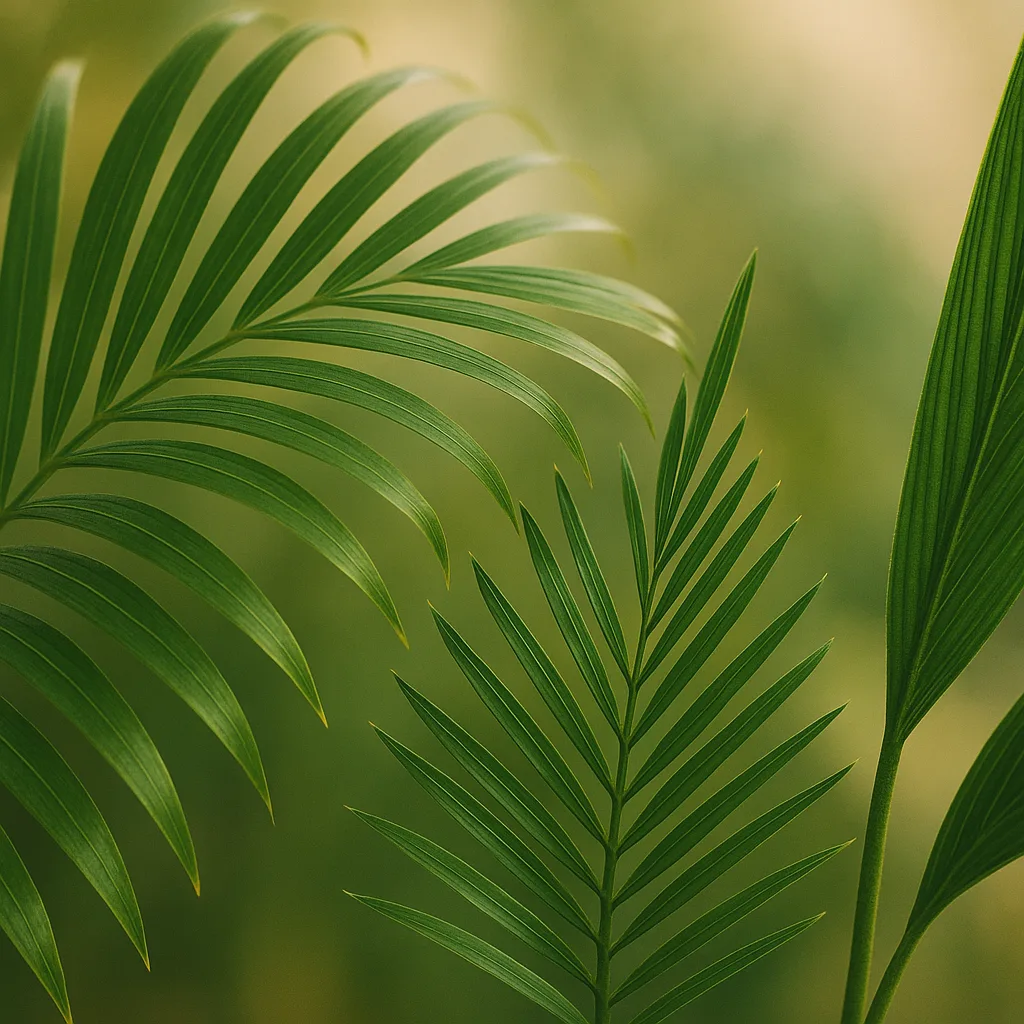
- Quick ID to label and care for a plant
- Safety and toxicity information for pets and kids
- Specific care needs: light, water, soil, fertilization
- Understanding fruit/flower expectations and seasonal behavior
Tools like Orvik’s AI visual ID can speed up recognition from a photo, but a basic field‑guide approach — looking at leaf shape, trunk, flowers and fruit — will help you verify results and learn more about the palm in front of you.
Key anatomical features to identify palms
Palms (family Arecaceae) share a common architecture but the differences are in details. For reliable indoor palm identification, focus on four anatomical features: leaf type, petiole and crownshaft, trunk and growth habit, and reproductive structures (inflorescences and fruit).
Leaf types: pinnate vs palmate
- Pinnate leaves (feather‑like): a central rachis with narrow leaflets. Example length: 40–180 cm (Areca, Phoenix, Howea).
- Palmate leaves (fan‑shaped): leaflets radiate from a single point. Example width: 30–120 cm (Bismarckia, Licuala — less common indoors).
- Segment shape: linear, lanceolate, or obovate; leaflet margin (entire, serrated) can be diagnostic.
Petiole, sheath and crownshaft
- Some species have a smooth green crownshaft — a tubular wrap of leaf bases (e.g., Roystonea, some Howea).
- Petiole length and presence of spines: e.g., Phoenix species have spines at the petiole base; Chamaedorea petioles are short and spineless.
- Leaf base sheath texture: fibrous, smooth, or banded; color differences (brown sheaths vs green) help ID.
Trunk and growth habit
- Single trunk vs clustering (clumping): single trunks include Howea forsteriana (Kentia) vs clumping types like Dypsis lutescens (Areca/palmlet).
- Trunk diameter: from 1–3 cm (slender Chamaedorea) to 20–30 cm (mature Phoenix).
- Surface texture: ringed leaf scars, corky surface, or fibrous skirt (some species retain old leaves).
Inflorescence and fruit
- Inflorescence position: within crown vs pendant from trunk; length and branching pattern are diagnostic.
- Fruit size and color: tiny 3–8 mm drupes (Chamaedorea) to 5–7 cm dates (Phoenix) or large 10–30 cm coconuts (Cocos nucifera).
- Fruit arrangement: dense clusters vs spaced; peel/skin color (orange, red, black) can identify genus.
Common indoor palms: identification profiles
Below are the most frequently encountered indoor palms, with measurement ranges, visual cues, native range and typical indoor behavior.
For more on this topic, see our guide on Field Guide: Common Cactus Types and How to ID Them.
-
Areca palm (Dypsis lutescens)
- Leaves: pinnate, 60–180 cm long; arching fronds with 40–60 narrow lanceolate leaflets, bright to yellow‑green.
- Trunk: clustering stems 2–6 cm diameter; often multiple canes from base.
- Fruit: small oval orange to yellow drupes ~6–8 mm; rarely seen indoors.
- Native range: Madagascar; commonly sold as "butterfly palm" or "golden cane".
-
Kentia/Howea palm (Howea forsteriana)
- Leaves: pinnate, 100–200 cm long; dark green, arching, fewer leaflets per frond (15–30).
- Trunk: single, slender 10–15 cm diameter; smooth, ringed.
- Fruit: small orange to brown drupes ~1 cm; rarely fruits indoors.
- Native range: Lord Howe Island; tolerant of lower light and common indoor specimen.
-
Parlor palm (Chamaedorea elegans)
- Leaves: pinnate, 30–60 cm; delicate, narrow leaflets (6–10 pairs).
- Trunk: multiple thin canes 1–2 cm diameter; forms dense clumps.
- Fruit: small dark drupes 4–8 mm; sometimes appears after many years.
- Native range: Mexico and Central America; the classic indoor low‑light palm.
-
Pygmy date / Miniature date palm (Phoenix roebelenii)
- Leaves: pinnate, 80–120 cm, with 90–120 stiff, slightly pendulous leaflets.
- Trunk: single or clustering, 6–10 cm diameter; slender with distinct ring scars.
- Fruit: small orange to dark red dates 1–2 cm; may ripen indoors if pollinated.
- Native range: SE Asia; popular for compact landscapes and containers.
-
Lady palm (Rhapis excelsa)
- Leaves: palmate to costapalmate, each leaf 20–50 cm wide with 6–12 broad segments.
- Trunk: clustering thin stems 2–4 cm diameter, often many stems from base.
- Fruit: small, fleshy, round black drupes ~5–8 mm.
- Native range: Southern China and Taiwan; tolerates shade, favored for indoor cultivation.
-
Majesty / Ravenea palm (Ravenea rivularis)
- Leaves: pinnate, up to 3–4 m in nature; indoor specimens 60–180 cm with long arching pinnate fronds.
- Trunk: single trunk up to 20–30 cm when mature outdoors; young plants slender.
- Fruit: red to orange drupes ~1–2 cm.
- Native range: Madagascar; prefers bright indirect light indoors.
-
Christmas palm / Sealing wax palm (Veitchia merrillii)
- Leaves: pinnate, 1–2 m; glossy, slightly arching leaflets.
- Trunk: single slender trunk; smooth and greyish.
- Fruit: bright red to orange round fruits 8–12 mm, showy when present.
- Native range: Pacific islands; used as a decorative indoor/outdoor palm.
Palm fruit identification: what fruit tells you
Fruit are often the most diagnostic reproductive structure for palms. Even when a plant is not fruiting indoors, knowing the typical fruit type helps narrow ID.
Common fruit forms and their clues
- Small round drupes (3–10 mm): typical of Chamaedorea and Rhapis — look for dark purple/black fruits.
- Elongated or ovoid fruits (1–2 cm): Phoenix and some Dypsis species; color from yellow to red to black.
- Large single seed fruits (5–30 cm): coconut (Cocos nucifera) — rarely indoor and obvious by size.
- Clustering vs spaced: dense clusters along hanging inflorescences indicate certain genera like Areca or Howea.
Practical fruit ID tips
- Measure fruit diameter/length (mm or cm) and note color at maturity.
- Observe arrangement: is the fruit tightly clustered on a spike, or spread along branching panicles?
- Match color and size to genus patterns (e.g., orange small drupes often indicate Dypsis/Areca group).
Comparison: How to tell similar palms apart
Many indoor palms look alike at a glance. Below are direct comparisons with the key visual cues to separate them.
You may also find our article on Identify Indoor Plants Like a Pro helpful.
Palmate vs Pinnate: the first split
- Palmate (fan) leaves: radiating segments from a central point; think Rhapis (palmate‑like) or Licuala.
- Pinnate (feather) leaves: leaflets arranged along a central rachis; most indoor palms (Areca, Kentia, Parlor) are pinnate.
Areca (Dypsis lutescens) vs Kentia (Howea forsteriana)
- Areca: multi‑stemed clumping habit, yellowish midribs, fronds more arching and feathery; leaflets narrow and numerous (40–60).
- Kentia: single trunk or few trunks, stiffer, darker green fronds with fewer broad leaflets (15–30), more tolerant of low light.
Parlor palm (Chamaedorea elegans) vs Bamboo palm (Chamaedorea seifrizii)
- Parlor palm: shorter fronds 30–60 cm, leaflets fewer and wider, compact clumping habit.
- Bamboo palm: taller (to 2.5 m indoors), more numerous thin canes, leaflets narrower and more numerous per frond.
Phoenix roebelenii (Pygmy date) vs larger date palms
- Pygmy date: pinnate fronds 80–120 cm, many thin leaflets, small orange fruits ~1–2 cm; trunk slender and ringed.
- Larger date palms (Phoenix dactylifera): fronds up to 6–8 m, much thicker trunk, large edible dates 3–7 cm.
Practical ID workflow: steps you can use today
A reproducible workflow reduces guesswork. Use this checklist when you want to identify an indoor palm. Photograph the whole plant, leaf details and any fruit, then follow the steps below. Orvik can accelerate step 2–4 by analyzing images and suggesting likely species.
- Take photos: whole plant, close‑up of a single frond, base of trunk, any flowers/fruit. Include a ruler or coin for scale.
- Note leaf type: pinnate or palmate. Count leaflet pairs and measure leaf length (cm).
- Record trunk habit: single vs clumping; measure trunk diameter (cm) and note bark texture.
- Look for distinctive features: crownshaft, spines at petiole base, persistent leaf bases, or a fibrous skirt.
- Compare fruit: size, color, arrangement. If no fruit, use leaf and trunk cues from steps 2–4.
- Cross‑check with a field guide or an AI tool like Orvik using your photos to get a shortlist; then confirm with botanical characteristics.
Care implications, seasonal behavior and toxicity
Identifying your palm is not only an academic exercise — it informs light, water, feeding and safety precautions.
You might also be interested in How to ID a Bird from a Photo.
Related reading: Understanding Hydrangea Names — From Common to Scientific.
Care differences driven by species
- Low light tolerant: Chamaedorea elegans and Rhapis excelsa; grow under 50–200 µmol·m−2·s−1 of light indoors.
- Bright light preferred: Phoenix, Ravenea and some Dypsis species; these perform better with 200–500 µmol·m−2·s−1.
- Watering: palms generally prefer soil that dries slightly between waterings. Overwatering causes root rot — note species‑specific tolerance (Areca likes more moisture than Kentia).
- Temperature: most indoor palms like 16–24 °C (60–75 °F); avoid drops below 10 °C for tropical species.
Seasonal behavior
- Many indoor palms have limited seasonal cues and may not flower/fruit indoors; when they do, it often follows warmer, brighter periods.
- Outdoors in native range, flowering and fruiting seasons are species‑specific: e.g., many Phoenix species fruit in the dry season.
Toxicity and safety warnings
- Most true palms (Arecaceae) are considered low toxicity to humans, but ingestion of large fruit or seeds can be a choking hazard for children.
- Beware of cycads: Sago palm (Cycas revoluta) is not a true palm and is extremely toxic — all parts, especially seeds, are hepatotoxic and can be fatal to dogs and cats.
- Some species have spines on petioles or sharp leaf edges that can cause cuts or dermatitis; wear gloves when handling Phoenix or some wild palms.
- Always check ASPCA and local poison control resources if you suspect ingestion by a pet or child.
Using Orvik and other tools to confirm ID
Orvik’s AI visual identification can take your photos and propose likely matches, which is particularly useful when you lack botanical training. Use Orvik as part of the workflow described earlier: get candidate IDs, then verify using the anatomical checklist (leaf type, trunk, fruit).
- Why use an AI like Orvik? Quick image analysis, suggestions of similar species, and care tips tailored to the predicted species.
- Limitations: AI can be challenged by juvenile forms, damaged leaves, or cultivars; always validate results using morphological clues in this guide.
- Pro tip: include scale (ruler/coin) and multiple angles in photos to improve accuracy.
Conclusion
Identifying an indoor palm plant comes down to a systematic look at leaf form (pinnate vs palmate), number and shape of leaflets, trunk habit (clumping versus single), and any reproductive structures such as flowers or fruit. With careful observation, a simple checklist, and tools like Orvik to suggest likely matches, most house palms can be identified confidently. Knowing the exact species lets you tailor care — light, water and feeding — and avoid safety risks like toxic look‑alikes.
Frequently Asked Questions
- What are the first steps to identify an indoor palm?
- Photograph the whole plant plus closeups of leaves, petiole, trunk and any fruit; note whether leaves are pinnate or palmate, count leaflet pairs, and observe trunk habit (single vs clumping).
- How can I tell palmate leaves from pinnate leaves?
- Palmate leaves radiate from a central point like a fan. Pinnate leaves have a central rachis with leaflets arranged on either side (feather‑like).
- Are palms poisonous to pets?
- Most true palms (Arecaceae) are low toxicity, but some plants commonly called "palms" like the Sago palm (a cycad) are highly toxic. Always check species‑specific toxicity before letting pets nibble foliage or fruit.
- Why does my indoor palm have brown leaf tips?
- Brown tips are commonly due to low humidity, underwatering, salt buildup from fertilizer, or inconsistent watering. Identify species needs and adjust humidity and watering frequency.
- Can Orvik identify my palm from a photo?
- Yes—Orvik’s AI can analyze clear photos (whole plant and closeups) to suggest likely species. Use the app’s suggestions alongside morphological checks for confirmation.
- What fruit clues help identify a palm?
- Measure fruit size and note color and arrangement: small round drupes (Chamaedorea/Rhapis), ovoid dates (Phoenix), or large single fruits (coconut). These traits narrow genus identification.
- How do I distinguish Areca from Kentia palms?
- Areca (Dypsis lutescens) is clumping with many narrow leaflets and yellowish midribs; Kentia (Howea forsteriana) is usually single‑stemmed with fewer, broader leaflets and darker green fronds.