
If you own a glossy-leaved houseplant with elegant white spathes, you’ve likely asked: is a peace lily poisonous? This article explains the science, symptoms, identification tips, habitat and seasonal behavior, how to respond to exposures, and how to tell peace lilies apart from lookalikes such as calla lilies, beach spider lilies, and crinum lilies. Throughout, practical visual cues and safety steps are included so you can care for your plant and protect children and pets. Orvik, an AI visual ID app, can help confirm whether a plant is indeed a peace lily if you’re unsure.
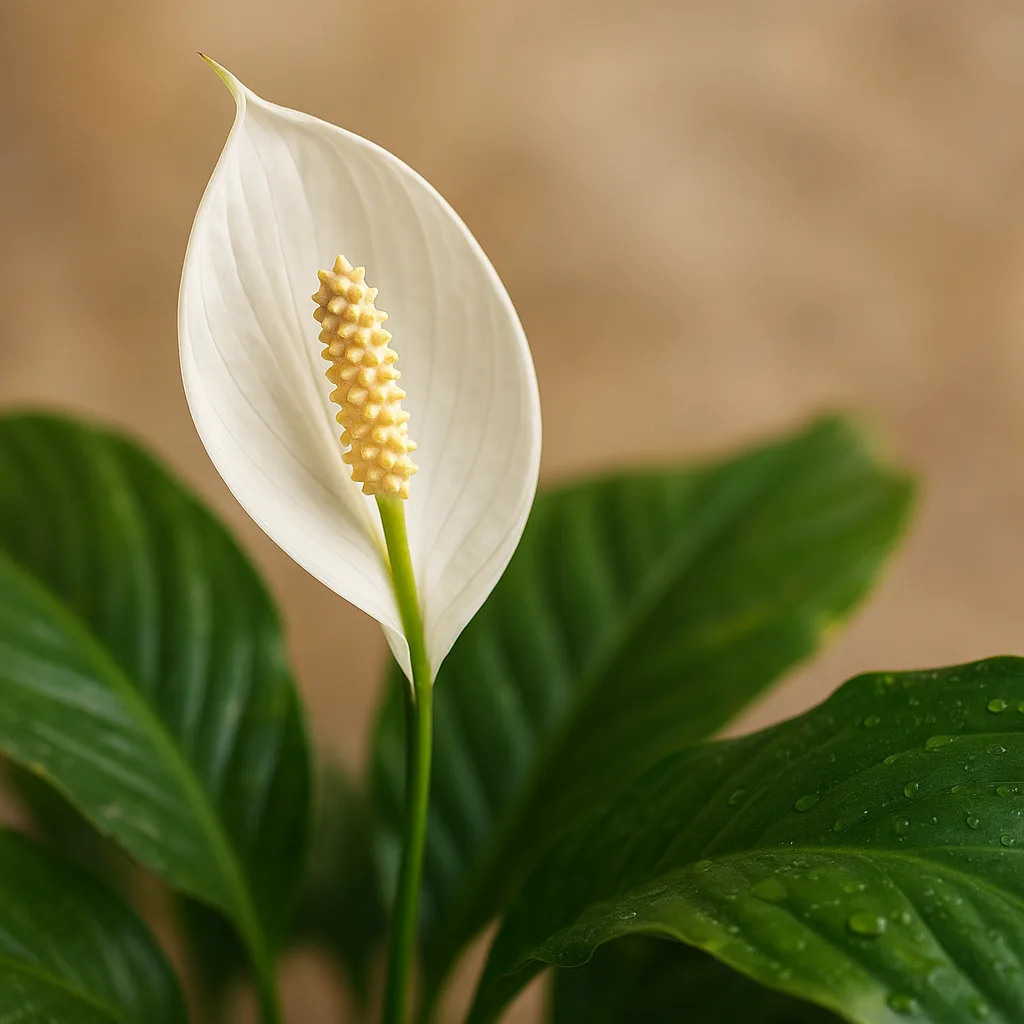
Quick answer: is a peace lily poisonous?
Short answer: yes. Peace lilies (genus Spathiphyllum, commonly from hybrids of S. wallisii and related species) contain insoluble calcium oxalate crystals called raphides that cause immediate irritation if chewed or swallowed. The irritation typically produces pain, burning, drooling, swelling of the mouth and throat, and sometimes vomiting. Serious or life‑threatening reactions are uncommon in healthy adults but can be more dangerous for small children and pets if a large amount is ingested.
- Toxic agent: calcium oxalate raphides (needle‑like crystals)
- Typical clinical signs: oral irritation, drooling, vomiting
- Severity: usually mild to moderate; rarely severe
- Primary risk groups: infants, toddlers, cats, and dogs
What makes peace lilies toxic?
Calcium oxalate crystals (raphides)
Peace lilies store calcium oxalate in specialized cells. When a leaf, stem, or flower is chewed, these cells rupture and release microscopic needle‑shaped crystals (raphides). The crystals mechanically puncture soft tissues in the mouth and throat and trigger local inflammatory responses. Because the crystals are insoluble, they produce immediate, intense pain rather than a systemic poison that must be metabolized.
Chemistry and toxicology
- Compound: calcium oxalate (insoluble)
- Mechanism: mechanical irritation + local inflammation
- Onset: seconds to minutes after chewing
- Duration: symptoms usually improve within hours to a couple of days
Unlike soluble oxalates that can affect kidney function in very large doses, the insoluble raphides of peace lilies mainly cause local reactions. Documented fatalities from peace lily ingestion are extremely rare to nonexistent in medical literature; the primary clinical concern is airway compromise if severe swelling occurs or if a large child/animal ingests a lot and vomits repeatedly.
Symptoms checklist
- Immediate burning or stinging of mouth, lips, tongue
- Salivation (drooling) and difficulty swallowing
- Facial swelling and hoarse voice (less common)
- Vomiting and abdominal pain if significant amounts are swallowed
- Eye irritation if sap contacts the eye
Identification: how to recognize a peace lily
Correct identification is the first step in assessing risk. Peace lilies are common indoor plants with distinct features. Below are field‑expert visual cues you can use at home, and tips for using Orvik to confirm identity with a photo.
For more on this topic, see our guide on Oleander Poisoning: What You Need to Know.
Key visual features
- Leaves: Glossy, dark to medium green, lanceolate to elliptic; typically 10–40 cm (4–16 in) long and 3–10 cm (1–4 in) wide. Smooth margins, prominent midrib, and an arching habit.
- Height: Most common indoor varieties reach 30–120 cm (1–4 ft) tall. Dwarf cultivars are shorter (20–40 cm).
- Flowers: A white or cream spathe (a modified bract) wraps a central spadix; the spathe measures roughly 5–12 cm (2–5 in) long, and spadix 2–8 cm (1–3 in).
- Texture: Leaves are smooth and slightly waxy; older leaves may develop brown tips from dryness.
- Arrangement: Leaves arise in a rosette from rhizomatous roots; not a bulb or true stem like some lilies.
Visual ID tips (field checklist)
- Look for a single white spathe per flowering stalk; if present, it is typically oval and encloses a cylindrical spadix.
- Measure a representative leaf: is it elongated (≥10 cm) with a clear central vein?
- Check the base: peace lilies grow from a shallow rhizome—not from an underground bulb like calla lilies or crinums.
- Note the leaf texture: glossy and soft rather than the thicker, leathery leaves of many true lilies.
If you’re unsure, take a clear photo of the whole plant and close‑ups of a leaf and the flower. Orvik’s visual ID can often differentiate Spathiphyllum from lookalikes using key morphological cues.
Habitat, geographic distribution, and seasonal behavior
Natural range and habitat
Peace lilies are native to tropical regions of the Americas and Southeast Asia. Wild species are understory plants in humid, shaded forests where they grow in rich, well‑drained soil and dappled light. Most houseplants are hybrids derived from species like Spathiphyllum wallisii and S. floribundum.
- Native: Tropical Central and South America, and parts of Asia.
- Habitat: Shaded understories, moist but well‑drained soils, high humidity.
- US houseplant hardiness: typically grown indoors in temperate climates; outdoors only in USDA zones ~10–12.
Seasonal behavior and blooming
Indoors, peace lilies commonly bloom in spring and early summer, though with proper light and care they may produce sporadic blooms year‑round. Flowering frequency depends on light, temperature, and nutrition.
- Typical bloom size: spathe 5–12 cm, spadix 2–8 cm.
- Temperature preference: 18–24°C (65–75°F) during the day; avoid temperatures below 15°C (60°F).
- Light: bright, indirect light; direct sun can scorch leaves.
- Water: keep soil consistently moist but not waterlogged; drought stress causes brown tips.
Safety: first aid and what to do if someone ingests a peace lily
Knowing immediate steps reduces the risk of complications. Most cases are self‑limited, but take them seriously if symptoms are severe or if a small child or pet is involved.
You may also find our article on Know Your Weeds: Identify Lawn & Yard Invaders helpful.
First aid for humans
- If a child or adult chews the plant: remove plant material from the mouth; rinse mouth and lips thoroughly with cool water.
- Do not induce vomiting unless instructed by a medical professional or poison control.
- If eye exposure occurs: flush the eye with lukewarm water for 10–15 minutes and seek medical care if irritation persists.
- For difficulty breathing, swelling of the face or throat, or persistent vomiting: call emergency services immediately.
Contact your local poison control center for guidance: in the United States call 1‑800‑222‑1222. For international emergencies contact local medical services.
First aid for pets
- If a pet chews the plant: remove plant pieces, rinse mouth with water, and phone your veterinarian or an animal poison control service immediately.
- Common signs in pets: pawing at the mouth, drooling, vomiting, decreased appetite, vocalizing in pain.
- Bring a photo or the plant sample to the vet to assist identification.
Because cats and dogs may ingest more leaf material relative to their body weight than a human, they are at higher risk for more severe symptoms. The Pet Poison Helpline (in the U.S.) can be reached at 855‑764‑7661; fees may apply.
Peace lily vs similar plants: how to tell them apart
Misidentification can lead to improper advice. Below are direct comparisons to three commonly confused plants: calla lily, beach spider lily, and crinum lily.
You might also be interested in Black Widow Risk: What You Really Need to Know.
Peace lily (Spathiphyllum) vs Calla lily (Zantedeschia)
- Flowers: Spathiphyllum produces a white spathe surrounding a solid spadix; calla lilies have a funnel‑shaped spathe that wraps around a spadix but the overall shape is a single, sculpted trumpet.
- Leaves: Peace lily leaves are matte to glossy, elongated with a pointed tip. Calla lily leaves are often arrow‑shaped (sagittate) and sometimes variegated.
- Roots: Peace lilies grow from rhizomes; calla lilies grow from an underground tuber (corm) or rhizome and may show more bulbous base structures.
- Toxicity: Both are toxic. Calla lilies (Zantedeschia) also contain calcium oxalate raphides and can be irritating; the risk profile is similar but calla lilies may be mistaken for peace lilies by novices.
Peace lily vs Beach spider lily (Hymenocallis littoralis)
- Flowers: Beach spider lilies have highly distinctive strap‑like white petals that create a spider‑like appearance; the spathe is absent. Peace lily has a single broad spathe.
- Leaves: Beach spider lily leaves tend to be longer, strap‑like, and grow in clumps from a bulb; peace lily leaves are broader and arise from a creeping rhizome.
- Habitat: Beach spider lilies are often coastal and can tolerate more sun and salt spray; peace lilies prefer shaded, humid conditions.
- Toxicity: Beach spider lilies are also considered toxic—many Amaryllidaceae (the family of Hymenocallis) contain alkaloids that can cause gastrointestinal upset and more systemic symptoms.
Peace lily vs Crinum lily (Crinum spp.)
- Size: Crinum lilies are generally larger, often reaching 1–2 m (3–6 ft) tall with huge strap‑like leaves and large, showy clusters of tubular or funnel‑shaped flowers.
- Flowers: Crinum flowers are typically star‑shaped or funnelled and borne in umbels on a tall stalk; peace lily flowers are single spathes on shorter stalks.
- Growth form: Crinums grow from bulbs and have seasonal growth and dormancy; peace lilies are evergreen, rhizomatous houseplants.
- Toxicity: Crinum species contain alkaloids and can be toxic; symptoms can include vomiting and diarrhea and, in some species, more serious systemic effects.
When in doubt, photograph several plant parts (flower, leaf underside, base) and use Orvik to compare the plant to verified images. This reduces the risk of confusing a heavily toxic species with a relatively less dangerous houseplant.
Related reading: Dracaena and Cats: What Owners Should Know.
Prevention and practical tips for households with children and pets
Prevention is the most reliable strategy. Here are actionable steps you can take to reduce exposure risk while still enjoying the aesthetics and air‑purifying qualities of peace lilies.
- Place plants out of reach of young children and pets: high shelves or hanging baskets (secured) are effective.
- Choose plant types intentionally: if you have very young children or many pets, consider non‑toxic alternatives such as spider plant (Chlorophytum comosum), Boston fern (Nephrolepis exaltata), or areca palm (Dypsis lutescens).
- Use deterrents: citrus peels, pet‑safe bitter sprays, or placing crushed pepper around pots (use caution with cats) can discourage chewing.
- Educate household members about the risks and show them which plants are off‑limits.
- Keep a photo of your plant and contact numbers for poison control and your veterinarian near your phone or in a safety app like Orvik for quick reference.
Using Orvik to identify plants and avoid mistakes
Orvik’s AI‑powered visual ID is a practical tool to confirm whether a plant in your home is a peace lily or a lookalike. If you’re uncertain about a plant’s identity—and therefore its toxicity—snap a clear photo and let Orvik analyze leaf shape, flower structure, and other diagnostic features.
- Snap multiple images (whole plant, close‑up of leaf, and flower if present).
- Orvik compares your photos to a database of verified botanical images and returns likely matches with confidence scores.
- Use the result to decide on placement and safety measures—especially helpful if you found a plant outside and want to bring it indoors safely.
Orvik is particularly useful when distinguishing between plants with similar white flowers, such as peace lilies and calla lilies. The app also stores past identifications so you can quickly review whether a plant in your house is known to be toxic.
Frequently Asked Questions
- Is a peace lily toxic to humans?
- Yes. Peace lilies contain calcium oxalate crystals that cause immediate mouth and throat irritation, drooling, and sometimes vomiting if chewed or swallowed.
- Is a peace lily poisonous to pets?
- Yes. Cats and dogs commonly exhibit drooling, vomiting, pawing at the mouth, and oral pain after ingestion; contact a veterinarian promptly.
- Is a calla lily poisonous?
- Yes. Calla lilies (Zantedeschia) also contain calcium oxalate crystals and can cause similar irritating symptoms if ingested.
- Is beach spider lily poisonous?
- Yes. Beach spider lily (Hymenocallis littoralis) is considered toxic; many Amaryllidaceae contain alkaloids that can cause gastrointestinal upset and other symptoms.
- Is crinum lily poisonous?
- Yes. Crinum species contain toxic alkaloids and can cause vomiting and diarrhea; some varieties may have more severe effects.
- What should I do if someone ingests a peace lily?
- Remove plant material from the mouth, rinse with water, do not induce vomiting unless advised, and contact poison control or seek medical attention for severe symptoms like swelling or breathing difficulty.
- How can I tell a peace lily from a calla lily?
- Peace lilies have a broad white spathe around a solid spadix and grow from rhizomes with glossy lanceolate leaves; calla lilies have a trumpet‑shaped spathe, often arrow‑shaped leaves, and grow from tubers or corms.