
Overview: what people mean by “is a Virginia creeper poisonous”
When someone asks "is a Virginia creeper poisonous" they are usually worried about three practical things: 1) Can touching the vine cause a skin reaction? 2) Are the berries or leaves toxic if eaten by people or pets? 3) How to tell it apart from truly dangerous lookalikes such as poison ivy. In short: Parthenocissus quinquefolia (Virginia creeper) is not the same as poison ivy, its berries are considered mildly toxic to humans, and it can cause irritation in sensitive individuals. However, it is still a plant to treat with care—especially around children and pets.
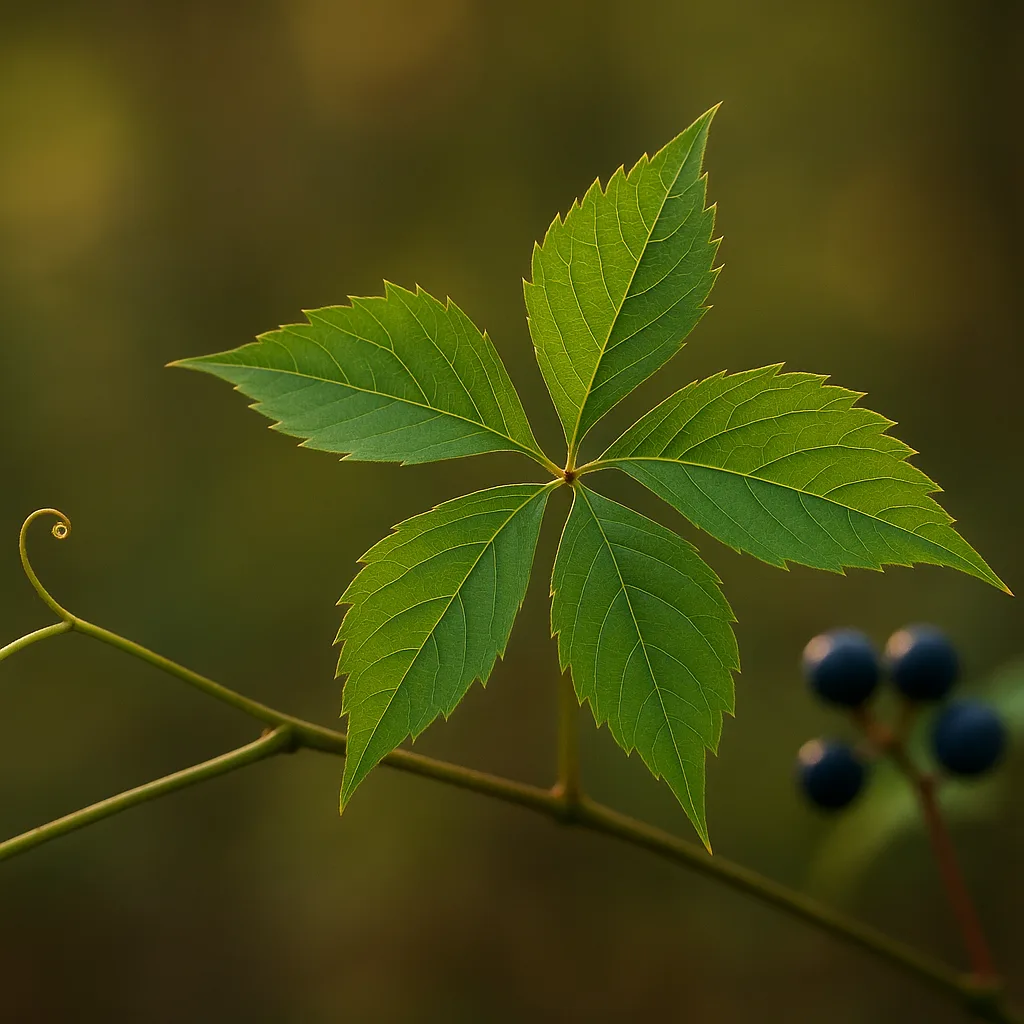
- Scientific name: Parthenocissus quinquefolia
- Common names: Virginia creeper, five-leaved ivy
- Primary concern: ingestion of berries and rare contact irritation
Identification & practical visual cues
Correct identification is the first step in answering toxicity questions. Below are clear, field-ready cues you can use when you encounter a vine in the wild, along a fence or on a wall.
Leaves and leaflets
- Leaf arrangement: compound, palmately divided into five leaflets (occasionally three or seven). This is the quickest field ID—"five leaves" for Virginia creeper.
- Leaflet size: each leaflet typically 4–12 cm long and 2–6 cm wide; shape ranges from lanceolate to ovate with serrated or toothed margins.
- Color: glossy green in summer, turning bright red to purple in autumn.
Tendrils, stems and growth habit
- Tendrils: coiling tendrils that fork and end in small adhesive pads; these pads stick to smooth surfaces (brick, siding).
- Stem: woody vine up to 10–30 m long when supported; young stems are green, older stems brown to gray.
- Growth form: vigorous climber and groundcover; can quickly cover trees, fences and walls.
Flowers and fruit
- Flowers: small, greenish, inconspicuous, appearing in late spring to early summer.
- Berries: spherical, blue-black to purplish-black, about 5–8 mm in diameter, borne in clusters (often 8–20 per cluster) from late summer into fall.
Tip: If you're unsure in the field, take a close photo of the entire leaf (showing all five leaflets) and a close-up of the tendrils. Orvik can analyze photos to help confirm ID.
Toxicity & health risks
Understanding the chemistry and the likely health outcome if touched or eaten will answer the main concern behind the search query.
For more on this topic, see our guide on Chinaberry Tree: Toxicity, ID & Safety Guide.
Is Virginia creeper toxic if eaten?
- Berries are considered mildly to moderately toxic to humans. They contain compounds that can cause gastrointestinal upset (nausea, vomiting, diarrhea) and sometimes dizziness or weakness.
- Severity: For healthy adults ingestion of a small number of berries is unlikely to be life-threatening; for children and small pets, even a few berries can cause more pronounced symptoms and require veterinary/medical attention.
- Onset: symptoms typically begin within 30 minutes to a few hours after ingestion.
Is Virginia creeper poisonous to touch?
- Contact reactions are less common than with poison ivy. Virginia creeper does not typically cause the classic urushiol-induced contact dermatitis seen with poison ivy.
- Sap irritation: some people can develop mild skin irritation from the vine's sap or from coarse hairs on older stems—redness, itching or rash in sensitive individuals.
- Precaution: if you are sensitive or unsure, wear gloves and long sleeves when handling or removing the vine.
Risks to pets and livestock
- Dogs and cats: ingestion of berries or large amounts of foliage can lead to vomiting, diarrhea, lethargy, and drooling. Small animals are at higher risk.
- Birds and wildlife: many birds eat the berries without ill effect and disperse the seeds—this helps the vine spread.
First aid and safety precautions
If you or a family member (human or animal) interacts with Virginia creeper in a way that leads to exposure, follow these steps.
- Skin contact: Wash the area with soap and water as soon as possible. Remove and wash contaminated clothing.
- If rash/irritation develops: apply cool compresses and over-the-counter topical hydrocortisone for mild symptoms; seek medical care for severe swelling, blistering, or spreading rash.
- If ingested: do not induce vomiting unless told to by a poison control center or medical professional. Call your local poison control center (US: 1-800-222-1222) or emergency services if symptoms are severe.
- Pets: call your veterinarian or an animal poison control hotline (e.g., ASPCA Animal Poison Control: 1-888-426-4435 in the US).
Virginia creeper vs lookalikes: how to tell them apart
Many searches asking “is a Virginia creeper poisonous” really come from people trying to distinguish it from poison ivy and other toxic plants. Below are direct comparisons with clear ID rules.
You may also find our article on Wisteria: Toxicity, ID, and Safe Handling helpful.
Virginia creeper vs poison ivy (Toxicodendron radicans)
- Leaves: Virginia creeper has five leaflets; poison ivy has three—"leaves of three, let it be."
- Growth: Virginia creeper uses tendrils with adhesive pads to cling to surfaces; poison ivy often uses hairy aerial roots and can be a trailing vine or shrub.
- Color and fall: both turn red in fall, which can cause confusion—use leaflet count for reliable ID.
Virginia creeper vs bittersweet (Celastrus spp.)
- American bittersweet (Celastrus scandens) and oriental bittersweet (Celastrus orbiculatus) have simple alternate leaves (not divided into leaflets) and bright orange capsule fruits that split open to reveal red/orange berries in fall.
- Virginia creeper leaves are compound with five leaflets and have dark blue-black berries—not orange capsules.
- Toxicity: bittersweet berries and seeds are also considered toxic if ingested—"is bittersweet poisonous" and "is american bittersweet poisonous" are valid concerns; both species can cause nausea and gastrointestinal symptoms.
Virginia creeper vs devil's ivy (Epipremnum aureum)
- Devil's ivy (pothos) is a tropical houseplant with thick, glossy, often variegated leaves and does not produce small blue berries. It contains insoluble calcium oxalate crystals and is toxic if chewed—"devil's ivy is it poisonous" is yes for pets and humans.
- Virginia creeper is an outdoor deciduous vine with five leaflets and blue-black fruit; habitat and leaf shape make them easy to separate.
Virginia creeper vs jack-in-the-pulpit (Arisaema triphyllum)
- Jack-in-the-pulpit is a woodland herb with a single unforked leaf (often divided into three leaflets) and a distinctive hooded flower structure that yields bright red berries in late summer. It contains calcium oxalate crystals and is indeed poisonous if eaten raw—"is jack in the pulpit poisonous" is yes.
- Virginia creeper is a woody vine—not an herbaceous ground plant—and its berry clusters are bluish-black, not the bright red clusters of jack-in-the-pulpit.
Habitat, distribution and seasonal behavior
Knowing where and when you will encounter Virginia creeper helps explain why it is so commonly mistaken for other plants.
- Range: Native to eastern and central North America; found from Nova Scotia to Manitoba and south to Florida and Texas. Also naturalized in parts of Europe and Asia.
- Habitat: thrives in woodlands, forest edges, roadside margins, fence lines, walls and urban landscapes. Tolerant of full sun to heavy shade.
- Seasonal cycle: spring leaves emerge green; small flowers appear in late spring to early summer; berries ripen late summer to fall; leaves turn striking reds/purples in autumn and drop in winter.
Practical removal, control and management
If you determine the vine is Virginia creeper and want to remove it safely, follow these practical tips.
Looking beyond this category? Check out Mastering Coin Identification: A Field Guide.
- Wear protective clothing: gloves, long sleeves, and eye protection to avoid mechanical irritation from stems and berries.
- Cut and remove vines: sever at the base and peel away from structures; use pruning shears for vines up to 2–3 cm diameter, a saw for larger stems.
- Dispose properly: bag and discard berries and clippings if children or pets are a concern; do not compost berries where compost will be used around people or animals.
- Repeated control: Virginia creeper resprouts from roots—follow up with hand-pulling of new shoots or targeted herbicide applications if necessary.
Note: when in doubt about whether a vine is toxic or not, tools like Orvik can speed up identification using a photo of the plant. Orvik's AI visual ID can help you decide whether to remove a vine immediately or simply admire it from a distance.
Related reading: Mistletoe: What to Know About Its Toxicity.
Using technology to identify plants: Orvik and other tools
Modern visual ID apps are useful in the field. Orvik can process photos of leaves, tendrils, and berries to provide likely identifications and confidence scores—handy when you need to answer "is a virginia creeper poisonous" quickly.
- Best practice: take at least two photos—one of the whole leaf showing all leaflets and one close-up of berries or tendrils.
- Cross-check: use Orvik to get an ID, then confirm by checking key features listed above (five leaflets, adhesive pads on tendrils, blue-black berries).
- Record-keeping: save the photo and Orvik's ID result for future reference, especially if you're removing or treating the plant.
Conclusion
To answer the original question: "is a Virginia creeper poisonous?" — Virginia creeper is not as dangerous as poison ivy when it comes to contact dermatitis, but its berries are considered mildly to moderately toxic if eaten, and the plant can cause irritation in sensitive people. Keep children and pets away from the berries, wear protection when handling the vine, and use tools like Orvik to confirm identification before you act. When in doubt, treat unknown berries and vines with caution and consult medical or veterinary professionals if exposure occurs.
Frequently Asked Questions
- Is Virginia creeper poisonous to touch?
- Virginia creeper rarely causes the urushiol-type rash associated with poison ivy. However, some people can experience mild skin irritation from the sap or stems. Wear gloves if handling.
- Are the berries of Virginia creeper poisonous?
- Yes, the blue-black berries are considered mildly to moderately toxic to humans and can cause nausea, vomiting and diarrhea. They are more hazardous to small children and pets.
- How do I tell Virginia creeper from poison ivy?
- Count leaflets: Virginia creeper usually has five leaflets per leaf; poison ivy has three. Virginia creeper also has forked tendrils with adhesive pads; poison ivy often has hairy roots.
- Is American bittersweet poisonous?
- Yes. American bittersweet (Celastrus scandens) produces orange berries in capsules that are considered toxic if eaten, causing gastrointestinal upset.
- Is jack-in-the-pulpit poisonous?
- Yes. Jack-in-the-pulpit (Arisaema triphyllum) contains calcium oxalate crystals that cause intense burning and irritation if chewed raw; it is considered poisonous.
- Is devil's ivy poisonous?
- Yes. Devil's ivy (Epipremnum aureum), commonly grown as pothos, contains insoluble calcium oxalate crystals and is toxic to humans and pets if chewed or swallowed.
- Can I use Orvik to identify Virginia creeper?
- Yes. Orvik's AI visual identification can analyze photos of leaves, tendrils and berries to suggest likely IDs. Use its results along with field cues for confirmation.