
Introduction — what people really want to know
When someone types "is anthurium toxic to dogs" into a search bar, they want a clear, practical answer fast: how dangerous is this common houseplant, what symptoms to watch for, how quickly will they appear, and what to do right now if a dog has chewed a leaf or eaten part of a flower. This guide gives a field‑expert look at Anthurium (family Araceae), the chemistry behind its toxicity, reliable visual ID cues, emergency steps, comparisons to other commonly asked plants (such as azalea, dianthus, digitalis, dipladenia and dumb cane), and sensible prevention and pet‑safe alternatives.
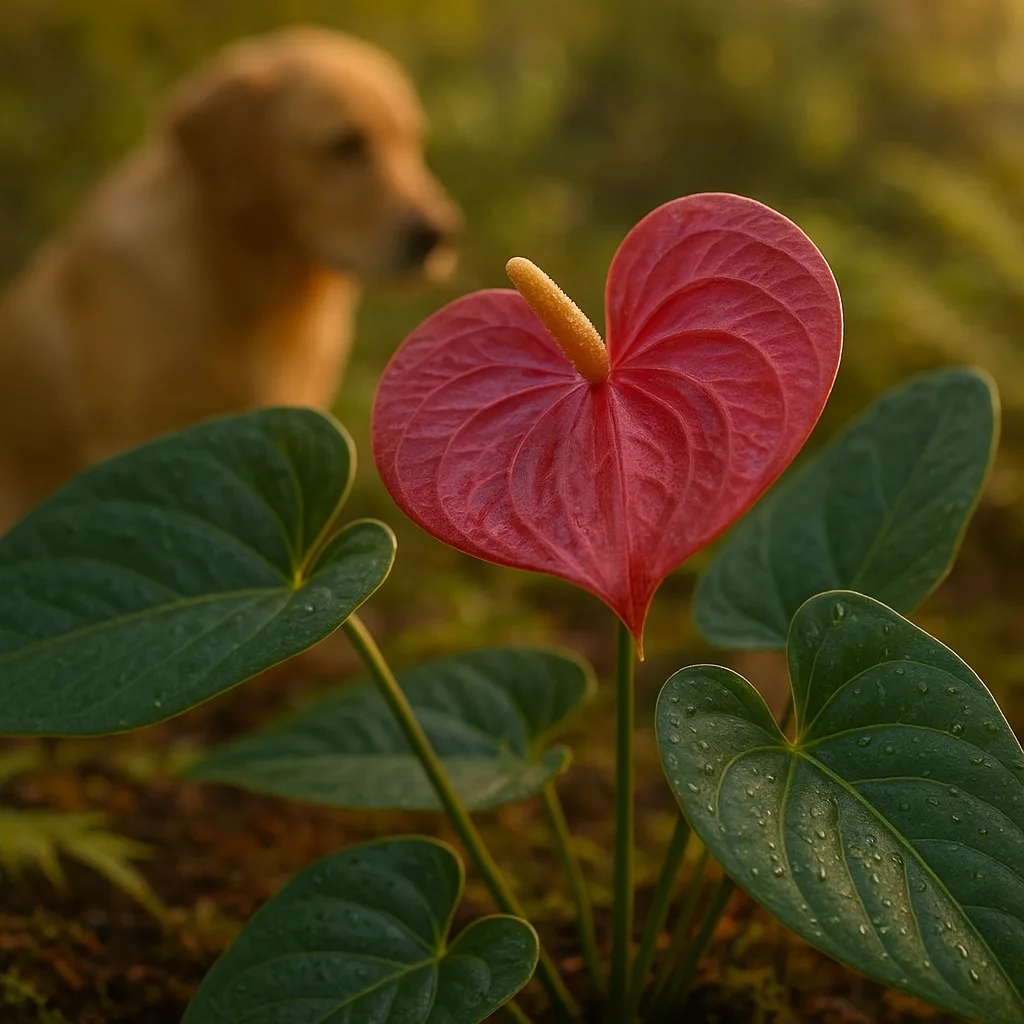
- Quick answer: Anthurium is toxic to dogs — mainly causing painful oral irritation and gastrointestinal upset.
- Severity: Usually mild to moderate; rarely life‑threatening unless a large quantity is eaten or there is a complication.
- Identification and fast ID tools like Orvik help you confirm the plant before you call a vet.
What is anthurium? Botany, appearance and habitat
Anthurium is a genus of roughly 1,000 species in the Araceae family. Common names include flamingo flower, tailflower and laceleaf. Many species are epiphytes in tropical forests; dozens of species and hybrids are sold as houseplants and cut flowers.
Visual identification tips
- Flower structure: A prominent cylindrical spadix (the tail‑like column) surrounded by a single, glossy spathe — the colorful, leaf‑like bract. Spadix is usually 2–15 cm long; spathes range 3–15+ cm across.
- Spathe colors: red, pink, white, cream, green or bicolored. Spathes are smooth and waxy, often with a heart or arrowhead shape.
- Leaves: simple, leathery, often heart‑shaped; leaf blades commonly 10–50 cm long depending on species and cultivar. Surface is glossy, sometimes slightly corrugated.
- Sap: clear to slightly milky; plants have succulent stems and a moist, fleshy texture where leaves attach.
Habitat, geographic distribution and seasonal behavior
- Native range: Central and South America, the Caribbean — many species grow in humid rainforest understories as epiphytes or terrestrial plants.
- Global cultivation: Widely grown indoors and in tropical/subtropical gardens; used as cut flowers worldwide.
- Seasonality: In the wild, flowering can be year‑round in stable, humid climates. Indoors, many hybrids flower intermittently year‑round if temperature (18–27 °C) and humidity (>50%) are adequate.
The toxic chemistry: how Anthurium affects dogs
Most of the irritation and toxicity from Anthurium comes from insoluble calcium oxalate crystals, commonly called raphides, and from other irritating plant proteins and enzymes. These needle‑shaped crystals are stored in specialized cells and are released and propelled into the mouth and mucous membranes when tissue is chewed or crushed.
For more on this topic, see our guide on Dracaena and Cats: What Owners Should Know.
Mechanism of injury and timeline
- Raphides create immediate, mechanical irritation by embedding in soft tissues (tongue, gums, throat), causing sharp pain and inflammation.
- Onset: Symptoms typically begin within minutes to an hour after ingestion.
- Duration: Acute signs most severe in first 24–72 hours; residual inflammation or secondary infection can prolong recovery.
Common clinical signs in dogs
- Oral signs: intense drooling (ptyalism), pawing at the mouth, whining, reluctance to eat or drink, swollen lips and tongue, visible redness or ulceration.
- Gastrointestinal signs: vomiting, retching, abdominal discomfort; typically transient but can be frequent if large amounts were swallowed.
- Respiratory signs: in severe cases, mouth and throat swelling can interfere with breathing; stridor or open‑mouth breathing indicates urgent care is needed.
- Systemic signs: generally rare with Anthurium alone; weakness, collapse or arrhythmias are not typical unless another toxic plant was ingested or a secondary complication arises.
Immediate steps and veterinary treatment
If you catch a dog chewing an anthurium plant or showing symptoms, quick, calm action helps. Do not panic and do not try home remedies that could worsen the situation.
You may also find our article on Pothos and Dogs: What Every Owner Should Know helpful.
First aid at home (what you can safely do)
- Remove the plant and any remaining fragments from the dog’s mouth and out of reach.
- Rinse the mouth with lukewarm water for 1–2 minutes to flush out crystals — do this only if the dog allows it without distress.
- Offer small sips of water if the dog can swallow comfortably; do not force fluids if there is severe mouth pain or breathing difficulty.
- Take clear photos of the plant (leaf, spathe, entire plant) and the wounds in the mouth if visible; these are invaluable for a vet. Orvik can help identify the plant from photos and speed decision‑making.
- Call your veterinarian or a pet poison control hotline — be ready to describe the plant, the amount chewed, approximate time, and your dog’s weight and symptoms.
What veterinarians may do
- Supportive care: pain control (analgesics), anti‑inflammatories, and medications to control vomiting.
- Oral care: rinsing, gentle debridement if plant fragments remain embedded, and topical soothing agents or anesthetic gels under guidance.
- Antihistamines or corticosteroids: used in some cases to reduce swelling of the mouth and throat.
- Hospitalization and oxygen: reserved for dogs with breathing difficulty due to airway swelling.
- Fluids (IV) and monitoring: for frequent vomiting, dehydration, or systemic signs.
How dangerous is anthurium compared with other plants?
People frequently ask about many ornamental plants. Below are short comparisons that address related searches such as "is azalea poisonous to dogs", "is dianthus poisonous to dogs", "is digitalis poisonous to dogs", "is dipladenia poisonous to dogs", and "is dumb cane poisonous".
Anthurium vs Azalea (Rhododendron spp.)
- Azalea toxicity: Rhododendron species contain grayanotoxins. Even small amounts can cause vomiting, drooling, diarrhea, weakness, and serious cardiovascular effects (bradycardia, arrhythmias, hypotension). Severe poisoning can be fatal.
- Key visual differences: Azaleas are woody shrubs with clusters of funnel‑shaped flowers (pink, white, red, purple) and small, ovate leaves; anthurium is herbaceous with a single waxy spathe and spadix.
- Search intent note: If you’re asking "is azalea poisonous to dogs", treat exposure as potentially more severe — contact a vet promptly.
Anthurium vs Dianthus (carnation, pinks)
- Dianthus toxicity: Most Dianthus species (carnations, pinks) are considered non‑toxic or of low toxicity to dogs. They can cause mild GI upset if eaten in quantity but rarely cause severe problems.
- Visual differences: Dianthus has clusters of small, frilled flowers (2–4 cm across) and narrow linear leaves; anthurium has large heart‑shaped leaves and a single conspicuous spathe.
- Queries like "is dianthus poisonous to dogs" often reflect confusion with other garden plants; dianthus is low risk compared with anthurium.
Anthurium vs Digitalis (foxglove)
- Digitalis toxicity: Foxglove (Digitalis purpurea) contains cardiac glycosides (digoxin‑like compounds). Ingestion can cause severe, life‑threatening cardiac arrhythmias and sudden death. This is a high‑risk plant for dogs.
- Visual differences: Foxglove has tall spikes of tubular, bell‑shaped flowers (often purple or pink) and long, serrated leaves; anthurium has a single spathe per flower and thick leathery foliage.
- If you searched "is digitalis poisonous to dogs", treat exposure as an emergency — seek immediate veterinary care.
Anthurium vs Dipladenia (Mandevilla)
- Dipladenia toxicity: Mandevilla (also sold as dipladenia) is mildly to moderately toxic; ingestion typically causes vomiting, hypersalivation and diarrhea. It contains saponins and other irritants but is generally not as painful as calcium oxalate‑bearing plants.
- Visual differences: Dipladenia produces 5‑petaled funnel flowers (3–6 cm) on viney stems; anthurium has a single spathe and a central spadix.
Anthurium vs Dumb cane (Dieffenbachia)
- Dumb cane toxicity: Dieffenbachia contains calcium oxalate crystals like Anthurium and causes nearly identical oral irritation, swelling and drooling. It is often considered equally uncomfortable and potentially dangerous if airway compromise occurs.
- Visual differences: Dieffenbachia typically has large, variegated leaves (green with cream or yellow patterns) and a more cane‑like stem; anthurium usually has a showy spathe and smoother, heart‑shaped leaves.
- Queries such as "is dumb cane poisonous" reflect genuine risk — both plants should be kept away from curious pets.
Prevention, pet‑proofing and safer alternatives
Preventing exposure is far easier than treating it. Pet owners can combine plant selection, physical barriers and training to reduce risk.
You might also be interested in How to Identify Any Rock in the Field.
Practical prevention steps
- Choose placement carefully: keep toxic species out of reach — high shelves, hanging baskets, or rooms pets cannot access.
- Use barriers: terrariums, plant stands with covers, or enclosed greenhouses indoors.
- Provide alternatives: chewing toys, enrichment, and safe plants to reduce temptation.
- Label your plants and take photos: an accurate ID speeds vet decisions. Orvik is useful for on‑the‑spot plant identification and can help you show the exact species when you call for advice.
Pet‑safe indoor plant alternatives
- Spider plant (Chlorophytum comosum) — hardy, non‑toxic and visually appealing.
- Boston fern (Nephrolepis exaltata) — generally non‑toxic and adds humidity.
- African violet (Saintpaulia) — compact, colorful flowers and safe for pets.
- Bamboo palm (Chamaedorea seifrizii) — a pet‑safe palm for larger spaces.
Using plant identification tools (including Orvik) to act quickly
Fast, accurate identification influences next steps. Is the plant really Anthurium, or something more dangerous like foxglove or rhododendron? A correct ID helps the vet assess risk and recommend treatment.
Related reading: Oleander Poisoning: What You Need to Know.
- Take multiple photos: whole plant, close‑ups of leaves and the flower (spathe and spadix), underside of leaves, stem base and any chewed fragments.
- Note where the plant was growing: potting medium, indoor or outdoors, and approximate size (height and leaf length).
- Use Orvik to identify the plant from photos — it can rapidly narrow possibilities and give you the scientific name to report to veterinary staff.
- Bring or send photos to your veterinarian: a clear ID can change the urgency and the recommended treatments.
Conclusion — practical takeaways for worried pet owners
Yes, anthurium is toxic to dogs, primarily due to calcium oxalate crystals that cause painful oral irritation and sometimes vomiting. Most cases are self‑limited and respond well to prompt first aid and supportive veterinary care, but airway swelling can be dangerous and requires urgent attention. When in doubt, document the plant with photos, use Orvik or similar ID tools to confirm the species, and contact your veterinarian or a pet poison control service immediately. Replace or relocate high‑risk plants and consider pet‑safe alternatives so curiosity doesn’t become a medical emergency.
Frequently Asked Questions
- Is anthurium toxic to dogs?
- Yes. Anthurium contains calcium oxalate crystals that cause immediate oral irritation, drooling, pawing at the mouth, and vomiting. Most cases are mild to moderate but can be serious if the airway swells.
- What are the first aid steps if my dog chews an anthurium?
- Remove plant material, gently rinse the mouth with lukewarm water if the dog allows, take photos of the plant, and call your vet or a pet poison control service. Do not induce vomiting unless instructed by a vet.
- How do I tell anthurium apart from other plants like dumb cane or dipladenia?
- Anthurium has a single glossy spathe and a central spadix (tail‑like column); dumb cane (Dieffenbachia) has large variegated leaves and lacks a colorful spathe; dipladenia (Mandevilla) has 5‑petaled funnel flowers on viney stems.
- Is azalea poisonous to dogs?
- Yes. Azaleas (Rhododendron spp.) contain grayanotoxins and can cause vomiting, drooling, weakness, and potentially life‑threatening cardiac effects. Seek prompt veterinary care for exposure.
- Are carnations (Dianthus) toxic to dogs?
- Dianthus species (carnations, pinks) are generally considered low toxicity to dogs and typically cause only mild GI upset if eaten in quantity.
- Is foxglove (Digitalis) dangerous for dogs?
- Yes. Foxglove contains cardiac glycosides and is highly toxic; ingestion can cause severe arrhythmias and sudden death. Treat as a medical emergency.
- Can I use Orvik to identify a plant my dog ate?
- Yes. Orvik is an AI‑powered visual ID tool that can quickly suggest a plant’s identity from photos, which helps your veterinarian assess risk and choose treatment.