
When dogs are curious in the garden they sample flowers, leaves and berries — and honeysuckle is one of the most commonly encountered vines and shrubs. If you're asking "is honeysuckle poisonous to dogs," you want straightforward, actionable information: which species are risky, how to identify them, what symptoms to watch for, and what to do if your dog eats one. This guide synthesizes botanical ID, regional behavior, toxicology notes and on-the-ground advice so you can act with confidence. For quick plant IDs in the field, many owners find tools such as Orvik helpful for confirming species from photos.
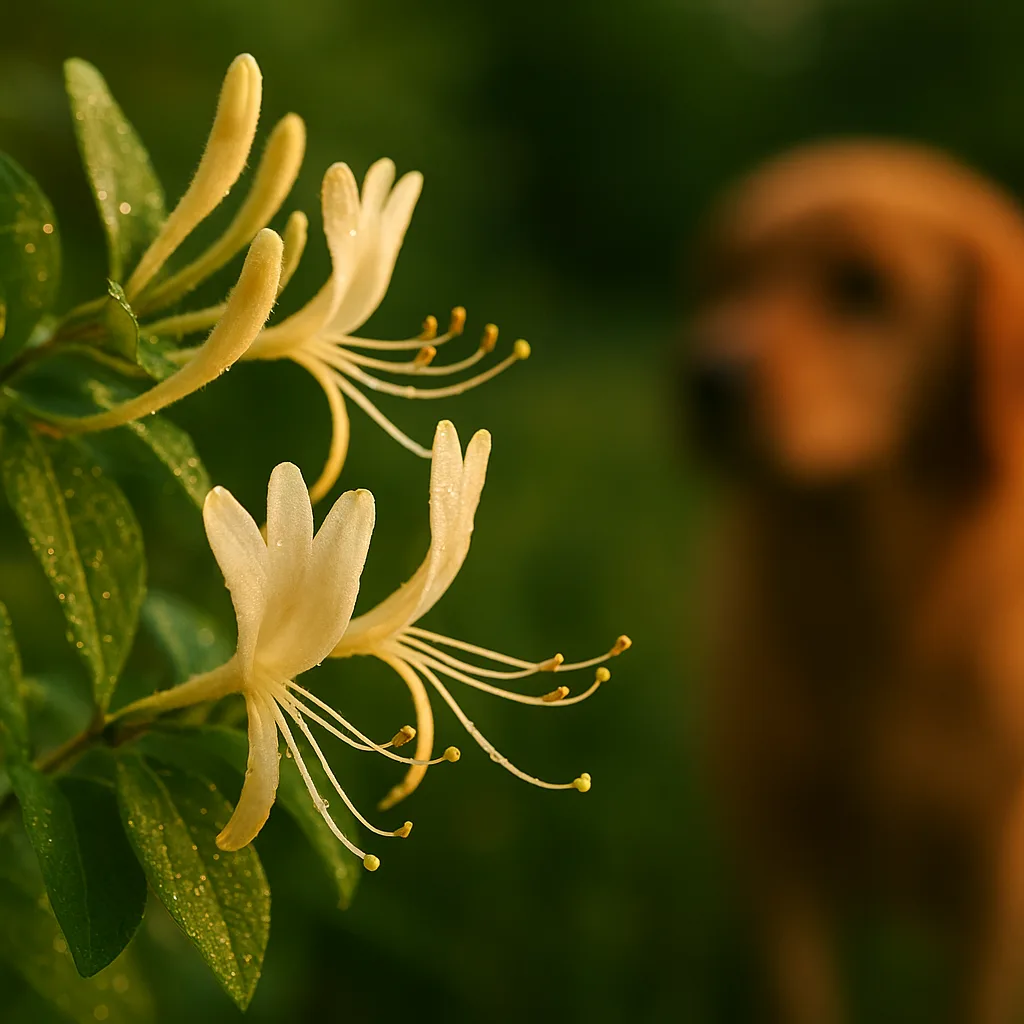
1. Quick answer: Are honeysuckles poisonous to dogs?
Short answer: most honeysuckle species (genus Lonicera) are not highly poisonous to dogs, but several species can cause gastrointestinal upset if eaten—especially berries. A few look-alike plants often called "honeysuckle" (for example, Cape honeysuckle) belong to other families and have different risk profiles. Always treat any ingestion as potentially harmful until you know the species and amount consumed.
- Most common Lonicera species: low toxicity; expect mild vomiting or diarrhea in many cases.
- Some species’ berries have caused more pronounced symptoms in small dogs or with large ingestions.
- Look-alikes (wisteria, climbing hydrangea, Cape honeysuckle) can be more toxic—wisteria and hydrangea are known to cause stronger reactions.
2. Honeysuckle ID: visual cues you can use
Identifying the plant precisely is the first step. Honeysuckles are a diverse group; visual cues make the difference between a harmless nibble and a potential emergency.
General Lonicera traits
- Leaves: opposite arrangement (pairs on the stem), simple, typically 2–8 cm long; shape oval to lanceolate.
- Flowers: tubular or trumpet-shaped, fused petals forming 1–3+ cm long tubes; often fragrant; colors include white, yellow, pink, red.
- Berries: 5–10 mm diameter, colors vary by species — red, orange, black or blue-black.
- Growth form: woody twining vine or multi-stemmed shrub; stems often arching and may form thickets.
Practical visual checklist when your dog has eaten plant material
- Note the flower color, tubular length and fragrance.
- Check the leaves for opposite arrangement (an important distinguishing trait).
- Look at the fruit: size, color and whether it forms in clusters.
- Photograph the plant from multiple angles — apps such as Orvik can quickly match photos to species.
3. Species spotlight: risk profiles and identification
Different honeysuckle species behave differently in landscapes and differ slightly in toxicity. Below are several commonly encountered species and their key attributes relevant to dog owners.
For more on this topic, see our guide on Which Marigold Is Which? Clear Botanical IDs.
Japanese honeysuckle — Lonicera japonica
- Identification: tubular white flowers aging to yellow, fragrant; leaves 2–6 cm; flowers about 2–3 cm long.
- Habitat & range: native to East Asia; invasive across much of the eastern U.S., thriving in forests, roadsides and yards.
- Toxicity: generally considered of low toxicity to pets; ingestion usually causes mild gastric upset (vomiting, diarrhea) if any.
Amur honeysuckle — Lonicera maackii
- Identification: white tubular flowers; shiny red-orange berries (~6 mm) held in clusters; leaves 3–7 cm.
- Habitat & range: native to northeastern Asia; widely invasive in eastern North America.
- Toxicity: berries have a reputation for causing nausea and diarrhea in humans and pets; not usually life-threatening but can be unpleasant and dangerous in large quantities or for small dogs.
Trumpet honeysuckle / coral honeysuckle — Lonicera sempervirens
- Identification: tubular coral-red flowers in clusters, less invasive; flowers 2–4 cm long, attractive to hummingbirds.
- Toxicity: generally low; floral nectar is popular with pollinators and not known to cause severe poisoning in dogs, but leaves/bodies could cause GI upset if consumed in quantity.
Cape honeysuckle — Tecomaria capensis (not a true Lonicera)
- Identification: showy tubular orange-red flowers 3–5 cm long; opposite or whorled leaves; a member of Bignoniaceae (not Caprifoliaceae).
- Habitat & range: native to southern Africa; commonly used in warm-climate landscaping worldwide.
- Toxicity: often listed as low to moderate toxicity; ingestion can cause vomiting and diarrhea. Because it’s a different family, it may contain different secondary compounds — treat ingestion conservatively.
4. Look-alikes and comparisons: honeysuckle vs wisteria vs climbing hydrangea
Garden plants can be confused at a glance. Two common questions are whether wisteria or climbing hydrangea are as risky as honeysuckle. Short answer: wisteria and hydrangea are generally more concerning for dogs than most Lonicera species.
Honeysuckle (Lonicera) vs Wisteria (Wisteria sinensis / W. floribunda)
- Flowers: Honeysuckle has upright or outward-facing tubular flowers; wisteria has pendulous racemes of pea-like flowers, often purple or white, 10–30+ cm long.
- Leaves: Honeysuckle leaves opposite, simple; wisteria leaves pinnate with 7–15 leaflets, alternate on the stem.
- Toxicity: Wisteria seeds and pods contain toxins (e.g., wisterin and lectins) that commonly cause vomiting, diarrhea and weakness — cases can be more severe than typical honeysuckle ingestion.
Honeysuckle vs Climbing hydrangea (Hydrangea anomala petiolaris)
- Flowers: Hydrangea has flat clusters (corymbs or lace-cap type) of sterile showy florets around fertile flowers; not tubular.
- Leaves: Hydrangea leaves alternate, toothed, often 7–15 cm long — unlike opposite leaves of Lonicera.
- Toxicity: Hydrangea contains cyanogenic glycosides (hydrangin) that can release cyanide when plant tissue is chewed — symptoms include drooling, vomiting, difficulty breathing in larger ingestions. Usually causes mild GI upset but can be serious if large amounts ingested.
5. Symptoms to watch for and when to seek help
Observe your dog closely after ingestion. Onset and severity depend on the species, plant part eaten (flowers, leaves, berries, seeds), size of the dog and how much was consumed.
- Common mild signs (most Lonicera ingestations): drooling, vomiting, diarrhea, abdominal pain, lack of appetite — usually within 1–6 hours.
- Signs warranting immediate vet care: persistent vomiting, bloody diarrhea, severe weakness, tremors, seizures, trouble breathing, collapse.
- Specific red flags: ingestion of wisteria seeds/pods or large quantities of hydrangea leaves — these can produce more serious systemic signs.
Have these details ready when you call for help: your dog’s weight (kg or lbs), the plant species (or photos), which plant parts were eaten, how many berries/flowers/amount of plant, and the time since ingestion. Emergency numbers to keep on hand:
You may also find our article on Virginia Creeper: Safety, ID & Toxicity helpful.
- ASPCA Animal Poison Control Center: 888-426-4435
- Pet Poison Helpline: 855-764-7661
6. First aid and veterinary steps
First aid depends on timing and severity. Never induce vomiting unless instructed by a veterinarian or poison control. Here are safe steps:
- Remove access: Keep the dog away from the plant and remove remaining plant material from reach.
- Record evidence: Photograph the plant and collect a clipped sample in a sealed bag — essential for accurate ID. Apps like Orvik can often identify species from images, speeding triage.
- Call for guidance: If the dog is showing no symptoms and the plant is a low-toxicity honeysuckle, many vets advise monitoring at home. If you suspect wisteria, hydrangea, or large ingestion, call a vet or poison control immediately.
- Follow vet instructions: They may recommend bringing your dog in for decontamination, activated charcoal, IV fluids or symptomatic care depending on exposure and signs.
7. Prevention and landscape management
Reduce risk with plant choices and pet-safe landscaping practices. Prevention is easier than an emergency visit.
Looking beyond this category? Check out How to ID a Bird from a Photo.
- Know your plants: Label specimens and make a simple yard map. Use Orvik or a regional plant guide to confirm species before planting.
- Avoid high-risk species: If you have young, inquisitive dogs, consider avoiding wisteria and large hydrangeas near play areas.
- Use barriers: Trellises and fencing can limit access to vines and shrubs that fruit or shed toxic material.
- Provide safe alternatives: Offer edible herb/treat gardens (e.g., basil, rosemary, catmint) as attractive, non-toxic options for chewing.
8. Case examples and regional notes
Real-world patterns help clarify risk.
Related reading: Chinaberry Tree: Toxicity, ID & Safety Guide.
- Eastern U.S.: Amur honeysuckle (L. maackii) and Japanese honeysuckle (L. japonica) are widespread invasives; reports typically note mild GI upset in dogs after berry ingestion.
- Warm climates (California, Mediterranean, Australia): Cape honeysuckle (Tecomaria capensis) is common; accounts vary but usually describe vomiting/diarrhea rather than life-threatening signs.
- Ornamental plantings: Wisteria is frequent in mature gardens; because seeds/pods are more toxic, ingestion by puppies and small dogs has led to emergency visits for vomiting and lethargy.
When in doubt, local veterinary clinics and poison control can interpret regional plant risks more precisely. For rapid field identification to inform triage, Orvik can be a useful part of your toolkit.
Conclusion
So, is honeysuckle poisonous to dogs? In most cases common honeysuckles (Lonicera spp.) are not highly poisonous, but they can cause unpleasant gastrointestinal symptoms if eaten, particularly berries. Some look-alikes and other climbing ornamentals — notably wisteria and hydrangea — present greater risks and warrant faster veterinary attention. Identify the plant, note what parts were eaten, observe your dog for gastrointestinal or neurological signs, and call your veterinarian or a poison control hotline if you have concerns. Using visual ID tools such as Orvik and keeping quick-reference emergency numbers handy makes the difference between a monitored home-care episode and a necessary emergency visit.
Frequently Asked Questions
- Is wisteria poisonous to dogs?
- Yes. Wisteria (e.g., Wisteria sinensis) is toxic—seeds and pods are most dangerous and can cause vomiting, diarrhea, weakness. Seek veterinary advice if ingested.
- Is amur honeysuckle poisonous to dogs?
- Amur honeysuckle (Lonicera maackii) is generally low to moderately toxic; its berries can cause nausea and diarrhea, especially in small dogs or after large ingestions.
- Is cape honeysuckle poisonous to dogs?
- Cape honeysuckle (Tecomaria capensis) is not a true Lonicera and can cause vomiting and diarrhea if eaten. It’s usually not life-threatening but warrants monitoring.
- Is chinese wisteria poisonous to dogs?
- Yes. Chinese wisteria (Wisteria sinensis) contains compounds that commonly produce gastrointestinal signs and should prompt a call to your vet or poison control.
- Is climbing hydrangea poisonous to dogs?
- Climbing hydrangea contains cyanogenic glycosides; small ingestions usually cause GI upset, while large amounts can lead to more serious symptoms. Contact a vet if ingested.
- What should I do if my dog eats honeysuckle?
- Remove access, photograph and (if safe) clip a sample for ID, note amount/time and call your vet or a poison control hotline. Monitor for vomiting, diarrhea, lethargy or neurological signs.
- Can dogs drink honeysuckle nectar safely?
- Occasional licking of honeysuckle nectar is unlikely to cause harm, though some dogs may experience mild stomach upset. Observe and call your vet if symptoms occur.