
Quick answer: is milkweed poisonous?
Short answer: yes—milkweeds (genus Asclepias and close relatives) contain toxic compounds, especially cardiac glycosides (cardenolides), and can be poisonous if eaten or mishandled. For most adults casual contact is unlikely to be life-threatening, but children, pets and livestock can become ill after ingesting leaves, flowers, seeds or sap. The level of toxicity varies dramatically among species and plant parts.
Key takeaways
- Milkweed contains cardenolides (cardiac glycosides) concentrated in the milky latex.
- Symptoms from ingestion usually begin with gastrointestinal upset; large ingestions can affect the heart and nervous system.
- Not all milkweeds have identical toxicity—species like Asclepias curassavica often have higher cardenolide concentrations than A. tuberosa.
- Use tools like Orvik to identify species in the field to assess risk accurately.
What makes milkweed poisonous: chemistry and mechanism
Milkweeds produce a range of defensive chemicals. The best-known are cardenolides, a class of steroid-like cardiac glycosides that interfere with sodium-potassium ATPase in animal cells. This disruption alters heart muscle contractility and can cause arrhythmias at sufficient doses. Milkweed sap (latex) also contains other compounds—alkaloids and proteolytic enzymes—that can irritate skin and mucous membranes.
Common toxic compounds
- Cardenolides (cardiac glycosides): the main toxic class across many Asclepias species.
- Latex irritants: sticky, white sap containing proteins and secondary metabolites that can cause dermatitis and eye irritation.
- Species-specific compounds: different Asclepias species have varying profiles and concentrations of cardenolides; tropical milkweed (A. curassavica) tends to be particularly rich.
How the toxins act
- Ingestion: cardenolides are absorbed in the gut and affect cardiac cells, potentially producing nausea, vomiting, slow or irregular heartbeat, dizziness and in severe cases arrhythmia or collapse.
- Contact: latex can cause localized skin redness, itching or blisters; eye exposure may produce pain and conjunctivitis.
- Sequestration: monarch caterpillars (Danaus plexippus) and some other insects store cardenolides in their tissues, making themselves unpalatable to predators.
How poisonous is milkweed to humans and pets?
Toxicity varies by species, plant part, and the physiology of the consumer. Leaves and pods typically have the highest concentrations; seeds and roots can also be toxic. Children and pets are at higher risk due to smaller body size and curiosity-driven ingestion.
Reported clinical effects
- Minor exposures: nausea, vomiting, abdominal pain, diarrhea, drooling.
- Moderate exposures: dizziness, headache, weakness, slow or irregular pulse, low blood pressure.
- Severe exposures: cardiac arrhythmias, seizures, respiratory distress, rarely death (usually linked to large ingestions or concentrated extracts).
Who is most vulnerable?
- Children under 6 years old: smaller body mass and exploratory eating.
- Pets (dogs, cats): dogs often chew leaves and are frequently reported in veterinary cases.
- Livestock: cattle, horses and goats can be poisoned if large quantities are eaten; there are documented livestock fatalities when pastures are heavily infested.
Note: exact toxic doses for humans are not well established and depend on the species and preparation. Because of this uncertainty, assume ingestion can be medically significant and seek advice from poison control or a medical professional.
For more on this topic, see our guide on Bleeding Heart Toxicity: What You Need to Know.
Practical identification: how to recognize milkweed in the field
Correct identification is the first step in assessing risk. Milkweeds share several visual cues but species differ in size, flower form, color and habitat. Photographing a plant with an app like Orvik can help confirm species quickly.
General milkweed ID features (genus Asclepias)
- Leaves: typically opposite or whorled, simple, entire; length commonly 5–20 cm depending on species; texture from soft to leathery.
- Stem & height: perennial herbs or subshrubs 30–200 cm tall (common milkweed A. syriaca often 60–150 cm).
- Flowers: in umbels, usually star-shaped with a central corona; colors range from white and pale pink to orange, red or purple; each flower 5–15 mm across (varies).
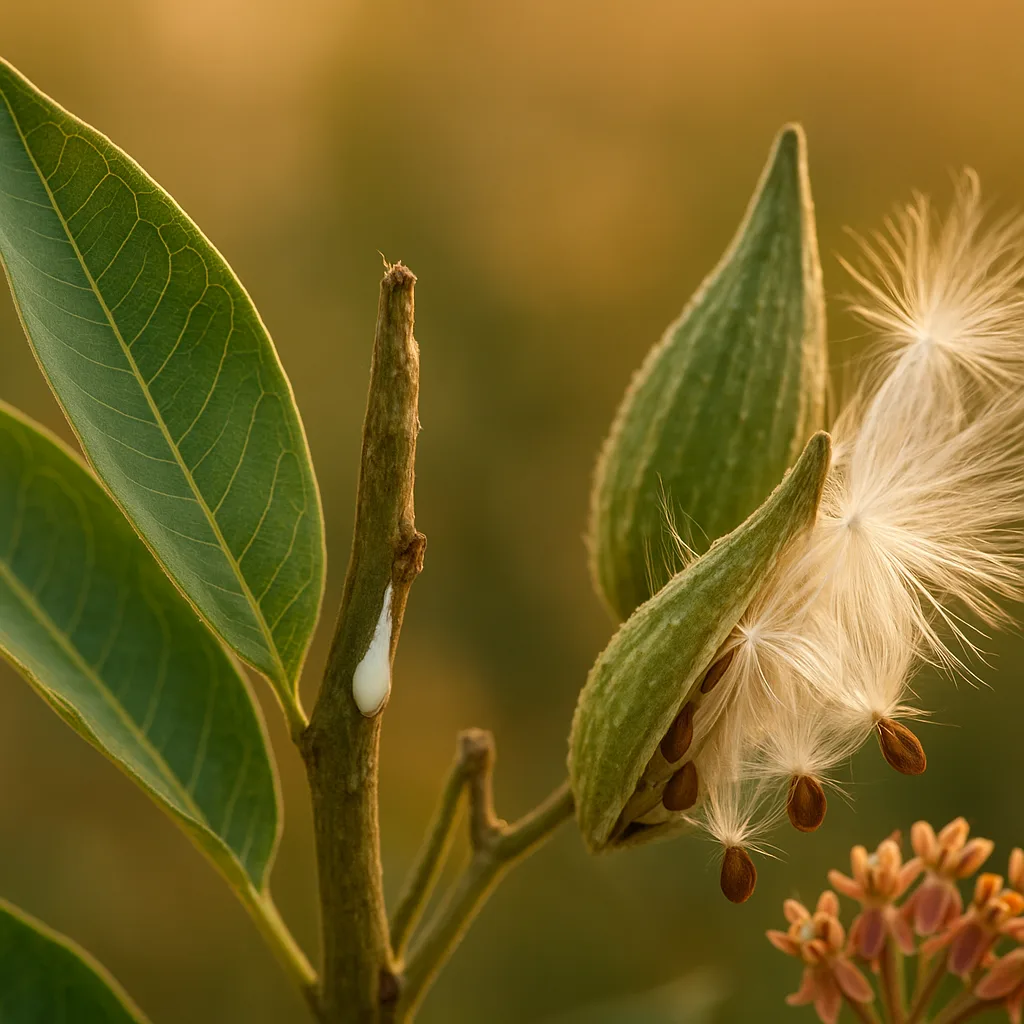
- Latex: milky, sticky sap exuded when leaves or stems are broken—classic field sign.
- Fruit: elongated follicles (pods) 4–12 cm long that split open at maturity to release seeds with silky hairs (coma) for wind dispersal.
Quick visual cues for common species
- Common milkweed (Asclepias syriaca): large round clusters of pinkish-white flowers; broad opposite leaves 7–20 cm; height 0.6–1.5 m.
- Swamp milkweed (A. incarnata): narrow lanceolate leaves 5–12 cm, clusters of rose-pink flowers on upright stems; 0.6–1.2 m tall; prefers wet soils.
- Butterfly weed (A. tuberosa): bright orange flowers in flat-topped clusters; leaves mostly alternate and narrower; lower cardenolide concentrations than some species.
- Tropical milkweed (A. curassavica): vivid red and yellow flowers, often in warm climates or gardens; known for higher cardenolide content.
Field checklist before handling
- Look for milky sap by snapping a small stem (use gloves).
- Note flower color and cluster shape—umbel vs. flat-topped arrays.
- Measure leaf length and observe arrangement (opposite vs alternate).
- Photograph flowers, leaves, stem and pods; upload to Orvik for species-level ID if uncertain.
Habitat, geographic distribution and seasonal behavior
Milkweeds are widespread across North America, with species adapted to prairies, roadsides, open woodlands and wetlands. Some species extend into Central and South America, Africa and Asia. Flowering and seed production follow predictable seasonal patterns that can influence exposure risk.
Where you'll find milkweed
- Open fields, prairies and roadsides: A. syriaca is common in temperate North America.
- Wetlands and marsh edges: A. incarnata (swamp milkweed) prefers damp soils.
- Gardens and disturbed sites: A. curassavica and cultivated species used for pollinator gardens.
Geographic notes
- Most native milkweeds are found in the contiguous United States and southern Canada; species richness is highest in central and eastern North America.
- Tropical species occur in warmer climates and may be sold for butterfly gardens outside their native range.
Seasonality
- Leaf emergence: spring to early summer (regional variation).
- Flowering: typically late spring through summer (May–August in temperate zones).
- Seed release: late summer to fall—follicles split and release seeds with silky hairs.
Safety and first aid: handling milkweed and what to do if exposed
Many gardeners and nature lovers appreciate milkweed for pollinators, but safety precautions reduce risk. The milky latex can stain and irritate; ingestion requires prompt action.
You may also find our article on Mistletoe: What to Know About Its Toxicity helpful.
Safe handling tips
- Wear nitrile or gardening gloves when cutting stems; latex can stain clothing and irritate skin.
- Avoid touching your face or eyes after handling plants; wash hands and tools with soap and water.
- Teach children not to eat wild plants and supervise pets around milkweed patches.
- If you keep milkweed in a garden for monarchs, situate plants away from play areas and livestock pastures.
First aid steps after contact
- Skin contact: wash the area with soap and water; remove contaminated clothing.
- Eye exposure: rinse with clean water for at least 15 minutes and seek medical attention if irritation persists.
- Ingestion: do not induce vomiting unless instructed by medical personnel; rinse mouth and call your local poison control center (U.S. 1-800-222-1222) or emergency services.
If you or your pet show signs of cardiac symptoms (palpitations, fainting, difficulty breathing) after exposure, seek emergency medical care immediately. For animals, contact your veterinarian or an emergency veterinary clinic.
Comparisons and lookalikes: how to tell milkweed apart from other plants
People searching "is milkweed poisonous" often worry about confusing milkweed with other toxic plants or underestimating risks. Below are comparisons with common lookalikes and with marsh marigold (Caltha palustris), which was specifically asked about.
Milkweed vs. dogbane (Apocynum spp.)
- Similarities: both have milky sap and belong to Apocynaceae family relatives; both are toxic.
- Differences: dogbane flowers are small, tubular and clustered on branched stems; leaves are opposite and usually narrower. Dogbane stems are woody at the base and do not form pods with silky seeds.
- Practical tip: look for milkweed follicles (pods) and star-shaped flowers—these are milkweed giveaways.
Milkweed vs. marsh marigold (Caltha palustris)
- Marsh marigold is not a milkweed. It is a buttercup-family plant (Ranunculaceae) found in wetlands and spring seeps.
- Toxicity: marsh marigold contains ranunculin, which becomes protoanemonin when damaged; this causes severe irritation to the mouth and GI tract and can blister skin. It is irritating and can be toxic if eaten raw.
- Visual differences: marsh marigold has glossy, round to heart-shaped leaves and bright yellow cup-shaped flowers (2–4 cm across) that appear in early spring. Milkweed has milky sap, umbel flower clusters and pods with silky-seeded follicles.
- How toxic is marsh marigold? Moderate—raw plant ingestion commonly causes burning, drooling, vomiting and diarrhea. Cooked or dried parts may be safer in traditional preparations, but avoid handling as a novice.
Common milkweed vs. butterfly weed vs. swamp milkweed
- A. syriaca: large spherical umbels, big broad leaves, pods 5–12 cm.
- A. tuberosa: bright orange flowers in flat clusters, lower milky sap, often considered less toxic but still treated with caution.
- A. incarnata: narrow leaves and elongated flower clusters on wetland margins.
When in doubt, photograph the plant and use Orvik or a botanist to confirm identification before handling or permitting access to children and animals.
You might also be interested in Mastering Visual ID: Your Photo Identifier Guide.
Why people ask “is all milkweed poisonous?” and what to conclude
Because milkweed species vary, the simple question "is all milkweed poisonous" reflects reasonable concern. The answer: most species contain toxic compounds to some degree, but concentrations vary. Some species used in butterfly gardens (e.g., A. tuberosa) typically have lower cardenolide levels than tropical milkweed (A. curassavica), but "lower" does not mean safe to eat.
Related reading: Oleander Poisoning: What You Need to Know.
Practical guidance
- Assume all milkweed species are potentially toxic and handle accordingly—wear gloves, keep out of reach of children and pets.
- If you grow milkweed for monarchs, choose regional native species and position them away from areas where people and animals routinely eat plants.
- Use identification apps like Orvik to determine which species you have and to educate family members about risks and benefits.
Conclusion
Milkweed is an ecologically valuable plant that supports pollinators, especially monarch butterflies, but it is also chemically defended and can be poisonous. The risk depends on the species, the plant part, and who is exposed. Use visual ID cues—leaf shape, flowers, pods and milky sap—to recognize milkweed, and rely on tools such as Orvik for fast species confirmation. When handling, wear protection, keep curious children and pets away, and treat any suspected ingestion seriously: contact poison control or a medical professional.
Respecting milkweed means appreciating its role in ecosystems while taking sensible precautions to keep people and animals safe.
Frequently Asked Questions
- Is milkweed poisonous to humans?
- Yes. Milkweed contains cardiac glycosides (cardenolides) and other irritants. Ingestion can cause nausea, vomiting and, in larger doses, heart and nervous system effects. Skin or eye contact with the milky sap can cause irritation.
- Is milkweed poisonous to touch?
- For most people, brief touch is unlikely to be serious, but the milky latex can irritate skin and eyes. Wear gloves when handling broken stems or pods; wash thoroughly if sap contacts skin.
- How poisonous is milkweed to pets and livestock?
- Pets (especially dogs) commonly show gastrointestinal signs after chewing leaves. Livestock can suffer more severe poisoning if they ingest large amounts; documented fatalities are associated with heavy consumption. Treat any ingestion as potentially significant and consult a vet.
- How is milkweed poisonous—what chemicals are involved?
- The primary toxic compounds are cardenolides (cardiac glycosides) that disrupt cellular ion pumps in heart cells. The plant's milky latex also contains irritant proteins and other secondary metabolites.
- Is all milkweed poisonous?
- Most milkweed species contain toxic compounds, but concentrations vary widely. Some species (e.g., <em>A. tuberosa</em>) generally have lower cardenolide levels than others (e.g., <em>A. curassavica</em>), yet all should be treated as potentially toxic.
- How poisonous is marsh marigold compared to milkweed?
- Marsh marigold (<em>Caltha palustris</em>) contains protoanemonin from ranunculin, which causes strong irritation to the mouth and GI tract and can blister skin. It is an irritant and can be toxic if eaten raw; its effects are generally different (irritation) from milkweed’s cardiac effects.
- What should I do if someone ingests milkweed?
- Rinse their mouth, remove any plant material, and call your local poison control center or emergency services. Do not induce vomiting unless instructed. Seek immediate care if there are signs of cardiac or neurological symptoms.