
When people ask "is nightshade poisonous?" they’re usually worried about attractive berries, sudden stomach upset, or a child putting something found in the yard into their mouth. Nightshade isn’t a single plant but a common name applied to several members of the Solanaceae family (and to some look‑alikes). Some are deadly poisonous, others mildly toxic, and a few—like tomatoes and petunias—are harmless in normal use. This field guide explains which nightshades are dangerous, how poisonous they are, how to recognize them in the field, and what to do if exposure happens.
What we mean by "nightshade": common species
"Nightshade" is a loose vernacular label. Below are the species most often meant when people ask whether nightshade is poisonous.
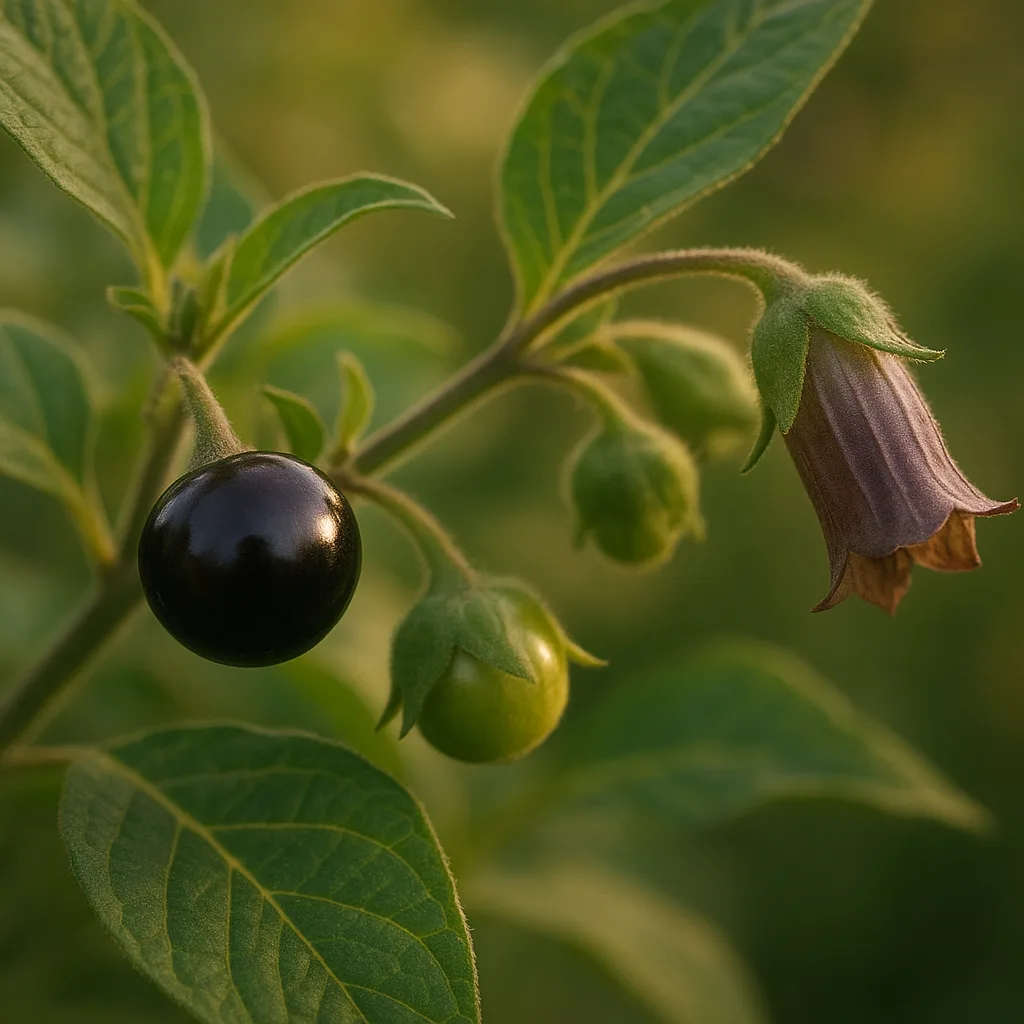
- Deadly nightshade (Atropa belladonna) – classic "belladonna," highly toxic; shiny black berries, bell‑shaped flowers.
- Black nightshade (Solanum nigrum) – small black berries, variable toxicity; sometimes used in folk medicine.
- Bittersweet nightshade (Solanum dulcamara) – vine with red berries; mildly to moderately toxic.
- Jimsonweed / thorn apple (Datura stramonium) – large trumpet flowers and spiny seed pods; contains strong tropane alkaloids.
- Mandrake (Mandragora officinarum) – thick, forked root; historically famous, contains tropanes.
- Carolina jessamine (Gelsemium sempervirens) – not a Solanaceae member but often confused with ornamental vines; highly toxic.
How poisonous is nightshade? Understanding toxicity
Toxicity varies by species, plant part (berries, leaves, seeds, roots), plant age, season, and individual susceptibility. The common toxic compounds are:
- Tropane alkaloids (atropine, scopolamine, hyoscyamine) — abundant in Atropa, Datura, Mandragora; cause anticholinergic syndrome.
- Solanine and glycoalkaloids — found in some Solanum species (e.g., green potatoes, some black nightshade varieties).
- Gelsemine and gelsemicine — present in Carolina jessamine; potent neurotoxins.
What does that mean in practical terms?
- Some species (Atropa belladonna, Datura spp., Mandragora) can cause severe or fatal poisoning from small amounts—especially in children or pets.
- Others (black nightshade, bittersweet nightshade) are variable: ripe berries of some varieties are mildly toxic; unripe berries or large quantities can be dangerous.
- Toxicity can be rapid. Symptoms may begin within 15–60 minutes of ingestion for tropane alkaloids and may progress over hours.
Common clinical signs of tropane alkaloid poisoning include:
For more on this topic, see our guide on Field Guide to Flower Names.
- Dry mouth, flushed skin, dilated pupils (mydriasis)
- Rapid heartbeat (tachycardia), elevated body temperature
- Confusion, hallucinations, agitation, seizures
- Respiratory distress, coma in severe cases
Practical identification: visual, size, shape and texture cues
Identification is the first line of defense. Here are clear visual cues for the most commonly encountered nightshades.
Deadly nightshade (Atropa belladonna)
- Leaves: alternate, elliptical, 6–18 cm long, smooth margin; soft texture.
- Flowers: bell‑shaped, 2–3 cm long, dull purple to greenish‑purple, nodding.
- Berries: shiny, jet‑black, ~1 cm diameter, usually solitary in leaf axils.
- Habit: upright herbaceous perennial 0.5–1.5 m tall, prefers shade or woodland edges.
Black nightshade (Solanum nigrum)
- Leaves: alternate, 3–9 cm long, sometimes slightly lobed; surface smooth or slightly hairy.
- Flowers: small white, star‑shaped, 5–8 mm across, in loose clusters.
- Berries: green when unripe, turning black when ripe, 5–8 mm diameter; in clusters of several.
- Habit: low, sprawling annual or short‑lived perennial, often in disturbed ground.
Bittersweet nightshade (Solanum dulcamara)
- Leaves: ovate with one or two lobes near the base, 2–8 cm long; climbing vine.
- Flowers: small purple tubular with yellow centres, 1–2 cm long.
- Berries: glossy red-orange when ripe, 6–10 mm diameter, in clusters.
- Habit: twining vine found on fences, hedgerows, streambanks.
Jimsonweed (Datura stramonium)
- Leaves: large, coarsely toothed, 7–20 cm long.
- Flowers: large trumpet shape, 10–25 cm long, white to purple, often open at night.
- Seed pods: egg‑shaped, spiny, 4–10 cm long; contain hundreds of brown seeds (3–4 mm each).
- Habit: upright annual, 0.5–2 m tall, common in disturbed soils.
Carolina jessamine (Gelsemium sempervirens) — not a true nightshade
- Leaves: opposite, evergreen/semievergreen, 3–7 cm long, glossy.
- Flowers: tubular, bright yellow, 2–3 cm long, fragrant in spring.
- Berries: not typical berry clusters; seeds in pods.
- Habit: woody, twining vine used in ornamentals; found in southern and eastern USA.
Tip: use multiple cues—flower shape, berry arrangement (solitary vs clusters), and leaf arrangement (alternate vs opposite)—to confirm an ID. Tools like Orvik let you photograph a plant and get visual comparison and identification help in the field.
Habitat, geographic distribution and seasonal behavior
Nightshade species have wide distributions but specific preferences:
- Atropa belladonna: Native to Europe, North Africa and Western Asia; naturalized in parts of North America. Prefers shady woodlands, hedgerows and disturbed forest edges. Flowers late spring to mid‑summer; berries ripen in mid to late summer.
- Solanum nigrum: Cosmopolitan weed; common in temperate and tropical regions. Found in gardens, roadsides and waste places. Flowers and berries throughout summer and into fall.
- Solanum dulcamara: Native to Eurasia, introduced in North America. Likes moist ground near streams, fences and hedges. Berries ripen late summer to autumn.
- Datura spp.: Found worldwide as both native and introduced species, especially in warm temperate regions. Germinates in disturbed soils; flowers in summer and fall.
- Gelsemium sempervirens: Southeastern U.S., common in woodlands, thickets and as a cultivated ornamental. Blooms in early spring.
Is nightshade poisonous to touch? Skin exposure and dermal risk
Most nightshades are not dangerous through simple skin contact. The main risk is ingestion of toxins, not casual touching. That said:
You may also find our article on Identify Any Plant: Field Guide & Expert Tips helpful.
- Dermal irritation: Some species (especially fresh sap from Datura or broken plant parts) can irritate skin or eyes. Wear gloves when handling unknown plants.
- Absorption: Tropane alkaloids are poorly absorbed through intact skin; systemic poisoning from mere touch is rare. However, mucous membranes (eyes, mouth) are vulnerable—rubbing your eyes after handling berries can transfer toxins.
- Open wounds: If you have cuts, broken skin, or heavy prolonged contact (e.g., sap on a wound), the risk increases. Clean wounds promptly and seek medical advice.
Specific to deadly nightshade: scientific and clinical experience indicate that touching berries or leaves will not usually produce systemic symptoms. The main danger is swallowing berries or applying crushed material to mucous membranes or open wounds.
First aid and what to do in suspected poisoning
If you suspect someone (child, adult, pet) has ingested or had significant exposure to a nightshade:
- Remove any remaining plant material from the mouth or skin and rinse thoroughly with water.
- Call emergency services or your regional poison control center immediately. In the U.S. call 1‑800‑222‑1222; international numbers vary.
- Do not induce vomiting unless instructed by a medical professional. Some plant toxins make induced vomiting dangerous.
- Note the plant: take photos (fruit, leaves, flowers, habit) and, if safe, bring a sample in a sealed bag to the hospital for identification. Apps like Orvik can speed identification by analyzing your photo and offering likely matches to show clinicians.
- Monitor vitals: watch breathing, level of consciousness, and seizures. If the victim is unconscious and breathing, place them in the recovery position while help arrives.
Medical treatment for severe anticholinergic poisoning (from tropane alkaloids) may include activated charcoal (if within a short time of ingestion), supportive care, benzodiazepines for seizures or agitation, and in some cases an antidote (physostigmine) administered by a physician. Hospital care is critical in moderate to severe cases.
You might also be interested in How to Identify Any Rock in the Field.
Key comparisons: how to tell similar species apart
People often confuse species that look superficially similar. Here are quick diagnostic comparisons.
Related reading: Mastering Plant ID with AI: A Field Guide.
Belladonna (Atropa belladonna) vs Black nightshade (Solanum nigrum)
- Belladonna berries: solitary, glossy black, ~1 cm diameter; Black nightshade: small clusters of berries, 5–8 mm, often smaller and less glossy.
- Belladonna flowers: bell‑shaped, purple; Black nightshade: small, white, star‑shaped flowers.
- Leaf arrangement: Belladonna leaves are larger and alternate; black nightshade leaves are smaller and may show more variation.
Datura (Jimsonweed) vs Deadly nightshade
- Datura: very large tubular/trumpet flowers (10–25 cm), spiny seed pods; Datura is distinctive and hard to confuse with belladonna.
- Belladonna: bell‑shaped, nodding flowers and single black berries—no spiny pods.
Carolina jessamine (Gelsemium) vs Bittersweet nightshade
- Leaf arrangement: Carolina jessamine has opposite leaves; bittersweet nightshade has alternate leaves—this is a fast way to tell woody jessamine vines from Solanum vines.
- Flowers: Carolina jessamine flowers are tubular, bright yellow and fragrant; bittersweet nightshade flowers are purple with a yellow centre.
When in doubt, photograph multiple features—leaves (both sides), arrangement on stems, flowers (close‑ups), fruit, and overall habit—and use an identification tool like Orvik to compare images with verified herbarium specimens.
Preventing exposure: practical tips for families, gardeners, and pet owners
Prevention is usually straightforward and highly effective.
- Teach children not to eat wild berries or plants. Supervise young children near wild areas.
- Remove poisonous plants from yards where small children or pets play. Pull seedlings before plants set fruit.
- Wear gloves when handling unknown plants, and wash hands before eating or touching your face.
- Label garden plants, especially ornamental vines and shrubs that could be mistaken for edible species.
- Use Orvik to photograph and confirm identification before removing or exposing plants—accurate ID helps prioritize removal and medical care if necessary.
Conclusion
So, is nightshade poisonous? Yes—some nightshades (notably Atropa belladonna, Datura spp., and mandrake) are highly toxic and potentially fatal if ingested. Others (black nightshade, bittersweet nightshade) are variably toxic and should be treated with caution, especially around children and pets. Skin contact rarely causes systemic poisoning but can irritate and transfer toxins to the mouth or eyes. Learn to identify the local species, use photographic identification tools like Orvik for quick verification, and call poison control immediately in suspected exposure. With identification, common sense, and preparedness, most nightshade encounters can be managed safely.
Frequently Asked Questions
- Is belladonna poisonous?
- Yes. Atropa belladonna contains tropane alkaloids (atropine, scopolamine, hyoscyamine) that can cause severe anticholinergic poisoning. Berries and leaves are particularly dangerous.
- How poisonous is nightshade—can a few berries kill you?
- Toxicity varies by species and dose. Highly toxic species like belladonna and Datura can cause severe poisoning from a few berries or seeds—especially in children and pets. Treat any ingestion as potentially serious and seek medical help.
- Is deadly nightshade poisonous to touch?
- Casual skin contact rarely causes systemic poisoning. The main risk is transferring plant sap to your mouth or eyes or contact with broken skin. Wear gloves and wash hands after handling.
- Is datura poisonous?
- Yes. Datura species contain strong tropane alkaloids; all parts of the plant are toxic and can cause hallucinations, seizures, respiratory failure, and death.
- Is Carolina jessamine poisonous?
- Yes. Gelsemium sempervirens contains potent neurotoxins and is dangerous if ingested. It is not a true nightshade but is often mistaken for ornamental vines.
- How quickly do symptoms appear after ingestion?
- Symptoms from tropane alkaloids often start within 15–60 minutes; other plant toxins may take longer. Immediate medical evaluation is recommended after any suspected ingestion.
- Can pets be poisoned by nightshade?
- Yes. Dogs, cats, and livestock can suffer poisoning with symptoms like drooling, vomiting, disorientation, seizures and respiratory distress. Contact a veterinarian or animal poison control center right away.
- How can Orvik help with nightshade identification?
- Orvik lets you photograph plants and compares visual features to verified references, helping you confirm whether a plant is a dangerous nightshade and assisting clinicians in exposure cases.