
Quick answer: is wisteria poisonous?
Short answer: yes — parts of wisteria are poisonous if eaten. Seeds and seed pods are the most commonly cited hazards. In most human cases the effects are gastrointestinal (nausea, vomiting, diarrhea, abdominal pain) and rarely life-threatening; however, children and pets who ingest many seeds may need medical attention. Contact reactions are uncommon but possible in sensitive people.
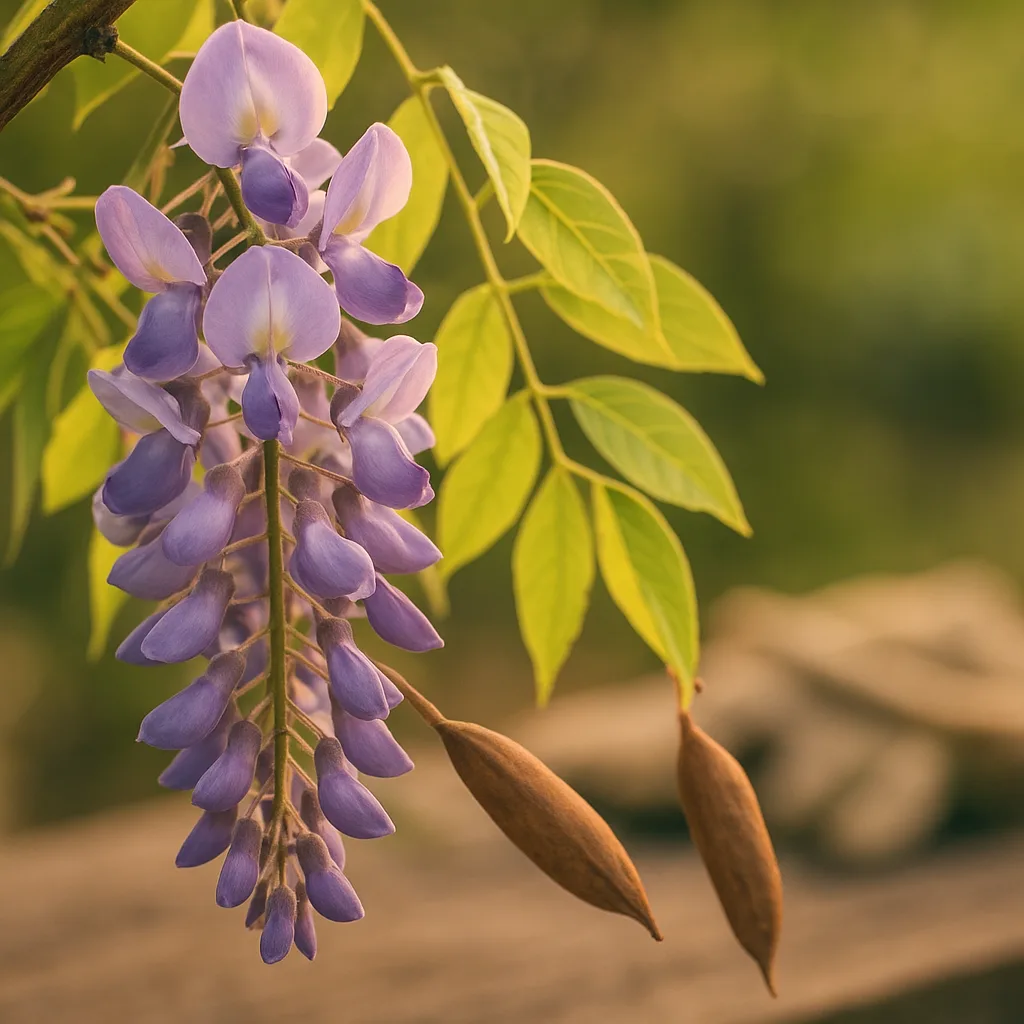
- Main toxin locations: seeds and pods (ripe and unripe)
- Typical symptoms: vomiting, diarrhea, abdominal cramps, dizziness
- Fatalities: extremely rare; most cases are self-limiting
- Practical step: do not ingest; keep seeds away from children and pets
What parts of wisteria are toxic and why
Chemistry and suspected toxins
Wisteria (genus Wisteria) contains biologically active compounds — notably lectins and certain glycosides — that can irritate the gastrointestinal tract when consumed. Horticultural literature often refers to the principal compound family as "wisteria lectins" (not a single standardized molecule across all species). These molecules bind to cell membranes and can cause nausea and vomiting. Because chemical profiles vary by species (Wisteria sinensis, W. floribunda, W. frutescens, W. brachybotrys), toxicity can vary in strength.
Which parts are most dangerous?
- Seeds — small, bean-like seeds inside pods are the most commonly implicated in poisoning incidents. A single seed may cause mild symptoms in adults; multiple seeds or seeds eaten by children can cause stronger reactions.
- Pods — the fuzzy green pods that follow flowers contain the seeds and may also be irritating if chewed or ingested.
- Leaves and flowers — generally less toxic than seeds but still contain the same compound families; ingestion can cause gastrointestinal upset.
- Sap and handling — not known to be a strong dermal toxin, but contact with sap can cause skin irritation or dermatitis in susceptible individuals.
Symptoms, timing, and medical guidance
What to expect after ingestion
- Onset: symptoms usually begin within 30 minutes to a few hours of eating seeds or pods.
- Common symptoms: nausea, vomiting, abdominal pain, diarrhea, dizziness, weakness.
- Less common: low-grade fever, increased salivation, or mild neurological symptoms (rare).
When to seek medical help
- If a child has eaten seeds or pods, call your local poison control center or emergency services immediately.
- If an adult has eaten many seeds and experiences repeated vomiting, dehydration, severe abdominal pain, or neurologic symptoms, seek urgent care.
- Bring a sample of the plant (photo or the actual seed/pod) to the ER if possible. Tools such as Orvik can help you identify the species and provide immediate reference information to clinicians.
Identification: how to visually tell wisteria
Identification helps answer the real question behind "is wisteria poisonous": which plant am I looking at and how likely is it to cause harm? Below are practical, field-tested visual cues.
For more on this topic, see our guide on Mistletoe: What to Know About Its Toxicity.
Key visual features
- Flowers: Pea-shaped, fragrant, arranged in pendulous racemes (clusters). Length varies by species—Wisteria sinensis typically 10–25 cm (4–10 in); W. floribunda often 20–45 cm (8–18 in).
- Flower colors: Commonly violet-blue or lilac; can be pink, white, or nearly deep purple.
- Leaves: Pinnate (compound) leaves with 7–19 leaflets in many species; individual leaflets usually 2–7 cm long, ovate to lanceolate.
- Seed pods: Fuzzy, bean-like pods 4–10 cm (1.5–4 in) long that ripen to brown and split open in autumn to release black seeds.
- Growth habit: Woody twining vine or climbing shrub, often forming thick stems up to 10–20 cm diameter on older plants; bark becomes furrowed with age.
Species notes (helpful ID pointers)
- Wisteria sinensis (Chinese wisteria) — racemes 10–25 cm, flowers often appearing before or with leaf-out in spring, intensely fragrant. Native to China; widely planted in temperate regions.
- Wisteria floribunda (Japanese wisteria) — racemes can reach 20–45 cm or longer, sometimes cascading 50 cm+; flowers may open gradually along the raceme.
- Wisteria frutescens (American wisteria) — racemes shorter (5–15 cm), less pendulous; generally more tolerant of wet soils and lower hardiness zones; blooms later than Asian species.
- Wisteria brachybotrys — similar to W. floribunda but with shorter clusters and often densely hairy calyces and seed pods.
Habitat, geographical distribution, and seasonal behavior
Where wisteria grows
Wisteria species are native to East Asia (China and Japan) and the southeastern United States. They thrive in temperate climates and have been widely introduced as ornamentals across North America, Europe, Australia, and parts of New Zealand.
- Common habitats: riparian edges, forest margins, open woodlands, roadsides, fences, and garden structures (arbors, pergolas).
- Soil and light: favors well-drained, fertile soils and full sun for best flowering but tolerates partial shade.
- Hardiness: W. sinensis and W. floribunda typically hardy in USDA zones 5–9; W. frutescens in zones 6–9 and more tolerant of heat and humidity.
Seasonal cycle
- Spring: major flowering period (April–May in temperate Northern Hemisphere). Flowers often appear before full leaf development in W. sinensis.
- Summer: flowers fade; pods develop. Leaves remain through summer and into autumn.
- Autumn: pods mature and dry, turning brown and splitting to release seeds. This is when the seed hazard is most visible.
- Winter: deciduous species drop leaves; woody structure and seed pods remain visible.
Safety and handling: gardeners, children, and pets
Safe handling tips
- Wear gloves and long sleeves when pruning or handling seed pods to reduce the chance of skin irritation.
- Dispose of pods and seeds in secured garden waste; do not leave pods where children or pets can reach them.
- Mark or remove plants near play areas where curious children could sample seeds.
- Label plants in shared gardens; use a quick ID tool like Orvik when uncertain about species or look-alikes.
First aid and emergency steps
- If skin contact causes irritation: wash with soap and water, remove contaminated clothing, and monitor for rash. Seek dermatological care for persistent reactions.
- If ingested: do not induce vomiting unless instructed by a poison control professional. Rinse the mouth and provide water if the person is fully conscious.
- Contact your local poison control center (in the U.S., 1-800-222-1222) or emergency services if symptoms are moderate to severe.
- Bring a photo or sample of the plant; tools such as Orvik can help produce an identification image and a quick toxicity summary for clinicians.
Comparisons: Chinese vs American vs Japanese wisteria — and wisteria vs jasmine
Chinese (W. sinensis) vs Japanese (W. floribunda) vs American (W. frutescens)
- Flower clusters: W. sinensis: 10–25 cm; W. floribunda: 20–45+ cm (longer, showier); W. frutescens: shorter, 5–15 cm.
- Bloom timing: W. sinensis often blooms earlier and may flower before full leaf-out; W. frutescens blooms later and is less likely to overwhelm supports with vigorous twining.
- Invasiveness: W. sinensis and W. floribunda can be invasive outside their native ranges, sprouting from roots and establishing in the wild. W. frutescens is generally less aggressive.
Wisteria vs Jasmine: how to tell them apart
People often confuse wisteria with jasmine at a glance because both can be climbing, fragrant, and found on arbors. They are botanically distinct and have different toxicity profiles.
You may also find our article on Virginia Creeper: Safety, ID & Toxicity helpful.
- Flower shape: Wisteria flowers are pea-shaped (Fabaceae family) in elongated drooping racemes. Jasmine flowers are star-shaped or tubular and are borne singly or in small clusters.
- Leaves: Wisteria has compound pinnate leaves; most Jasminum species have simple, opposite leaves (sometimes pinnate in a few species).
- Growth habit: Wisteria vines twine and develop woody stems; many jasmines are softer-stemmed climbers or shrubs.
- Toxicity: Most common jasmine species (genus Jasminum) are not considered highly poisonous to humans but can cause mild GI upset if eaten. Contrast: wisteria seeds are recognized as clearly poisonous.
Wisteria and animals: pets, livestock, and wildlife
Risks to pets
- Dogs and cats: ingestion of pods or seeds can cause vomiting, diarrhea, and lethargy. Severity usually correlates with quantity consumed and animal size.
- Birds: some birds may crack seeds, but significant toxicity cases are less commonly reported; however, avoid deliberate feeding of wild birds with unfamiliar seeds.
Livestock considerations
Large livestock (cattle, horses) rarely suffer severe poisoning from wisteria because they seldom consume ornamental vines in quantity. However, when forage is limited or plants are mixed into hay, grazing animals may sample pods; monitor for digestive upset. If you suspect livestock poisoning, consult a large-animal veterinarian promptly.
Preventive actions for pet owners and farmers
- Remove fallen pods from yards and runs promptly.
- Train pets to avoid plant material, and supervise animals around wisteria in bloom and pod stages.
- Replace planting near kennels or pastures with non-toxic ornamentals if pets or young livestock frequent the area.
Using modern tools for identification and safety (including Orvik)
When you find an unfamiliar vine or are unsure whether a plant in your yard is wisteria, quick identification can reduce risk. Smartphone apps and image recognition tools are now reliable first steps. Orvik, for example, uses AI-powered visual identification to differentiate species and can flag common toxic plants — helping you confirm whether that vine with hanging purple racemes is Wisteria sinensis or a harmless look-alike.
Looking beyond this category? Check out Mastering Visual ID: Your Photo Identifier Guide.
Related reading: Milkweed and Toxicity: What You Need to Know.
- Take a clear photo of flowers (or pods if out of season) and leaves, and run it through an identification app like Orvik.
- Review the app’s notes on toxicity and recommended precautions — then remove or secure the plant if necessary.
- For medical incidents, provide the app’s identification result (screenshot) to health professionals to speed diagnosis.
Conclusion: practical takeaway for gardeners, parents, and pet owners
Wisteria is a stunning ornamental with a clear caveat: do not eat the seeds, and handle pods with caution. While most exposures lead only to temporary gastrointestinal upset, children and pets are at higher risk and should not have access to seed pods or fallen material. Learn to identify wisteria visually (compound leaves, pendulous pea-like racemes, fuzzy pods), remove or secure pods in autumn, and use modern identification tools such as Orvik to confirm species quickly when uncertain. Treat exposures seriously — rinse, monitor, and contact poison control or a veterinarian if symptoms progress.
Understanding what part of the plant is dangerous, how to spot it, and what to do in an emergency answers the real concern behind "is wisteria poisonous" — and empowers you to enjoy its beauty without unnecessary risk.
Frequently Asked Questions
- Is Chinese wisteria poisonous?
- Yes. Chinese wisteria (Wisteria sinensis) contains toxic seeds and pods that can cause gastrointestinal upset if eaten. Symptoms are usually nausea, vomiting, and diarrhea.
- Is wisteria poisonous to touch?
- Not typically. Skin contact rarely causes severe reactions, but sap or crushed plant material can cause mild dermatitis in sensitive people. Wear gloves when handling.
- Is wisteria poisonous to humans?
- Parts of wisteria are poisonous to humans, especially seeds and pods. Most adult exposures cause temporary GI symptoms; children who ingest seeds should receive medical attention.
- Is jasmine plant poisonous?
- Most common Jasminum species are not considered highly poisonous to humans, though ingestion can cause mild digestive upset. Always check the specific species before assuming safety.
- What should I do if my child ate wisteria seeds?
- Rinse the mouth, do not induce vomiting unless instructed, and call your local poison control center or emergency services immediately. Take a photo or sample of the plant if possible.
- Are wisteria seeds deadly?
- Deaths from wisteria ingestion are extremely rare. Seeds can cause significant gastrointestinal distress and dehydration in large amounts, particularly in children and small pets.
- How can I identify wisteria quickly?
- Look for pendulous racemes of pea-shaped flowers (purple, pink, white), pinnate leaves with many leaflets, and fuzzy bean-like pods in late summer/autumn. Apps like Orvik can help confirm identification from a photo.
- Can pets die from eating wisteria?
- Severe outcomes are uncommon but possible if a pet eats large quantities of seeds or pods. Veterinary care is recommended for repeated vomiting, lethargy, or signs of distress.