
Introduction: What people mean by “jasmine name”
When someone searches for "jasmine name" they are usually asking one (or more) of three things: the botanical name of the plant, the etymology and meaning of the common name, or practical identification guidance for a flower they’ve spotted. This article answers all three with field-ready detail: botanical nomenclature, cultural meaning, clear visual cues, look-alikes, and practical notes on where and when jasmines bloom. If you need to confirm a sighting, tools such as Orvik can help by matching photos to species and supplementing these ID cues.
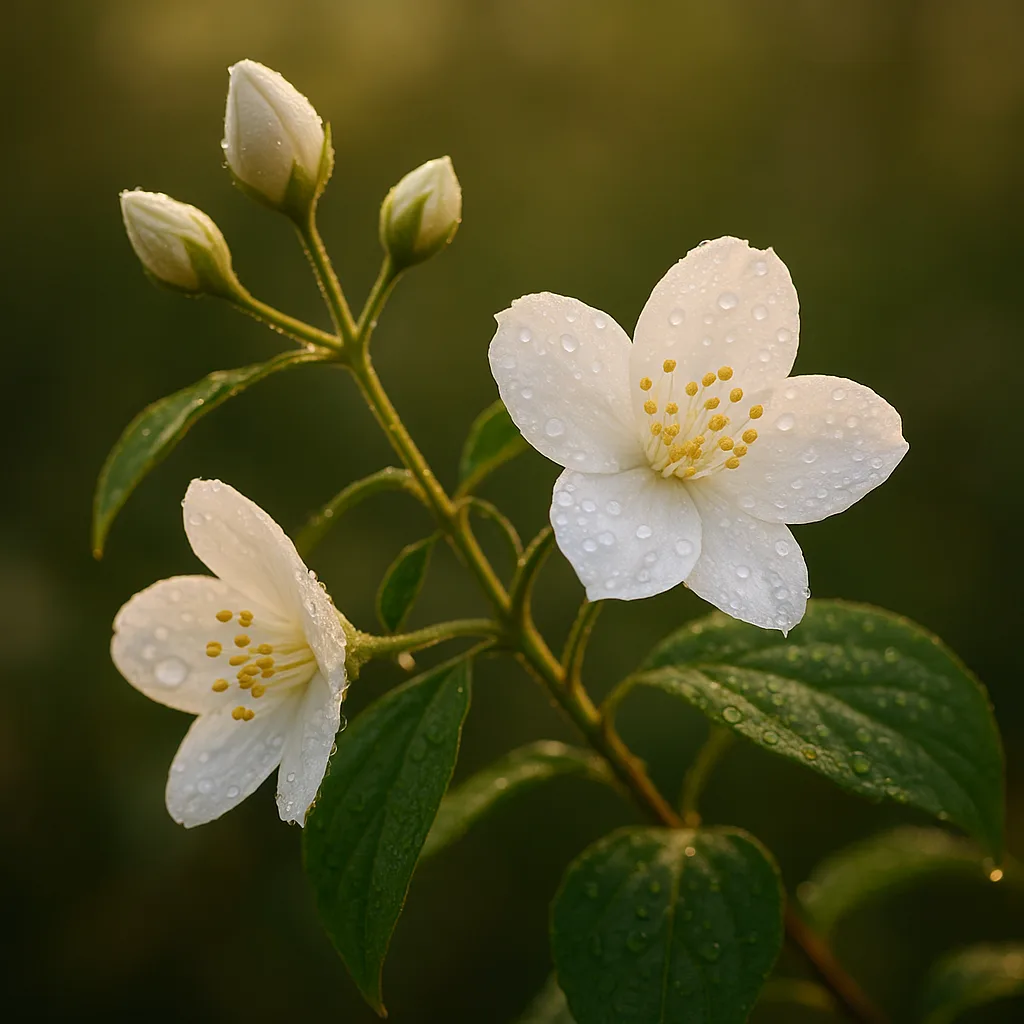
- Questions covered: botanical name, name meaning, identification tips.
- Related comparisons: geranium (Pelargonium/Geranium) and gerbera (Gerbera).
- Practical tools: photography tips and Orvik recommendations for accurate ID.
Botanical name of jasmine — scientific classification
Jasmine refers to plants in the genus Jasminum, family Oleaceae. There are roughly 200–300 species of Jasminum, ranging from deciduous shrubs to evergreen climbers and small trees.
- Genus: Jasminum
- Family: Oleaceae
- Common species and botanical names: Jasminum officinale (common jasmine), Jasminum sambac (Arabian/poet's jasmine), Jasminum polyanthum (pink jasmine), Jasminum nudiflorum (winter jasmine).
How botanical names work
Botanical names follow the binomial system: genus + species (for example, Jasminum sambac). Hybrids and cultivars carry additional designations, e.g., Jasminum × grandiflorum for some garden crosses. When someone asks “botanical name of jasmine,” they’re usually seeking the genus (Jasminum) and the specific epithet of the species in question.
Name meaning and cultural significance of jasmine
The common name “jasmine” comes from Persian yashmīn (یاسمین) through Arabic and Late Latin; linguistically it reflects the plant’s long history across Asia and the Mediterranean. The name carries rich cultural meanings in many regions.
- Meaning: Typically associated with purity, love, beauty, and sensuality in literature and perfume traditions.
- Cultural uses: Wedding garlands in South Asia (Jasminum sambac), perfumery (essential oils from several Jasminum species), and tea scenting (jasmine-scented teas often use J. sambac or J. grandiflorum).
- Symbolism: National flower in countries like Pakistan (J. officinale/ambiance), and important in Southeast Asian rituals.
Given names and language use
“Jasmine” and variants (Yasmin, Yasemin, Jazmín) are popular female given names worldwide. The botanical and cultural histories both inform why the name suggests fragrance and beauty.
For more on this topic, see our guide on Red Spider Lilies: Meaning & ID Guide.
Visual identification: how to tell a jasmine
Field identification relies on multiple visual and sensory cues: flower shape, petal number, color, scent strength, leaf arrangement, and growth habit. Below are practical, measurable cues you can use in the field or garden.
- Flower size: typically 1–3 cm across for small, single jasmines; some species and cultivated forms have flowers up to 3–5 cm in diameter for larger-flowered types.
- Petal count and shape: many jasmines have 5–9 lobes (true jasmine flowers usually have 5 petals fused at the base or 5 distinct petals in double forms).
- Color: most wild jasmines are white or cream; some species (e.g., J. polyanthum) have pale pink buds that open white.
- Scent: strongly fragrant at night in many species (nocturnal fragrance), though some have daytime scent.
- Leaf arrangement: opposite leaves (paired at nodes) or pinnate leaves depending on species; leaflets typically 1–6 cm long with entire or slightly toothed margins.
- Growth habit: woody climbing vine (liana) up to 3–6 m, columnar shrub to 1–3 m, or groundcover/deciduous shrub in some species like J. nudiflorum.
Key field cues to photograph
- Close-up of an open flower (showing petal count and throat).
- Side view of flower cluster (inflorescence) and unopened buds (color can be diagnostic).
- Leaf arrangement on the stem (opposite vs alternate) and any pinnate structure.
- Overall habit: vine climbing on a structure versus an upright shrub.
Common species ID notes
- Jasminum officinale (common/poet's jasmine): white, star-shaped flowers 2–3 cm, intensely fragrant at night; pinnate leaves with 5–9 leaflets; climbing vine often 2–4 m.
- Jasminum sambac (Arabian/Arabian jasmine, 'Mogra'): small, waxy, intensely fragrant white flowers often double in cultivated forms; evergreen shrub or sprawling vine; used for jasmine tea and garlands.
- Jasminum polyanthum (pink jasmine): clusters of flowers; buds pink, open white; long cascading stems—popular as a greenhouse/training vine.
- Jasminum nudiflorum (winter jasmine): bright yellow tubular flowers up to 3 cm that bloom in winter; deciduous with simple leaves; often mistaken for forsythia at a glance.
Jasmine vs lookalikes: how to tell them apart
Many fragrant white flowers can be mistaken for jasmine. Below are comparisons to common lookalikes and garden plants—this section also addresses queries about geranium and gerbera botanical names.
- Key differences rely on leaf arrangement (opposite vs alternate), petal structure, disk presence (as in daisies), and scent timing.
Jasmine vs Mock Orange (Philadelphus)
- Mock orange flowers are larger (3–5 cm), with 4 petals and multiple visible stamens; leaves are alternate (not opposite).
- Scent is orange-blossom like and pronounced during the day; mock orange is a shrub, not a climber.
Jasmine vs Honeysuckle (Lonicera)
- Honeysuckle flowers are tubular and often two-lipped with a visible corolla tube; leaves are opposite, but the flower shape and twin-lipped opening differ from simple star-shaped jasmine flowers.
Jasmine vs Geranium / Pelargonium (addressing geranium botanical name queries)
Many gardeners call Pelargonium species “geraniums,” which causes confusion. Important botanical clarifications:
You may also find our article on Chrysanthemum Botany: Names, ID & Seasonality helpful.
- True geraniums belong to the genus Geranium (family Geraniaceae), often called cranesbills; they have five-petaled flowers and lobed or divided leaves.
- Garden "geraniums" are usually Pelargonium spp. (Pelargonium × hortorum, Pelargonium graveolens, etc.). Pelargoniums have asymmetric flowers, aromatic foliage, and are tender perennials/annuals depending on climate.
- Geranium botanical name examples: Geranium pratense (meadow cranesbill), while geranium latin name for garden forms is often Pelargonium × hortorum or Pelargonium zonale.
- Visual cues: pelargonium/geranium foliage is broad and often round with lobes; flowers are dainty clusters of 2–5 cm, not fragrant jasmine-type clusters.
Jasmine vs Gerbera (botanical name of gerbera)
- Gerbera daisies are in the genus Gerbera (family Asteraceae), notable species include Gerbera jamesonii and hybrids; they are daisy-like with large composite flower heads 5–12 cm across and a central disk of disk florets.
- Gerberas are vividly colored (reds, pinks, yellows, oranges) and have no jasmine-like fragrance or tubular star shape; leaves are basal rosettes or long petioles, not opposite on stems.
Habitat, distribution, and seasonal behavior
Jasmines originate largely from tropical and warm temperate regions of Eurasia, Australasia, and Africa. Their distribution and flowering times depend on species and climate.
- Native ranges: Many species native to South and Southeast Asia (e.g., J. sambac), the Mediterranean (e.g., J. officinale naturalized), and temperate Asia (e.g., J. nudiflorum).
- USDA hardiness: Most jasmines grow in USDA zones 7–11; deciduous species like J. nudiflorum tolerate cooler zones (down to zone 6 in sheltered sites), while J. sambac is tropical/subtropical.
- Bloom seasons: summer to early autumn is common for many species; winter-blooming exceptions include J. nudiflorum (late winter) and some cultivars forced in greenhouses.
Typical habitats
- Climbing jasmines: edges of woodlands, hedgerows, trellises and fences, often in full sun to part shade with well-drained soil.
- Shrubby jasmines: open slopes, cultivated gardens, and greenhouse settings where humidity and warmth are controlled.
- Specialized habitats: some species prefer limestone soils, others tolerate coastal salt exposure or higher humidity.
Uses, fragrance, and safety warnings
Jasmines are prized for fragrance and are used in perfumery, tea scenting, and ornamentally. However, as with any aromatic plant, there are safety considerations.
You might also be interested in Identifying Limestone: The Basics.
- Common uses: essential oil extraction (jasmine absolute), tea scenting (J. sambac or blends), cut flowers and garlands, and ornamental hedges/climbers.
- Fragrance: most intense during evening/night for species pollinated by moths; oil yield is low—many kilograms of flowers yield a small quantity of oil, making it a costly ingredient in perfumery.
- Safety: skin contact with concentrated jasmine extracts can cause irritation or allergic reactions in sensitive people.
Toxicity notes for pets and people
- Humans: Most Jasminum species are not acutely toxic if touched or ingested in small amounts, but concentrated essential oils can be irritating to skin and mucous membranes and should be handled diluted and with care.
- Pets: While many jasmines are considered non-toxic to dogs and cats, ingestion of plant material or essential oils can cause gastrointestinal upset, and oils can be more dangerous. If pets ingest significant quantities or show signs of distress, consult a veterinarian.
- Geranium/Pelargonium caution: many Pelargonium species (often called geraniums) contain essential oils (geraniol, linalool) that can be toxic to cats and dogs if ingested—this is separate from jasmine concerns but relevant when comparing plants in the garden.
- Gerbera safety: Gerbera daisies (Gerbera jamesonii) are generally non-toxic to pets and people.
How gardeners and naturalists cultivate jasmine
Jasmine is a garden favorite, but successful cultivation depends on species selection and local climate. Below are pragmatic tips with measurable parameters.
Related reading: Field Guide to Identifying Flowers with AI Tools.
- Light: Most jasmines prefer full sun to part shade—aim for at least 4–6 hours of direct sunlight for abundant flowering.
- Soil: Well-drained loam or sandy loam with pH 6.0–7.5; many species tolerate a range but dislike waterlogged soils.
- Watering: Moderate—keep evenly moist during active growth; reduce irrigation in winter for deciduous types.
- Fertilizer: Balanced 10-10-10 NPK in spring and mid-summer, or a slow-release fertilizer at recommended rates (e.g., 1–2 tbsp per m2 depending on product concentration).
- Pruning: Prune after flowering for summer bloomers; winter-flowering species are pruned in late winter/early spring to shape.
Hardiness and greenhouse management
- Tender tropical species (J. sambac) are best in containers in USDA zones below 9—move indoors to minimum 7–10 °C (45–50 °F) during winter.
- Hardy species such as some forms of J. officinale and J. nudiflorum can tolerate light frosts; use mulch (5–10 cm) around roots for cold protection when temperatures dip below -5 °C (23 °F).
Using Orvik and field tools to confirm a jasmine ID
Orvik and similar AI-powered visual identification apps are useful companions when you encounter an unfamiliar jasmine-like plant. Here are best practices to get accurate results.
- Take multiple photos: close-ups of the flower face, bud color, leaf arrangement, and overall habit. Orvik performs best with 3–6 images showing different angles.
- Include scale: place a coin or ruler near the flower to convey size—many ID errors arise from missing size context.
- Note scent and time of day: record whether the blooms are strongly fragrant at night; such phenology helps species-level ID (e.g., night fragrance suggests moth-pollinated Jasminum species).
Orvik can quickly narrow the possibilities to a shortlist of species (for example, distinguishing J. officinale from J. sambac), and its suggestions can be cross-checked with the morphological cues in this guide. Use Orvik as a supplement to observational skills—particularly handy for distinguishing visually similar genera like Pelargonium (geranium) and Gerbera.
Conclusion
"Jasmine name" can mean the botanical designation, the cultural meaning, or simple identification. Botanically, jasmine is the genus Jasminum (family Oleaceae), with species like J. officinale, J. sambac, and J. polyanthum offering distinct visual and olfactory clues for identification. When differentiating jasmine from lookalikes—mock orange, honeysuckle, geranium (Pelargonium/Geranium), or gerbera—focus on leaf arrangement, flower structure, scent timing, and growth habit. For field confirmations, document size, close-up flower morphology, leaf arrangement, and scent, and consider using Orvik to cross-reference photos and speed ID. Finally, respect fragrance extracts and essential oils: they are potent, useful, and require cautious handling for people and pets.
Frequently Asked Questions
- What is the botanical name of jasmine?
- Jasmine belongs to the genus Jasminum in the family Oleaceae. Common species include Jasminum officinale, Jasminum sambac, and Jasminum polyanthum.
- What does the name 'jasmine' mean?
- The name derives from Persian yashmīn and generally evokes purity, love, and fragrance. In many cultures jasmine symbolizes beauty and is used in ceremonies and perfumery.
- How can I tell jasmine apart from geranium or gerbera?
- Jasmine has star-shaped, often white fragrant flowers and opposite or pinnate leaves and is usually a woody vine or shrub. Geraniums (Geranium or Pelargonium) have lobed or aromatic leaves and asymmetric flowers; gerberas (Gerbera jamesonii) are daisy-like with a central disk and large colorful ray florets.
- Is jasmine toxic to pets?
- Most Jasminum species are not highly toxic to pets, but ingesting plant material or essential oils can cause GI upset or irritation. Some related garden plants (Pelargonium) contain oils more likely to be toxic—consult a veterinarian for specific cases.
- What is the botanical name of gerbera?
- Gerbera daisies belong to the genus Gerbera, notably Gerbera jamesonii and hybrid cultivars in the family Asteraceae.
- What is the geranium botanical (Latin) name?
- True geraniums are in the genus Geranium (e.g., Geranium pratense). Garden 'geraniums' are often Pelargonium species (e.g., Pelargonium × hortorum or Pelargonium graveolens).
- Can an app like Orvik identify my jasmine?
- Yes—Orvik and similar AI visual-ID tools can narrow species suggestions when supplied with clear photos of flowers, leaves, and habit. Use multiple images and include scale and scent notes for best accuracy.