
Introduction: What People Mean by "Magnolia Scientific Name"
When someone types "magnolia scientific name" into a search box they are usually trying to do one of three things: (1) find the formal botanical name for a particular magnolia tree or flower, (2) learn the taxonomy — genus and family — behind familiar large, fragrant blossoms, or (3) distinguish magnolias from similar-looking trees such as mulberries, poplars or epiphytic Spanish moss. This article answers all three needs with precise Latin names, clear identification cues, distribution and seasonal behavior, and practical tools for field ID (including how Orvik can help).
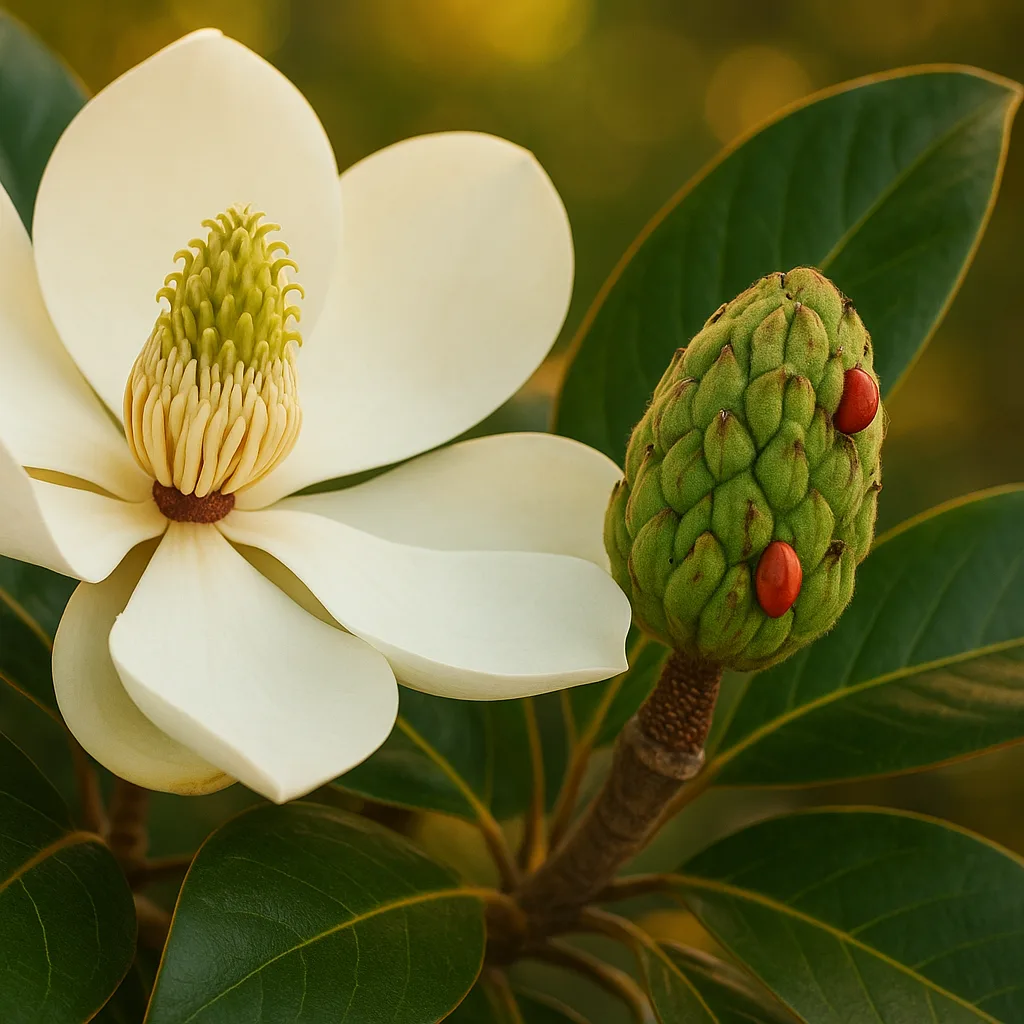
Magnolia Scientific Name and Taxonomy
Botanically, magnolias belong to the genus Magnolia L., in the family Magnoliaceae. The genus name Magnolia honors the 17th-century French botanist Pierre Magnol. The formal taxonomic hierarchy most users need is:
- Kingdom: Plantae
- Order: Magnoliales
- Family: Magnoliaceae
- Genus: Magnolia
Because the genus is large and historically complex, individual magnolia trees are most precisely identified by their species-level Latin name (for example, Magnolia grandiflora L.). Horticultural hybrids are common and are marked with an '×' (for example, Magnolia × soulangeana).
Why the Latin name matters
- Common names vary by region; Latin names are internationally stable.
- Species names carry biological information: leaf form, flowering habit, habitat preferences.
- Legal and conservation work (e.g., endangered species lists) uses scientific names.
Major Magnolia Species and Their Botanical (Latin) Names
There are roughly 210–340 species in the Magnoliaceae depending on the taxonomic treatment. Below are some of the most commonly encountered species, with quick identifying facts.
For more on this topic, see our guide on Roses: Scientific Names and Field ID Guide.
- Magnolia grandiflora L. — Southern magnolia, evergreen. Leaves 12–20 cm (5–8 in), glossy; flowers 12–25 cm (5–10 in) wide; native to southeastern USA.
- Magnolia × soulangeana (Soulange’s magnolia) — hybrid between M. denudata and M. liliiflora; deciduous, large pink to white cup-shaped flowers, 8–20 cm (3–8 in).
- Magnolia stellata (Star magnolia) — deciduous, smaller tree/shrub to 3–4 m, white star-shaped flowers 6–10 cm (2.5–4 in).
- Magnolia virginiana L. — Sweetbay magnolia; semi-evergreen to deciduous depending on climate; fragrant white cup-shaped flowers.
- Magnolia macrophylla Michx. — Bigleaf magnolia; exceptionally large leaves to 90 cm (36 in) and flowers to 30–40 cm (12–16 in).
- Magnolia sieboldii K. Koch — Siebold’s magnolia; nodding, saucer-like white or pink-centered flowers, native to East Asia.
Each Latin name pinpoints a species' diagnostic characters — leaf size, deciduous vs evergreen habit, flower size and timing, and native range.
Identification: Practical Visual Cues
To identify a magnolia in the field, rely on a combination of traits: leaf arrangement and texture, flower shape and size, fruiting structures, bark and growth habit. Below are step-by-step visual cues with measurements and patterns.
You may also find our article on How Flowers Get Their Scientific Names helpful.
Checklist for quick ID
- Leaf arrangement: alternate, simple leaves. Note size, margin (usually entire), and texture (leathery vs thin).
- Flowers: look for large, showy tepals (petal-like structures). Measure across in cm/inches.
- Fruit: cone-like aggregate fruits (cylindric to ovoid) that open to reveal bright red seeds in summer/fall.
- Bark and habit: smooth to furrowed bark; many magnolias have a pyramidal to rounded crown; evergreen species keep glossy leaves year-round.
- Twigs and stipule scars: look for encircling stipule scars at nodes — a magnolia trait.
Visual cues by trait
- Flowers: Magnolia flowers are composed of tepals, not distinct petals and sepals. Sizes typically range from 6 cm (2.5 in) in star magnolias to 25–30 cm (10–12 in) in southern magnolia. Colors: white, cream, pink, purple or combinations. Many are strongly fragrant (sweet, lemony, or vanilla-like).
- Leaves: Alternate, simple and entire. Evergreen species such as M. grandiflora have thick, glossy, dark-green upper surfaces and rusty-brown indumentum beneath; deciduous species have thinner, paler leaves that may be lobed (rare) or deeply veined.
- Fruits and seeds: Cone-like aggregate fruits 4–10 cm long; when mature they split to reveal 1–2 cm red or orange seeds that persist into autumn. This is a key diagnostic feature — very different from poplar catkins or mulberry drupes.
- Bark and form: Bark ranges from smooth, grayish on young trees to cracked and fissured on mature trunks. Height varies: shrubs to 4 m, small trees 6–12 m, large trees (e.g., some evergreen magnolias) up to 20–30 m.
Lookalikes and Comparison: How to Tell Magnolias Apart from Mulberry (Morus alba), Poplar, and Spanish Moss
Many lay observers confuse magnolia with other trees or plant forms. Below are direct comparisons addressing the related search queries like "morus alba scientific name" and "mulberry tree scientific name" and "poplar tree scientific name" as well as "spanish moss scientific name."
Magnolia vs Mulberry (Morus alba)
- Scientific name (mulberry): Morus alba L. (white mulberry), plus other species like M. rubra and M. nigra.
- Leaves: Mulberry leaves are usually serrated and often lobed, with an uneven texture; magnolia leaves are entire (smooth margins) and usually unlobed (some exceptions exist).
- Flowers and fruit: Mulberry produces small, inconspicuous catkin-like flowers and a multiple fruit (aggregate drupes) resembling a blackberry; magnolia flowers are large and showy. Mulberry fruit are edible (ripe black/purple) while magnolia flowers and seeds are not commonly eaten.
- Practical look: If you see glossy large tepals/large solitary flowers, it's a magnolia. If you see blackberry-like fruits in summer and lobed serrated leaves, it's a mulberry.
Magnolia vs Poplar (Populus spp.)
- Scientific family: Poplars are in the Salicaceae (genus Populus), not Magnoliaceae.
- Leaves: Poplar leaves are typically triangular to ovate with a flattened petiole that causes trembling in the wind; margins often toothed. Magnolia leaves are broader, entire, and do not tremble in the same way.
- Flowers: Poplars flower in catkins (slim, pendulous clusters) in early spring before or with leaf-out — not showy. Magnolias have conspicuous single flowers.
- Habitat: Poplars commonly occupy floodplains and riparian zones and grow very quickly; many magnolias are slower-growing and prefer richer, sometimes moister soils but vary widely by species.
Magnolia vs Spanish Moss (Tillandsia usneoides)
- Spanish moss scientific name: Tillandsia usneoides (L.) L. — an epiphytic bromeliad, not a moss.
- Growth form: Spanish moss is a hanging, filamentous epiphyte (gray-green strands) that drapes trees; it does not form woody stems, leaves or large flowers like magnolias.
- Field cue: If you see a woody trunk with large glossy leaves and individual showy flowers, it's magnolia. If you see curtain-like gray strands hanging from branches, that's Spanish moss.
Habitat, Geographic Distribution and Seasonal Behavior
Magnolias have a disjunct distribution: many species occur in East and Southeast Asia, while a rich assemblage exists in eastern North America and Central America. They occupy a range of habitats — from coastal lowlands to montane forests.
You might also be interested in Dolphin Diets: What They Eat and Why.
Distribution by region
- North America: Eastern USA is home to species like M. virginiana, M. macrophylla, and M. grandiflora.
- Central & South America: Several species occur in Central America and northern South America, often as evergreen trees.
- East Asia: China, Japan, and Korea support a large number of species, many of them temperate and deciduous.
Seasonal behavior and phenology
- Flowering: Many deciduous magnolias bloom in spring before or with leaf-out (e.g., M. × soulangeana, M. stellata); evergreen magnolias (e.g., M. grandiflora) bloom in late spring to summer.
- Leaf retention: Evergreen magnolias retain leaves year-round in mild climates; deciduous types drop in autumn.
- Fruit maturation: Aggregate fruits ripen in late summer to autumn, splitting to reveal red seeds that attract birds.
Cultivation, Uses and Safety/Toxicity
Magnolias are prized in landscaping, used for their flowers, shade and sometimes timber. Some species are used medicinally. A note on safety: magnolias are generally not highly toxic, but caution is warranted.
Related reading: Understanding Hydrangea Names — From Common to Scientific.
Horticultural uses and cultivation basics
- Soil: Most magnolias prefer well-drained, slightly acidic soil rich in organic matter; however, some species (e.g., M. virginiana) tolerate wetter soils.
- Light: Full sun to light shade; many spring-flowering species benefit from sunnier sites for abundant bloom.
- Size management: Choose species to match space: star magnolia (compact) vs southern magnolia (large canopy to 15–25 m).
- Propagation: By seed (species true to type only for some) or by grafting/softwood cuttings for cultivars and hybrids.
Wood, cultural and ecological uses
- Wood of some magnolias is used for furniture and veneer but is not a major commercial timber because trees are often valued for ornamental reasons.
- Flower nectar and red seeds attract pollinators and birds; magnolias can support understory biodiversity.
Toxicity and safety
- Most magnolia species are considered low-toxicity for humans and pets; ingestion of large quantities of any plant material can cause stomach upset (vomiting, diarrhea).
- Some species produce compounds in bark or seed coats that are mildly irritating; the red arils around seeds may cause temporary oral irritation if chewed.
- Spanish moss (often found on magnolia branches in the southeastern USA) can harbor chiggers and can cause dermatitis for some people; it also contains compounds that can be toxic to livestock if eaten in large quantities.
- When in doubt, keep children and pets from ingesting flowers, seeds or heavy quantities of leaf material and consult a veterinary or poison control hotline if ingestion occurs.
Using Orvik and Field Identification Tips
High-quality identification in the field combines visual observation with reference material or tools. Orvik — an AI-powered visual identification app — can be particularly helpful for distinguishing magnolias from lookalikes like Morus alba (white mulberry) or poplars, especially when you have a photograph but not the plant in hand.
How to photograph for best ID results (for Orvik or human experts)
- Take a clear, well-lit photo of the entire tree or shrub to capture growth habit and overall shape.
- Photograph leaves: upper surface, underside, and a close-up of the petiole at the node.
- Photograph flowers from several angles (top view and side view) and measure the flower diameter if possible.
- Photograph fruit/seed cones when present — the bright red seeds are a good diagnosing trait.
- Include a ruler, coin or object for scale in at least one shot.
How Orvik helps (and when to double-check)
- Orvik's image-recognition models can rapidly suggest Latin names (e.g., Magnolia grandiflora, M. stellata), narrowing down candidates from dozens of species.
- Use Orvik's suggested IDs as a starting point, then confirm with habitat, leaf texture and fruiting traits — especially for hybrids and cultivated varieties that look similar.
- Orvik is useful for distinguishing magnolia tepals from poplar catkins or mulberry drupes because it can prioritize floral traits in an image set.
Field ID quick checklist (pocket guide)
- Are the flowers large and solitary? Yes = likely magnolia.
- Are the leaves alternate and entire? Yes = magnolia more likely; serrated/lobed = check mulberry or other genera.
- Are you seeing a hanging gray filamentous plant? That's Spanish moss, not a magnolia.
- Are there small multiple fruits like blackberries? That's mulberry (Morus), not magnolia.
Conclusion
When someone searches "magnolia scientific name" they usually want the precise Latin name and practical ways to recognize the tree in the field. Magnolias belong to the genus Magnolia in the family Magnoliaceae; common species include Magnolia grandiflora, M. × soulangeana, M. stellata, and M. macrophylla. Use a combination of flower size and form, leaf texture, fruiting cones and habitat to make an accurate ID. For quick photo-based IDs, Orvik is a helpful tool that can suggest species-level names and let you compare visual traits. Always double-check AI suggestions with physical traits—especially for hybrids—and heed basic safety advice about keeping children and pets from ingesting unknown plant parts.
Frequently Asked Questions
- What is the scientific name for magnolia?
- The genus name is Magnolia (L.), family Magnoliaceae. Individual trees are identified to species, for example Magnolia grandiflora or Magnolia stellata.
- Is magnolia the same as Morus alba or other mulberries?
- No. Morus alba is the white mulberry (a different genus in the Moraceae). Mulberries have small clustered fruits and often serrated leaves; magnolias have large showy flowers and cone-like seed pods.
- How can I tell a magnolia from a poplar tree?
- Poplars (Populus spp.) have triangular to ovate leaves with flattened petioles and catkin flowers; magnolias have large tepaled flowers, entire leaves and aggregate cone-like fruits.
- What is the scientific name for Spanish moss and how is it related to magnolia?
- Spanish moss is Tillandsia usneoides, an epiphytic bromeliad. It often hangs from magnolia branches in the southeastern U.S., but it is not a moss and not closely related to magnolia.
- Are magnolia trees toxic to pets?
- Magnolias are generally considered low-toxicity, but ingesting large amounts of any plant can cause gastrointestinal upset. If a pet consumes magnolia flowers or seeds and shows symptoms, consult a veterinarian.
- How do I use Orvik to identify a magnolia?
- Photograph the whole tree, leaves (upper and underside), flowers and fruit with a scale object. Upload images to Orvik; the app will suggest species-level names which you should verify by checking leaf arrangement, flower form and fruit.
- What is Magnolia grandiflora known for?
- Magnolia grandiflora, the southern magnolia, is an evergreen species with large glossy leaves (12–20 cm) and big, fragrant white flowers often 12–25 cm across; native to the southeastern United States.