
When someone searches "name this flower" they usually have a photo, a curiosity, and a practical goal: find the plant's common name, understand whether it is toxic, or learn how to cultivate or remove it. This guide teaches you how to go from a fuzzy photo or a few field notes to a confident identification using clear visual cues, habitat context, comparison keys and modern tools like Orvik, an AI-powered visual identification app that speeds up the process.
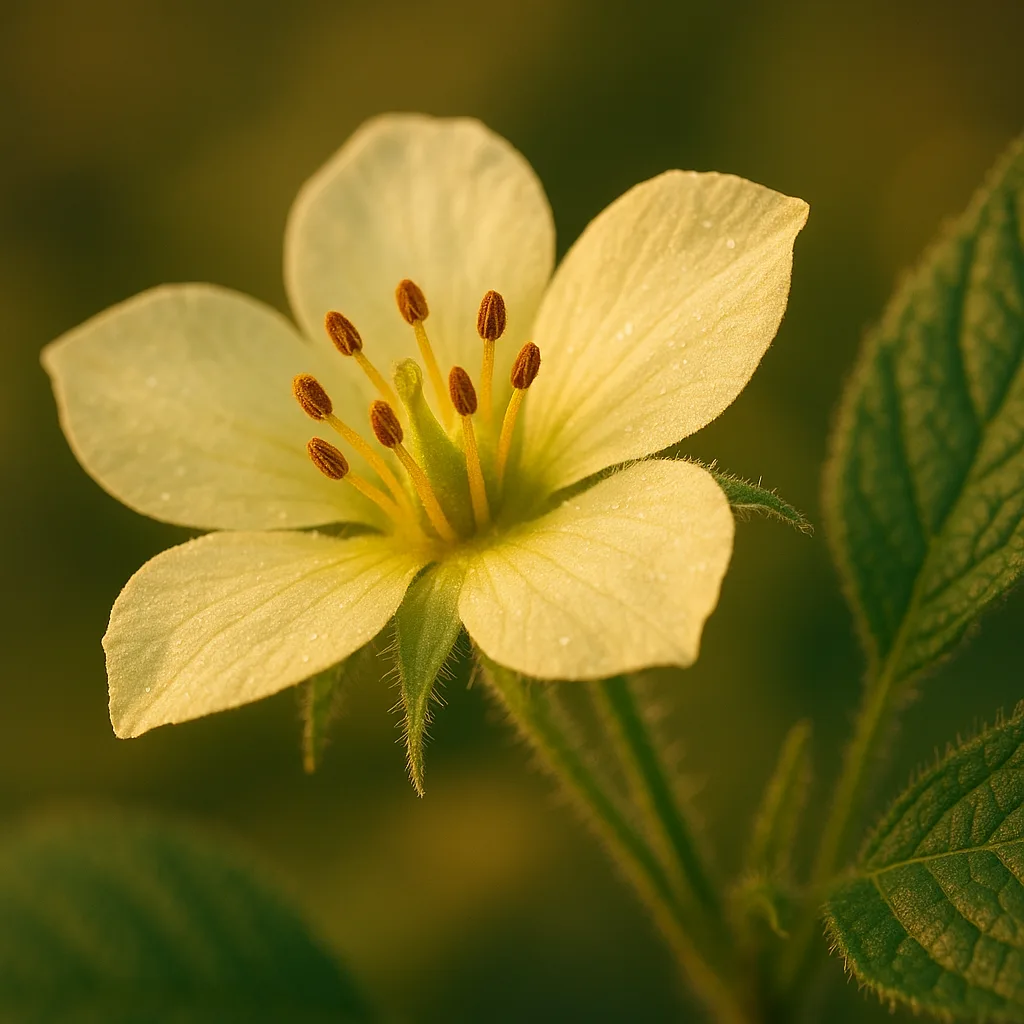
1. Start with a Quick Visual Checklist
Before you try to match a photo to a name, gather basic measurable and observable traits. These are the features most botanists use first because they reliably narrow down families and genera.
- Flower color(s): note primary and secondary colors (e.g., deep purple with a white throat).
- Petal count and arrangement: are there 3, 4, 5, many (composite head)?
- Symmetry: radial (actinomorphic) vs. bilateral (zygomorphic).
- Size: measure bloom diameter (e.g., 2 cm, 5–10 cm, 30 cm for giant inflorescences).
- Leaf type and arrangement: simple vs. compound, alternate vs. opposite, leaf margin (serrated, entire).
- Stem and habit: woody shrub, herbaceous, climbing vine, basal rosette.
- Fruit/seed form: capsule, berry, achene, pod—if present.
Tip: include a ruler or coin in your photograph for scale. Small differences—petal length of 8 mm vs 20 mm—often separate species.
2. Anatomy Essentials: What Is the Middle of a Flower Called?
Many people ask "what is the middle of a flower called?" The center commonly contains the reproductive organs: stamens (male) and pistil (female). Knowing these parts helps with identification because their number and form are diagnostic in many families.
- Stamens (male): each consists of a filament (1–2 mm to several cm) and an anther that bears pollen.
- Pistil (female): the whole unit—stigma (pollen-receptive surface), style (stalk), and ovary (may be superior or inferior).
- Disk vs. Ray Florets: in Asteraceae (daisies, asters) the center is a composite of many tiny disk florets surrounded by ray florets.
Measurements: pistils can be short (1–3 mm) in many geraniums or elongated (2–10 cm) in lilies and irises. The presence of a spur (a tubular nectar-containing extension) indicates genera like Aquilegia (columbines) or Digitalis (foxglove).
3. Major Flower Types and Their Field Markers
Some families are instantly recognizable by a few traits. Here are common groups you’ll encounter when people ask "what flower is this" or "what type of flower is this."
Roses (Family Rosaceae)
- Petals: typically 5 in wild species; cultivated roses have many more (double flowers).
- Leaves: pinnate with 5–9 leaflets, serrated margins.
- Habitat: gardens, hedgerows; many species native to temperate zones.
Lilies and similar (Family Liliaceae and allies)
- Flowers: 6 tepals, often trumpet-shaped; tepals 3–20 cm long.
- Stamens: 6 prominent stamens and a central style.
- Bulbous habit: arises from bulbs or rhizomes.
Asters and Daisies (Family Asteraceae)
- Inflorescence: capitulum (flower head) 1–30 cm across, composed of disk and ray florets.
- Leaves: highly variable; often alternate.
- Examples: Bellis perennis (common daisy), Helianthus annuus (sunflower), Aster spp.
Orchids (Family Orchidaceae)
- Flowers: bilateral symmetry, labellum (lip) distinct, often with pollinia (pollen packets).
- Leaves: usually simple, thick, often alternate; many epiphytic species.
- Habitat: tropical to temperate; many specialized pollination strategies.
Tulips, Hyacinths (Family Liliaceae sensu lato / Amaryllidaceae)
- Single cup-shaped blooms, 3 + 3 tepals, bulbous base.
- Bloom size commonly 3–10 cm across depending on cultivar.
Each of these groups has specific visual cues—closing or opening behavior, fragrance, or time of day when flowers open—that help nail the ID. For example, many Hibiscus species open in the morning and wilt by evening; magnolias have large tepals 10–30 cm long; columbines have backward-pointing spurs 1–3 cm long.
For more on this topic, see our guide on Field Guide to Flower Names.
4. Practical Field Identification Tips
Photos are great, but how you photograph the plant matters. Follow these steps to produce images that make identification easy for humans and AI tools like Orvik.
- Take at least three frames: whole plant (habit), close-up of a single flower, and details (leaf underside, stem, fruit or seed pod).
- Include a scale: a ruler, coin or a known object. Note dimensions in cm or inches.
- Photograph from multiple angles: top (dorsal), side (profile), and underneath if possible.
- Note habitat: sunlight (full sun, partial shade), soil moisture (dry, mesic, boggy), elevation.
- Record phenology: budding, full bloom, seed/fruit stage. Note date and time—seasonality matters.
Example: a purple flower with 3 funnel-shaped tepals, a central column and many small leaves on a basal rosette in early May suggests Iris reticulata (flower diameter 2–6 cm). Uploading these photos to Orvik with metadata (location, date) increases accuracy significantly.
5. Comparison Guide: How to Tell Similar Flowers Apart
Many misidentifications occur because plants share one or two similar traits. Here are practical comparisons that resolve common confusions.
Daisy vs. Aster
- Daisy (Bellis perennis): flower head usually 1–3 cm, ray florets narrow, central disk small; leaves basal rosette.
- Aster (Symphyotrichum spp.): heads often larger (2–6 cm), plant is taller (30–120 cm), leaves along stem.
Tulip vs. Lily
- Tulip: 3 + 3 tepals forming a cup; one flower per stem in wild types; bulb scales, anthers often dark.
- Lily: 6 tepals usually recurved or trumpet-shaped; multiple flowers per scape in species like Lilium; pollen often abundant and powdery.
Orchid vs. Iris
- Orchid: unmistakable labellum (lip), often complex column; pollinia (compact pollen masses).
- Iris: falls and standards (three downward petals called falls, three upward standards), beard or signal patch in some species.
When two taxa share habitat and color (e.g., purple spring bulbs), petal/tepal count, the arrangement of reproductive parts, and leaf structure usually clinch the ID.
You may also find our article on Identify Indoor Plants Like a Pro helpful.
6. Habitat, Distribution and Seasonal Behavior
Understanding where and when a plant grows is as important as how it looks. Many species have restricted ranges, elevation limits, or specific soil preferences.
- Geographic distribution: ranges can be local (within a county), regional (Mediterranean, Pacific Northwest), or cosmopolitan (garden escapees).
- Habitat: wetlands, grasslands, alpine scree, forest understory, coastal dunes—match habitat to species lists for your area.
- Seasonality: spring ephemerals bloom for 2–6 weeks (e.g., Trillium spp.), summer perennials bloom over several months (June–September).
Examples: Digitalis purpurea (foxglove) prefers disturbed, well-drained soils in temperate regions and blooms June–August; Camellia japonica blooms late winter to spring in mild climates; many orchids are seasonal and only detectable during brief flowering windows.
7. Safety, Toxicity and Handling
Knowing a flower's toxicity is often the primary reason people want to know "what is this flower called." Treat unknown plants with caution—many ornamental and wild species contain toxins that affect humans and pets.
- Highly toxic to humans/pets:
- Oleander (Nerium oleander): cardiac glycosides, ingestion of a few leaves can be fatal in children and pets.
- Foxglove (Digitalis purpurea): cardiac glycosides, causes nausea, arrhythmia; very toxic when ingested.
- Lily (Lilium spp. and Hemerocallis spp.): extremely toxic to cats—any exposure to pollen or petal can cause acute kidney injury.
- Moderate toxicity:
- Daffodils (Narcissus spp.): alkaloids cause gastrointestinal distress if ingested; bulbs are most toxic.
- Hydrangea (Hydrangea spp.): cyanogenic glycosides in leaves and buds can cause irritation.
- Handling precautions: wear gloves when pruning unknown plants, avoid ingesting raw plant parts, and keep pets away from garden cuttings.
Emergency action: If ingestion occurs, note the plant (photograph if possible) and contact local poison control or your veterinarian immediately. Accurate identification speeds treatment.
Looking beyond this category? Check out How to Identify Gemstones Like a Pro.
8. Tools and Resources: Using Orvik and Other Aids
While field skills are essential, digital tools accelerate identification. Orvik is an AI-powered visual identification app that compares your photos to a large database of species, providing likely matches with confidence scores. Use it in combination with traditional keys and floras.
Related reading: Diagnose Plant Health Like a Pro.
- How to use Orvik effectively:
- Upload multiple photos (habit, close-up of the flower, leaf detail, fruit).
- Add location and date metadata—the app uses geolocation to narrow species lists.
- Review the suggested matches and read the species descriptions; cross-check key diagnostic features.
- Other resources:
- Regional floras and field guides (e.g., Peterson Field Guides, Newcomb's Wildflower Guide).
- Herbaria and university extension services for verified specimens.
- Citizen science platforms like iNaturalist for community verification.
Orvik often reduces the time from photo to name from hours to minutes, but always verify key traits—especially for look-alike species or toxic plants.
9. Case Studies: From Photo to Name
Here are two short examples of how to move from an image to a confident identification.
-
Case 1: A small purple spring bulb
- Photo shows: 2.5 cm wide purple cup-shaped flower; 3 tepals + 3 tepals; narrow basal leaves 1–2 cm wide; bloom in March.
- Field deductions: spring bulb, iris-like arrangement, small size points to Iris reticulata or Crocus.
- Key checks: Crocus typically has 3 styles and grass-like leaves; I. reticulata has broader sword-like leaves and a distinct signal patch. Final match: Iris reticulata (diploid chromosome counts vary by cultivar; petals 20–25 mm).
-
Case 2: A tall plant with tubular purple flowers
- Photo shows tubular, two-lipped purple flowers 3–4 cm long arranged on a spike; opposite leaves 5–10 cm long in mid-summer, site is a disturbed roadside.
- Field deductions: bilabiate corolla suggests Lamiaceae (mint family) or Plantaginaceae (e.g., Penstemon).
- Key checks: square stem and aromatic crushed leaves indicate mint family; presence of hairs on the lower lip and lack of strong aroma suggests Penstemon is unlikely. Final match: likely Nepeta cataria (catmint) or Salvia spp.; consult Orvik and local flora for species-level match.
Conclusion
When you type "what flower is this" or "what flower is this picture," you want a reliable name, context and next steps—whether that means planting care, removal, or safety action. Start with a solid visual checklist, document habitat and size, use comparison features to rule out look-alikes, and confirm with resources. Tools like Orvik speed the process by matching images to vetted datasets, but your own field notes and awareness of toxicity are essential to a confident identification.
Practice: next time you see an unfamiliar bloom, photograph habit and detail, note the location and season, run the images through Orvik, and then verify by checking the flower’s pistil/stamen count and leaf arrangement. With practice you’ll move from "what this flower" to "I know this plant" quickly and accurately.
Frequently Asked Questions
- What is the middle of a flower called?
- The middle contains the reproductive organs: stamens (male, with anthers and filaments) and the pistil (female, made of stigma, style, and ovary).
- How can I quickly identify a purple flower from a photo?
- Note petal/tepal count, symmetry, size in cm, leaf type, and habitat; include a scale in the photo and use Orvik plus local floras to narrow possibilities.
- What do I do if I think a plant is poisonous?
- Avoid contact, remove pets and children from the area, photograph the plant, and contact poison control or a veterinarian with the photos for rapid identification and advice.
- Why does Orvik sometimes give multiple matches?
- Visual similarity and cultivar variation produce close matches; Orvik provides confidence scores—verify by checking diagnostic features like leaf arrangement, stamen number, and habitat.
- How important is habitat and season for identification?
- Very important—many species bloom only in specific seasons or habitats. Combining phenology and habitat with morphology often narrows IDs more effectively than visuals alone.
- Can I identify plants from only a single close-up photo?
- Sometimes, if the photo clearly shows unique diagnostic features. But accuracy increases with multiple views (habit, leaves, fruit) and scale reference.
- What's the difference between a petal and a tepal?
- Petals are distinct inner perianth parts, while tepals occur when petals and sepals look alike (common in lilies and tulips). Count and arrangement help decide genus.