
Bark is one of the most reliable ways to identify pines when leaves are distant, trees are old, or needles are missing. This field guide focuses on pine tree identification by bark and shows how to combine bark features with needles, cones, range, and habitat to confidently identify common species such as Pinus strobus (eastern white pine) and Pinus ponderosa (ponderosa pine). Use these practical cues in the field or supplement them with visual tools like Orvik for faster confirmation.
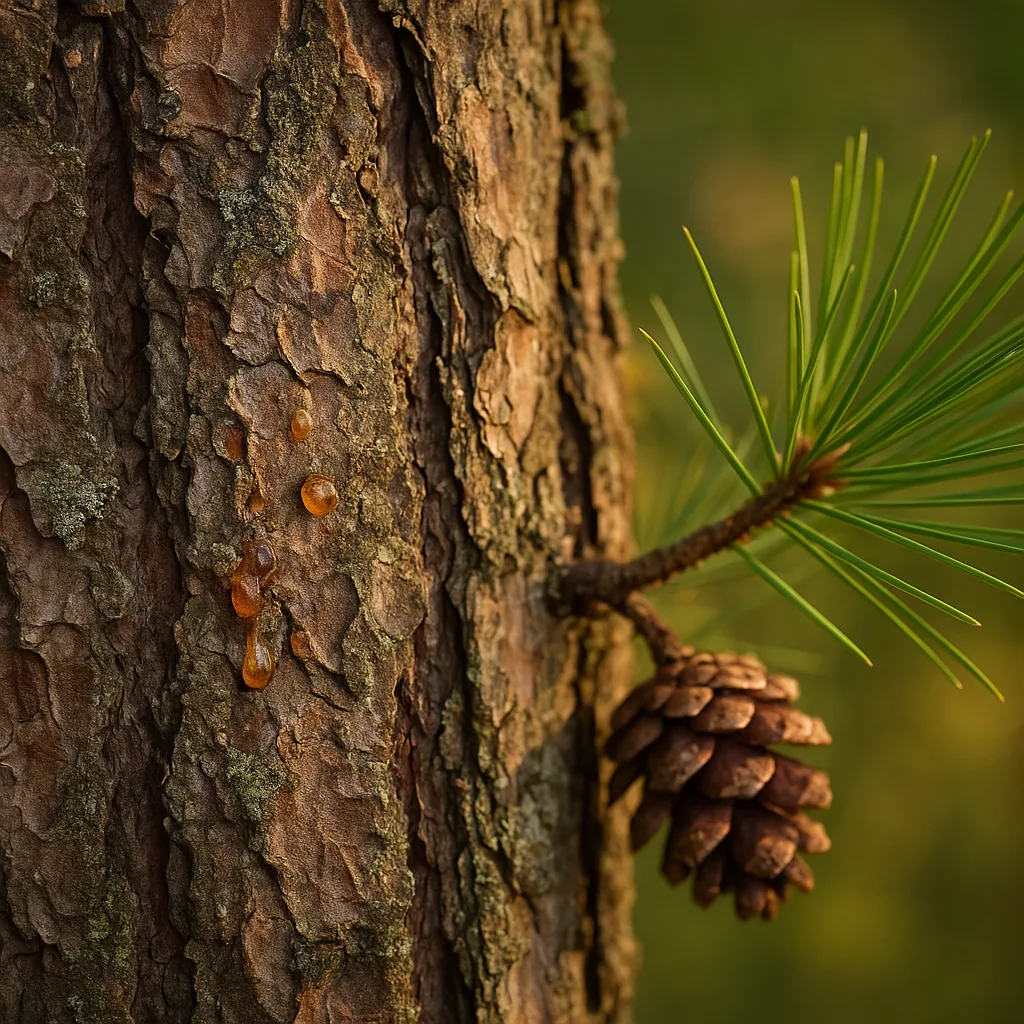
Why Bark Matters in Pine Identification
Bark preserves species-specific clues across seasons and often changes in predictable ways with age. Unlike needles that can be out of reach, bark is accessible at eye level and along the trunk. Bark traits—color, texture, plate size, furrow depth, resin pockets—are shaped by genetics and environment and remain useful for identification.
Key bark features to observe
- Color: ranges from silvery gray and cinnamon to dark brown or black.
- Texture: smooth, flaky, scaly, fissured, or deeply furrowed.
- Pattern: small rectangular plates, long vertical furrows, or peeling strips.
- Thickness and feel: thin and papery vs. thick and corky—measure roughly with your hand (thin <5 mm, thick >10 mm).
- Resin/resin blisters: visible droplets, sticky pockets or amber streaks.
- Age-related changes: young trees smoother; older trunks develop fissures and larger plates.
Common Pine Species: Bark Descriptions and Field Cues
Below are detailed bark profiles for the pines you’re most likely to encounter in North America and Eurasia. Each profile includes bark characteristics, needle info, cone notes, typical size and distribution.
Eastern White Pine (Pinus strobus)
- Bark: In young trees, smooth and gray-green; on mature trunks, thin, flat plates separated by shallow furrows. Plates often flake in small scales rather than forming deep ridges.
- Measurements: Mature bark plates 10–50 mm across; fissures up to 10–20 mm deep.
- Needles: Fascicles of five, soft, slender, 7–13 cm (3–5 in).
- Cones: 8–16 cm long, slender, slightly curved.
- Range & habitat: Northeastern North America; moist, well-drained soils; commonly found in mixed hardwood-conifer forests.
Ponderosa Pine (Pinus ponderosa)
- Bark: Distinctive cinnamon to orange-brown and large, irregular plates on mature trunks; plate edges often rimmed in black; in western forms the bark becomes deeply furrowed with age.
- Measurements: Plates may be 50–200 mm across; deep furrows 20–60 mm in older trees.
- Needles: Fascicles of three, 12–25 cm (5–10 in) long; stout and kinky.
- Cones: 6–12 cm, stout with sharp prickles.
- Range & habitat: Western North America; open, dry slopes and ponderosa savannas.
Scots Pine (Pinus sylvestris)
- Bark: Orange to reddish-brown on upper trunk and branches; lower trunk is darker, scaly and often fissured—gives a two-tone appearance.
- Measurements: Scales 20–100 mm; upper crown bark thin and flaky.
- Needles: Fascicles of two, 3–7 cm long, twisted.
- Cones: 3–7 cm, often small and asymmetrical.
- Range & habitat: Native across Eurasia; widely planted in North America.
Lodgepole Pine (Pinus contorta)
- Bark: Thin, scaly and reddish-brown on young trees; older trees develop tighter plates and may form thicker ridges depending on subspecies.
- Measurements: Scales typically <50 mm; bark thickness usually <10 mm on mature trunks.
- Needles: Fascicles of two, 3–8 cm long.
- Cones: 1.5–5 cm, often serotinous (held closed by resin in some forms).
- Range & habitat: Western North America; variable from coastal to subalpine habitats.
Jack Pine (Pinus banksiana)
- Bark: Dark gray to reddish-brown, small scaly plates, often rough but not deeply furrowed.
- Measurements: Scales usually 10–40 mm.
- Needles: Fascicles of two, 2–4.5 cm long; often twisted and short.
- Cones: 2–4 cm, often curved and serotinous.
- Range & habitat: Boreal forests of Canada and northern U.S.; sandy, well-drained soils.
Longleaf Pine (Pinus palustris)
- Bark: Thick, reddish-brown, deeply furrowed with chunky plates on mature trees; basal trunk often develops very thick, corky ridges.
- Measurements: Furrows may exceed 30 mm depth; bark thickness can be >20 mm especially near the base.
- Needles: Fascicles of three, very long: 20–45 cm (8–18 in).
- Cones: 10–18 cm long.
- Range & habitat: Southeastern U.S.; fire-dependent pine savannas and flatwoods.
Red Pine (Pinus resinosa)
- Bark: Dark red-brown on upper trunk, forming thick, plate-like scales; lower trunk darker and more furrowed with age.
- Measurements: Plates 20–100 mm across; furrows moderate 10–30 mm.
- Needles: Fascicles of two, 10–20 cm long.
- Cones: 4–7 cm, ovoid.
- Range & habitat: Northeastern U.S. and Canada; sandy, acidic soils in mixed stands.
How to Use Bark with Other Clues: Needles, Cones, and Buds
Bark should never be used in isolation if you can avoid it. Combine bark observations with needles, cone shape and size, branching habit, and location to narrow to species.
Needle clues (how to identify pine trees by needles)
- Fascicle count: Pines have 2, 3, or 5 needles per fascicle. Examples: eastern white pine = 5, ponderosa = 3, Scots pine = 2.
- Needle length: Measured in cm: long needles (>15 cm) suggest longleaf or some ponderosa forms; very short needles (<5 cm) suggest jack pine or Scots in some settings.
- Texture: Soft vs. stiff; twisted vs. straight. White pines have soft, flexible needles; red/ponderosa needles are stiff.
- Attachment and sheath: Look for persistent sheaths at the base of fascicles—some species have long persistent sheaths (white pine has short persistent sheath).
Cones and buds
- Cones: Size, shape, and presence of prickles on scales are diagnostic—measure cones with your hand: small (<5 cm), medium (5–12 cm), or large (>12 cm).
- Buds: Terminal buds in pines are often resinous and conical; note color and size (e.g., white pine buds are 10–20 mm).
Example: If the bark shows thin, flaky plates and the needles occur in fives, you are very likely looking at Pinus strobus (eastern white pine).
Pine vs Spruce vs Fir: Bark and Needle Differences
Many beginners confuse pines with spruces or firs. Bark provides one of several quick ways to separate these genera.
How to identify a spruce tree (spruce vs pine)
- Needles: Spruce needles are single, four-sided (square in cross-section), and roll between your fingers; pine needles come in clusters (fascicles).
- Bark: Spruce bark is thin and scaly to flaky, often with shallow furrows; older spruces develop scaly plates but rarely the large, chunky plates of many pines.
- Cones: Spruce cones hang down and usually disintegrate on the tree (seeds released), while many pine cones fall intact.
Fir and hemlock differences
- Fir bark: Smooth with resin blisters when young; older firs have thick plates but bark often remains smoother than many pines.
- Hemlock bark: Thin and scaly with small, irregular plates; needles are single and flat with short petioles.
Quick comparison checklist
- Count needles per cluster: 2–3–5 → Pine. Single needles → Spruce/Fir/Hemlock.
- Examine bark plates: large, chunky plates → many pines (ponderosa, longleaf); thin scaly bark → spruces and some pines (lodgepole).
- Look for resin: abundant sticky resin on twigs/trunk → many pines; firs often have resin blisters.
Age, Season, and Environmental Effects on Bark
Bark appearance changes with tree age, climate, fire history, and pests. Understanding these dynamics avoids misidentification.
For more on this topic, see our guide on Mastering Oak Leaves: Identify Trees in the Field.
How bark changes with age
- Seedlings/juveniles: Smooth, thin bark—often greenish or gray; lenticels may be visible.
- Maturing trees: Development of small scales or shallow furrows.
- Mature trees: Deep fissures, large plates, thick ridges, or corky bark depending on species.
Seasonal and environmental influences
- Fire: Fire-adapted species (longleaf, some ponderosa ecotypes) develop thick bark near the base that is darker and more charred-looking; this trait helps survival in frequent-fire ecosystems.
- Moisture and sun exposure: Sun-exposed south/west sides may have thicker, more cracked bark; wetter sites favor smoother bark on some species.
- Pests and disease: Beetle activity, cankers, and fungal pathogens can distort bark—look for pitch tubes (small resin masses) and sawdust as evidence of boring insects.
Practical Field Workflow: Step-by-Step Identification
Follow these steps in order to make a confident ID in the field. Photographing each feature helps you review later or to submit for a second opinion via Orvik.
- Observe overall habit: Height, crown shape, branching—pines often have long trunks with open crowns.
- Examine bark at eye level: Note color, plate size, furrow depth, and resin presence. Photograph a 30–50 cm section for scale (include a hand or a coin).
- Look at needles: Count needles per fascicle and measure approximate length with your fingers (1 finger ≈ 1.5–2 cm).
- Inspect cones and buds: Note cone size, shape and whether cones are serotinous (held closed by resin).
- Check habitat and range: Is the tree in coastal sand, montane slope, bog or mixed woodlot? Use distribution knowledge to narrow species.
- Use an ID tool: Upload clear photos of bark, needles, cones, and whole-tree habit to Orvik or another visual ID app to speed confirmation.
Photographing tips for bark
- Shoot in even, diffuse light—avoid harsh midday sun that hides texture.
- Frame a vertical section 30–60 cm tall to show plate patterns and furrows.
- Include a scale object (ruler, glove, coin) and a photo of needles and cones for cross-reference.
Common Misidentifications and How to Avoid Them
New observers often confuse pines with spruces, miscount needles, or rely on bark alone without age context. Here are common pitfalls and how to avoid them.
White Pine vs Spruce
- Look at needles: White pine (Pinus strobus) has clusters of five soft needles, each 7–13 cm long. Spruce needles are single and square in cross-section.
- Bark: White pine bark forms thin plates with shallow furrows; spruces tend to have thinner, flaky or scaly bark without the same plate pattern.
Ponderosa vs Lodgepole
- Bark color: Ponderosa mature bark shows warm orange to cinnamon in the upper trunk; lodgepole is more uniformly reddish-brown to gray.
- Plate size: Ponderosa plates are larger and more blocky; lodgepole plates are smaller and tighter.
Beware of age effects
- A young ponderosa may have smooth bark that resembles young lodgepole—always check needles and cones as well as location.
Safety, Toxicity, and Ethical Considerations
Fieldwork around trees is rewarding but not without risk. Follow common-sense precautions and be aware of toxicity and conservation concerns.
- Handling resin and sap: Pine resin is sticky and can irritate skin for some people; wear gloves if you are breaking bark or collecting samples.
- Toxicity: Most true pines (genus Pinus) are not highly toxic to humans in casual contact, but seeds and needles contain terpenes and can cause stomach upset if eaten in large quantities. Remember that yews (Taxus) are highly toxic and can be mistaken for evergreen trees—do not ingest unknown plant parts.
- Tree protection: Avoid removing bark or cutting branches from protected trees or in conservation areas. Some pine species are legally protected or rare in certain regions (e.g., some longleaf habitats).
- Field safety: Do not stand under dead-limbed or storm-damaged trees. Use a partner when working on steep or remote terrain.
Use Orvik to check identifications without removing samples—high-resolution photos and AI-assisted suggestions reduce the need for invasive sampling.
You may also find our article on How to Recognize Maple Trees in the Field helpful.
Conclusion
Bark is a powerful identification tool when used with needles, cones, habitat, and age context. By noting color, plate size, furrow depth, resin presence, and pairing those observations with needle fascicle count and cone morphology, you can narrow most pines to species in the field. Capture clear photos and try Orvik to confirm your ID quickly. With practice, the textures and patterns of bark become as recognizable as faces.
FAQ
Q: How can I identify a white pine?
A: Look for five needles per fascicle, soft needles 7–13 cm long, slender cones 8–16 cm, and mature bark of thin, flat plates with shallow furrows—these traits indicate Pinus strobus, the eastern white pine.
Q: What is the easiest way to tell a pine from a spruce?
A: Count needles: pines have needles in bundles (2–5), spruces have single needles attached on pegs. Also check bark: pines often have larger plates or deeper furrows than the thinner, scaly bark of many spruces.
Q: Can I identify a pine tree by bark alone?
A: Sometimes—especially for distinctive species like ponderosa or longleaf—but combining bark with needles, cones, and habitat greatly improves accuracy.
Looking beyond this category? Check out AI Field Guide: Identify Birds Fast.
Q: How do I identify eastern white pine specifically?
A: Eastern white pine (Pinus strobus) is identified by five soft needles per bundle, long slender cones (8–16 cm), and bark that remains in thin, flaky plates rather than deep, chunky blocks.
Related reading: Spotting Osage Orange Trees in the Field.
Q: Why does bark appearance change with age?
A: Bark thickens, plates enlarge, and furrows deepen as the tree adds new layers of cambium and bark tissues. Environmental stressors and fire history also accelerate changes.
Q: What tools help with field identification?
A: A hand lens, measuring tape, field guide, and a camera are very useful. AI-powered visual ID apps such as Orvik can quickly analyze photos of bark, needles, and cones to suggest species.
Q: Are any pine trees toxic?
A: Most pine species are not acutely toxic to touch, but some parts contain compounds that can cause gastrointestinal upset if ingested. Yews (not pines) are highly toxic and can be mistaken for other evergreens—do not eat unknown plant material.
Q: How do I photograph bark for identification with Orvik?
A: Take a vertical shot of a 30–60 cm trunk section in diffuse light, include a scale object (hand or coin), and also photograph needles and cones. Upload multiple images for the best AI match.
Frequently Asked Questions
- How can I identify a white pine?
- White pine (Pinus strobus) has five soft needles per fascicle (7–13 cm), slender cones (8–16 cm), and mature bark of thin, flat plates with shallow furrows.
- What is the easiest way to tell a pine from a spruce?
- Count needles: pines have needles in bundles (2–5), spruces have single, square needles. Bark on pines often has larger plates or deeper furrows than spruces.
- Can I identify a pine tree by bark alone?
- Sometimes for distinctive species, but accuracy increases greatly when combining bark with needles, cones, habit, and habitat.
- How do I identify eastern white pine specifically?
- Eastern white pine is identified by five-needle fascicles, long soft needles (7–13 cm), long slender cones (8–16 cm), and thin flaky bark plates.
- Why does bark appearance change with age?
- Bark thickens and plates or furrows develop as the tree adds new cambial layers; fire, pests, and climate also influence bark texture.
- What tools help with field identification?
- A hand lens, measuring tape, camera, field guide, and AI apps like Orvik for image-based ID are very helpful.
- Are any pine trees toxic?
- Most pines are not acutely toxic to touch, but ingesting needles/seeds can cause upset. Remember that yews (Taxus) are highly toxic and can be mistaken for other evergreens.
- How do I photograph bark for identification with Orvik?
- Photograph a vertical 30–60 cm section in diffuse light, include a scale object, and add close-ups of needles and cones for best results.