
When someone types "pine tree latin name" into a search bar, they usually want a clear, authoritative answer: what is the scientific name for a pine, how do scientific names work, and how can you identify specific pine species in the field. This guide gives that answer and much more: the taxonomy of pines, practical identification tips (needle length, fascicle counts, cone size, bark texture), comparisons with other commonly-searched plants like the almond tree, areca palm and bamboo, and how tools such as Orvik can speed up accurate identification.
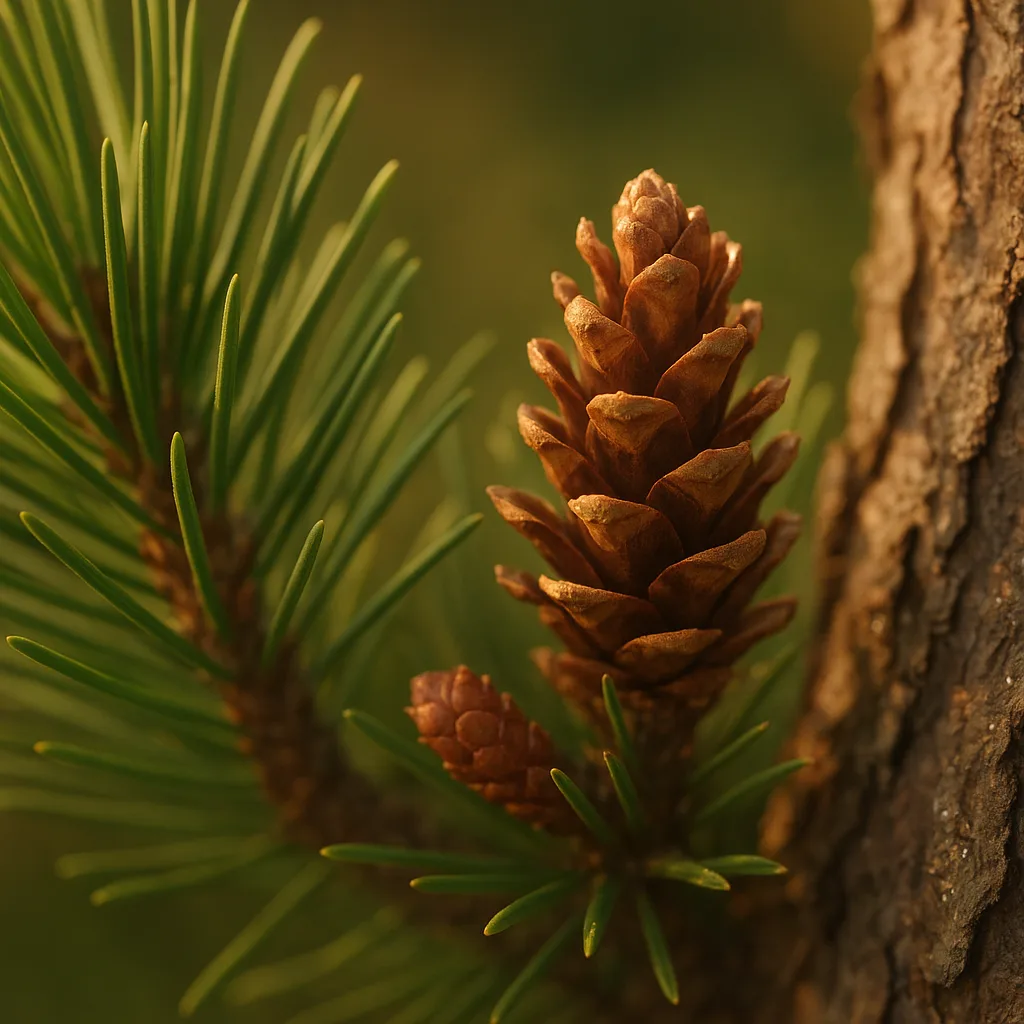
Quick answer: What is the pine tree Latin name?
Short, authoritative reply
The common name "pine" corresponds to the genus Pinus (family Pinaceae). That is the primary "pine tree latin name." Individual pines have their own binomials: for example Pinus sylvestris (Scots pine), Pinus ponderosa (ponderosa pine) and Pinus pinea (stone pine).
- Genus: Pinus
- Family: Pinaceae
- Order: Pinales
- Distribution: Mostly Northern Hemisphere, ~110 species
Botanical classification and the plant scientific name system
How binomial nomenclature works
Plant scientific names follow the binomial (two-name) system introduced by Carl Linnaeus: a genus name (capitalized) and a specific epithet (lowercase), both normally written in italics or emphasized in text. For example, Pinus (genus) + sylvestris (specific epithet) = Pinus sylvestris. The scientific name gives you a globally recognized identifier, reducing confusion caused by local common names.
- Genus groups closely related species (e.g., Pinus).
- Species is the unique epithet within the genus (e.g., sylvestris).
- Authority sometimes follows (e.g., Pinus sylvestris L., where L. = Linnaeus).
Why scientific names matter for identification
Scientific names allow ecologists, foresters and hobbyists to share precise information. For example, Pinus ponderosa has very different needle length, cone size and ecological role from Pinus strobus—and scientific names make that distinction explicit.
- Avoid regional ambiguity (many "pines" are not true pines).
- Link to literature on growth rate, wood density, conservation status.
- Essential for permits, forestry, restoration work.
Common pine species and how to identify them
Key field characters to measure
When identifying pines, focus on a short list of measurable, repeatable characters:
For more on this topic, see our guide on Which Bamboo Is Which? Latin Names Explained.
- Needle fascicle count: pines have needles in bundles (fascicles) of 1–5 (rarely 6).
- Needle length and stiffness: measured in cm or inches.
- Cone size and shape: length, diameter, thin or thick scales, resinous or papery.
- Bark texture and color: plated, fissured, scaly—changes with age.
- Tree habit: height, crown shape, branch angle.
Representative species (with scientific names and ID cues)
- Pinus sylvestris (Scots pine): needles 4–7 cm (1.5–2.8 in), in fascicles of 2; needles blue-green and slightly twisted; bark orange-brown and flaky on the upper trunk; cones 3–7 cm. Native across Europe and northern Asia; mature height 35–45 m in optimal sites.
- Pinus ponderosa (ponderosa pine): needles 12–22 cm (4.7–8.7 in) usually in fascicles of 2 or 3; long, stiff needles; thick, dark brown to cinnamon-plated bark (distinctive puzzle-like plates on older trees); cones 5–10 cm. Western North America; commonly 30–60 m tall.
- Pinus strobus (eastern white pine): needles soft, in fascicles of 5, 5–13 cm (2–5 in) long; cones slender, 8–16 cm; bark thin and smooth when young, becoming furrowed with age; tall, narrow crown. Native to eastern North America; typically 20–50 m tall.
- Pinus nigra (Austrian/black pine): needles 8–15 cm (3–6 in) in fascicles of 2; dark green needles and very rough, thick, ridged bark; cones 4–7 cm. Widespread in Europe; used in urban planting due to pollution tolerance.
- Pinus pinea (stone pine / umbrella pine): needles 10–20 cm (4–8 in) in fascicles of 2; large, rounded cones 8–15 cm that contain the edible pine nuts; rounded umbrella-shaped crown common in mature trees. Native to the Mediterranean; usually 12–25 m tall.
Pine vs other commonly-searched plants
Pine tree vs almond tree (Prunus dulcis)
People often confuse images or simply want to compare two frequently seen trees. The almond tree is a broadleaf (angiosperm) whereas pines are conifers (gymnosperms).
- Almond (Prunus dulcis): simple, deciduous leaves 5–12 cm long with serrated margins; showy spring flowers (white/pink) and a fleshy fruit (the almond drupe). Not a pine.
- Pine (Pinus spp.): evergreen needles in fascicles, no flowers or drupes—reproductive structures are cones.
Pine tree vs areca palm (Areca catechu)
Areca palm is a tropical monocot palm and looks nothing like a pine, but people sometimes search both names when identifying yard trees.
- Areca palm (Areca catechu): pinnate fronds up to 2–3 m long, single unbranched stem (trunk) with ringed leaf-scar rings; fruit are orange-yellow drupes. Tropical, not a conifer.
- Pine (Pinus spp.): needle-like leaves, branched woody stems, cones—occupies temperate to subtropical zones in the Northern Hemisphere.
Pine tree vs bamboo (Bambusoideae, e.g., Phyllostachys edulis)
Bamboo is a grass (subfamily Bambusoideae) with hollow, jointed culms; it is not a tree in the Botanical sense and lacks needles or cones.
You may also find our article on Understanding Lily Identity: Names & Science helpful.
- Bamboo (Phyllostachys edulis / Bambusa spp.): culms (stems) are hollow, segmented with nodes; leaves are broad and grass-like; growth often clumping or running via rhizomes.
- Pine: woody trunk, lateral branches, needle-like evergreen foliage, and seed-bearing cones.
Habitat, geographic distribution and seasonal behavior
Where pines grow
Pines are primarily native to the Northern Hemisphere and are found from sea level to alpine environments. Species-specific ranges vary:
- Boreal and montane species (e.g., Pinus sylvestris, Pinus mugo): commonly at 500–2,500 m elevation in cool climates.
- Temperate lowland species (e.g., Pinus ponderosa, Pinus strobus): prominent in lower montane and valley sites.
- Mediterranean species (e.g., Pinus pinea): drought-tolerant, often on calcareous soils and coastal belts.
Seasonal cycles and reproduction
Pines are evergreen and photosynthesize year-round, but they have clear seasonal reproductive cycles.
- Pollination: typically spring; wind-pollinated pollen released in large quantities.
- Cone maturation: ranges from one season to up to three years depending on species (e.g., many pines mature cones in 2 years).
- Seed dispersal: by wind, animals (squirrels, birds) or gravity; pine nuts are a high-energy food for wildlife.
Practical field identification tips (visual cues and measurements)
Step-by-step field ID checklist
Use these quick measurements and visual cues while standing near the tree. Carry a tape measure, small hand lens, and a field notebook or an app like Orvik to photograph and compare results to reference images.
You might also be interested in Inside the Acai Berry: Nature’s Amazonian Purple Fruit.
- Count needles per fascicle: remove a small cluster—are they in 1, 2, 3, 4 or 5?
- Measure one or two needles: length in cm (or inches), stiffness, cross-section (flat or triangular).
- Examine cones: measure length and note scale shape and resin coating; are male cones present in spring?
- Inspect bark: note color, plate size, furrows, and smell (resinous or not).
- Observe habit and crown: height, crown density, and branch angle.
Visual cues with examples
- Needles in fives usually point to white pines (e.g., Pinus strobus), needles soft and flexible.
- Very long needles (12–22 cm) often indicate ponderosa or related western species.
- Short, paired needles (4–7 cm) are common in Scots pine (Pinus sylvestris).
- Large, rounded cones (8–15 cm) with edible seeds suggest stone pine (Pinus pinea).
Photograph these details close-up and at a distance. Orvik's image-based recognition can analyze needle bundles, cone shape and bark patterns to propose likely species matches—making field ID faster and less error-prone.
Related reading: Understanding Hibiscus: Names, ID & Key Species.
Uses, safety and toxicity
Common uses of pines
- Timber: many pines yield construction lumber (softwoods) used worldwide; wood density varies—e.g., Pinus radiata (Monterey pine) is fast-growing and widely planted.
- Pine nuts: edible seeds from species like Pinus pinea and Pinus koraiensis.
- Resin and turpentine: historically harvested for solvents and varnishes.
- Ornamental and windbreaks: many species used in urban and rural landscaping.
Toxicity and safety warnings
- Livestock risks: Some pines can cause problems for grazing animals. For instance, ingestion of needles from certain pines (notably ponderosa pine, Pinus ponderosa) has been linked to late-term abortions in cattle; the suspected agents include diterpenoid compounds such as isocupressic acid. Keep pregnant livestock away from heavy pine needle fall.
- Allergic pollen: Pine pollen can be allergenic for sensitive people; pollen release is usually seasonal in spring.
- Misidentification with toxic conifers: Yews (genus Taxus) are highly toxic to humans and animals; unlike pines, yews have flat needles and produce fleshy red arils rather than cones.
- Handling caution: Some needles are sharp and can puncture skin; wear gloves when collecting samples, and avoid burning large quantities of resinous wood indoors due to toxic smoke.
How to get an exact species name: field keys, DNA, and apps like Orvik
Tools and techniques
If you need more than the genus-level answer "Pinus", here are practical ways to get a species-level identification:
- Regional field guides and dichotomous keys: use needle count, cone characters, and bark in sequence to narrow down species.
- Herbarium comparison or expert consultation: send high-resolution photos or specimens to a local herbarium or forest service botanist.
- DNA barcoding: for definitive identification, sequencing specific gene regions (e.g., rbcL, matK) provides species-level confirmation.
- Image-recognition apps: Orvik and similar AI-powered tools can identify trees rapidly based on photos of needles, cones and bark. Use them as a first pass and confirm with a field key for critical work.
Best practices when using apps like Orvik
- Photograph multiple features: needles, cone face and profile, bark close-up, and whole-tree silhouette.
- Include a scale object (ruler or coin) to measure needle and cone sizes precisely.
- Record location and habitat notes (soil dry vs moist, elevation, associated species) to improve the algorithm’s context-aware suggestions.
Conclusion
The straightforward answer to "pine tree latin name" is that pines belong to the genus Pinus in the family Pinaceae. For precise identification to species, use needle fascicle counts, needle length, cone morphology, and bark characteristics—supported by regional keys or DNA when necessary. Tools such as Orvik make field identification faster by comparing your photos against curated reference data, but always corroborate app suggestions using observable measurements. Understanding the scientific name gives you access to a wealth of biological, ecological and management information important for conservation, forestry and horticulture.
Whether you're curious about a backyard tree or conducting formal surveys, the combination of classic botanical characters and modern tools will get you from "pine tree latin name" to an exact species with confidence.
Frequently Asked Questions
- What is the scientific name for a pine tree?
- The genus name for pines is Pinus (family Pinaceae). Individual species have binomials such as Pinus sylvestris (Scots pine) or Pinus ponderosa (ponderosa pine).
- How do I tell which pine species I have?
- Count needles per fascicle (1–5), measure needle length, inspect cone size/shape and bark texture, and compare against regional keys. Photograph details and use tools like Orvik for speedy suggestions.
- Is the almond tree a pine?
- No. The almond tree is Prunus dulcis, an angiosperm (flowering, broadleaf tree). Pines are gymnosperms in genus Pinus with needle leaves and cones.
- What is the botanical name of the areca palm?
- The areca palm's scientific name is Areca catechu. It is a tropical palm and not related to conifers like pines.
- Are bamboo plants related to pines?
- No. Bamboo belongs to the grass family (subfamily Bambusoideae) with common species such as Phyllostachys edulis. Bamboo has jointed, hollow culms, unlike woody conifer trunks and needles.
- Are pine nuts safe to eat?
- Many species produce edible seeds (pine nuts), notably Pinus pinea and Pinus koraiensis. However, species differ; be certain of identification before consumption.
- Can pines cause livestock problems?
- Yes. Needles from some pines, notably ponderosa pine (Pinus ponderosa), have been implicated in abortion in cattle. Avoid heavy needle bedding in pastures with pregnant animals.
- How accurate are apps like Orvik for identifying pines?
- Apps like Orvik are very useful for preliminary identification, especially when you supply multiple clear photos and habitat data. They should be used alongside field measurements or expert confirmation for critical applications.