
Why people search for a plant id photo
When someone types "plant id photo" into a search engine they usually want a fast, reliable answer: what is this plant in front of me? Typical intents include identifying a garden flower, confirming whether a roadside weed is toxic, cataloging species on a hike, or verifying a seedling before planting. They are seeking practical, image-based guidance they can apply immediately.
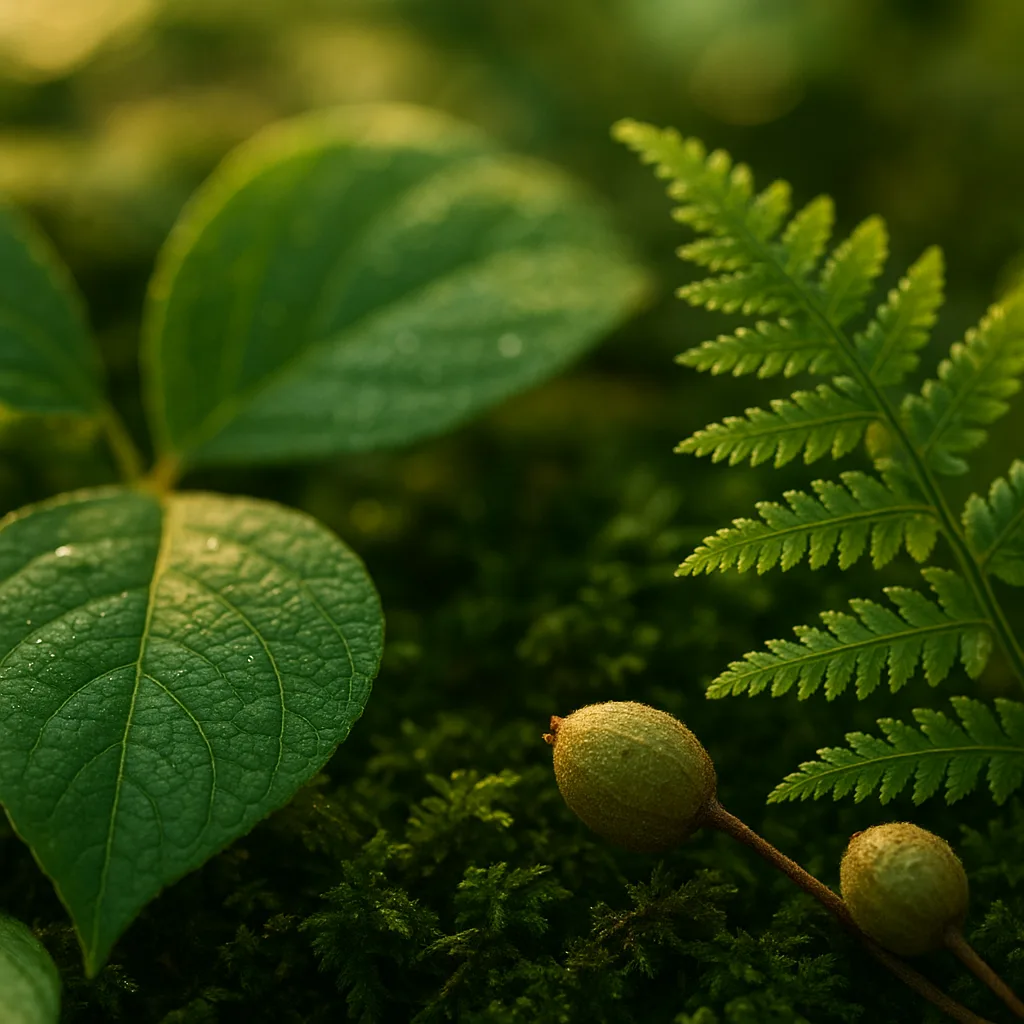
Common motivations
- Safety: determine if a plant is poisonous (e.g., Ricinus communis, castor bean) or irritating (e.g., Toxicodendron radicans, poison ivy).
- Horticulture: match a nursery label to a photo to confirm cultivar or growth habit.
- Conservation: record and report rare or invasive species with photographic proof.
- Curiosity & learning: build a plant collection or garden inventory using images for later reference.
How to take the best plant ID photo
Photo quality directly affects identification accuracy. A single, blurry snapshot rarely suffices. Follow these practical, field-tested tips to capture images that botanists and AI systems can reliably interpret.
Essential shots to capture
- Overall habit: a photo of the whole plant showing size and growth form (tree, shrub, herb) with scale—include a coin or ruler if possible.
- Leaves: close-ups of one or two mature leaves showing upper and lower surfaces, margins, and petiole attachment.
- Flowers or inflorescences: multiple angles—front, side, and a close-up of the corolla and reproductive parts.
- Fruit/seed: close-up of any berries, pods, nuts, or seed heads.
- Bark/stem: for woody plants, a clear shot of bark texture or stem hairiness (pubescence) is vital.
- Habitat context: soil type, surrounding vegetation, and location clues (e.g., shaded woodland vs. roadside).
Technical tips
- Lighting: use diffuse light—overcast days are ideal. Avoid deep shadows and direct midday sun that blows out details.
- Focus & stability: use macro mode for close-ups, stabilize with both hands or a small tripod; aim for readably sharp edges.
- Scale: include a common object (US quarter ≈ 24 mm, 30 cm ruler) to convey size.
- Multiple angles: take 6–12 photos covering all diagnostic parts; AI models like Orvik perform better with several views.
- Resolution: save images at full camera resolution; cropping is fine but avoid heavy compression artifacts (JPEG quality above 80%).
Key visual cues for plant identification
Experienced identifiers prioritize certain morphological characters. Below are the most diagnostic features you should capture and what to look for.
For more on this topic, see our guide on Mastering Plant ID with Plantsnap.
Leaves
- Arrangement: alternate, opposite, or whorled (e.g., Acer maples have opposite leaves; many legumes are alternate).
- Shape & size: ovate (egg-shaped), lanceolate (long and narrow), orbicular; report measurements—leaf length often ranges from 2–20 cm in common species.
- Margin: entire, serrated, lobed (e.g., oak Quercus lobed margins vs. elm Ulmus serrate).
- Venation: pinnate, palmate, parallel (maples palmate, grasses parallel).
- Surface: glossy, hairy (pubescent), glandular, sticky; underside color can differ (e.g., silver underside in Populus alba).
Flowers & inflorescences
- Symmetry: actinomorphic (radial) vs. zygomorphic (bilateral).
- Number & arrangement of petals: 5 petals in many Rosaceae; composite heads in Asteraceae (daisies) are actually many small florets.
- Color & size: record diameter (e.g., daisy-like heads 2–5 cm; orchid flowers often 1–3 cm wide).
- Reproductive parts: exposed stamens, pistils, and presence of nectar guides or spurs are important diagnostics.
Fruits, seeds & stems
- Fruit type: berry, drupe, capsule, achene, nut (e.g., acorns in Quercus are 1.5–3 cm long).
- Color & persistence: green then red/black, or persistent brown capsules through winter.
- Stem characteristics: woody vs. herbaceous, presence of thorns (e.g., roses), square stems (common in Lamiaceae mint family).
Common identification challenges and comparisons
Some plants are frequently confused. Here are direct comparisons with measurable, visual cues to tell them apart in the field.
Poison ivy (Toxicodendron radicans) vs. Virginia creeper (Parthenocissus quinquefolia)
- Leaflet number: poison ivy has 3 leaflets; Virginia creeper has 5 (rarely 7).
- Leaflet shape: poison ivy leaflets 4–12 cm, often with variable margins; Virginia creeper leaflets typically 4–9 cm with serrated edges.
- Growth habit: poison ivy can be a vine, shrub, or groundcover; Virginia creeper commonly climbs with tendrils ending in adhesive pads.
Dandelion (Taraxacum officinale) vs. Cat's ear (Hypochaeris radicata)
- Leaves: dandelion basal leaves usually have deep pinnate lobes with a single flower stalk; cat's ear leaves are hairy and often less deeply lobed.
- Stems: dandelion stems hollow and unbranched; cat's ear stems often branched with multiple flower heads.
- Florets: both are yellow composite heads; check for hairy leaves to distinguish cat's ear.
Red oak (Quercus rubra) vs. Pin oak (Quercus palustris)
- Lobed margins: red oak lobes are fewer (7–11) with blunt tips; pin oak has deep, narrow sinuses and pointed lobes with bristle tips.
- Acorn size: red oak acorns 2–2.5 cm with shallow cups; pin oak acorns 1.5–2 cm with deeper cups.
- Habitat: pin oak tolerates wet soils; red oak prefers well-drained upland sites.
Using AI plant identifier apps like Orvik
AI-powered tools have transformed how quickly you can get an identification from a photo. Orvik is one example of an app that leverages computer vision and curated species databases to return suggestions, typically showing a ranked list of probable species with confidence scores.
You may also find our article on Mastering Plant ID with AI: A Field Guide helpful.
How AI identification works
- Computer vision models analyze image features—leaf shape, color distribution, floral structures—and compare them to thousands of labeled examples.
- Probabilistic ranking: the app returns several likely matches with confidence percentages, rather than a single absolute answer.
- Contextual filters: many apps use geolocation, season, and habitat data to narrow down plausible species in your region.
Maximizing accuracy with Orvik and similar apps
- Upload multiple photos from the set recommended earlier—overall habit, leaves, flowers, fruit, bark.
- Enable location and date to allow the model to consider regional flora and phenology; this can improve accuracy by 10–30% for local species.
- Review the top 3–5 suggested matches and compare diagnostic characters; AI provides a best guess but human verification is wise for critical decisions (edibility, toxicity).
- Use the app’s feedback loop: confirm correct IDs when possible. Orvik and other services use this user feedback to continually improve their models.
Limitations and ethical considerations
- Juvenile plants or sterile specimens (no flowers/fruits) are harder to identify—error rates can exceed 40%.
- Hybridization and cultivars may not match entries in the database.
- Respect privacy and conservation: avoid sharing precise locations of rare or protected plants publicly.
Safety, toxicity, and handling precautions
Identification isn't only academic—knowing whether a plant is toxic can prevent serious harm. When uncertain, always err on the side of caution.
Safety checklist
- Do not taste or ingest any plant unless you are 100% certain of its identity and edibility; even then, try a small amount and be aware of allergies.
- Wear gloves when handling suspected irritants like poison ivy (Toxicodendron radicans) or stinging nettle (Urtica dioica).
- Note that some plants are toxic to pets—e.g., lilies (Lilium) are highly toxic to cats, and sago palm (Cycadaceae) seeds are toxic to dogs.
- Seeds and pods can be concentrated in toxins: castor bean (Ricinus communis) seeds contain ricin and are potentially lethal if chewed.
When to seek expert help
- If a child or pet ingests an unknown plant, contact poison control immediately (US Poison Control: 1-800-222-1222).
- Report suspected invasive species to local environmental agencies, especially if you find dense mats or rapid spread.
- For foraging, consult multiple sources: field guides, local extension services, and if possible, a trained botanist.
Field guide: Quick ID keys for common plants
Below are succinct, image-friendly descriptions for common garden and wild plants you may photograph. Each entry lists the most diagnostic visual cues, typical measurements, distribution, and seasonal behavior.
Looking beyond this category? Check out Photo ID: Mastering Animal Identification in the Field.
Related reading: Identify Any Plant from a Photo: Practical Field Guide.
- Common dandelion (Taraxacum officinale) — Basal rosette of deeply lobed leaves 5–25 cm long; single hollow stem to 25 cm bearing a yellow composite head 2–5 cm across; widespread in temperate regions; flowers spring–fall.
- White oak (Quercus alba) — Leaves 10–20 cm long with rounded lobes, acorns 1.5–2.5 cm with shallow cups; bark light gray and blocky; eastern North America; deciduous, autumn leaf drop.
- Eastern poison ivy (Toxicodendron radicans) — Compound leaf with three glossy leaflets, leaflets 5–12 cm; can be vine or shrub; widespread in North America; causes contact dermatitis year-round via urushiol oils.
- Blackberry (Rubus fruticosus agg.) — Arching canes with pinnate leaves (3–5 leaflets), white to pink flowers 1.5–3 cm across, aggregate black fruit 1–2 cm; thorny stems; hedgerows and disturbed sites; summer fruiting.
- Eastern redbud (Cercis canadensis) — Heart-shaped leaves 5–12 cm, bright pink pea-like flowers along branches in early spring before leaves; southern and eastern US; ornamental.
- Milkweed (Asclepias syriaca) — Opposite leaves 6–15 cm, dense cluster (umbel) of pinkish to purple fragrant flowers 1–2 cm across; seed pods 6–12 cm with silky floss; crucial for monarch butterflies; mid-summer bloom.
- Silver birch (Betula pendula) — Triangular leaves 3–7 cm with serrated margins, white papery bark with black fissures; native to Europe and parts of Asia; prefers well-drained soils; catkins in spring.
- English ivy (Hedera helix) — Evergreen, lobed leaves on juvenile climbing stems; adult flowering stems have unlobed leaves and umbels of small greenish-yellow flowers; invasive in many temperate forests; climbs with aerial rootlets.
Practical workflow: From photo to confident ID
Use this step-by-step process when you take a plant photo and want a confident identification.
- Take the essential shots: habit, leaves, flowers, fruit, stem, habitat.
- Use an AI tool like Orvik to generate initial suggestions; include location and date.
- Compare the AI suggestions against the diagnostic cues in your photos—leaf margins, venation, flower structure, fruit type.
- Cross-check with a regional field guide or online flora (e.g., USDA PLANTS, iNaturalist records) for range and seasonal fit.
- If the plant is potentially toxic, verify with an expert before handling or consumption.
Conclusion
Searching "plant id photo" reflects a need for quick, reliable, image-based identification. By taking multiple high-quality photos, focusing on diagnostic features, and using AI tools like Orvik thoughtfully, you can dramatically increase the accuracy of identifications. Always combine AI suggestions with morphological checks, habitat knowledge, and caution around toxic species. With practice, your photo-based identifications will become faster and more reliable, turning snapshots into useful botanical knowledge.
Frequently Asked Questions
- What makes a good plant ID photo?
- A good plant ID photo set includes an overall habit shot, close-ups of leaves (both surfaces), flowers, fruits/seeds, and stem/bark, plus a scale object and habitat context.
- Can AI always identify plants from a photo?
- No. AI greatly increases speed and convenience, but accuracy drops with juvenile plants, sterile specimens, hybrids, or poor-quality images. Use AI suggestions as a starting point and verify key traits.
- How many photos should I upload for best results?
- Upload 6–12 photos covering different plant parts and angles—habit, leaves, flowers, fruit, stems, and habitat—to maximize identification accuracy.
- Is it safe to handle every plant to take photos?
- No. Some plants cause contact dermatitis, irritation, or are toxic. Wear gloves when unsure, avoid touching sap or seeds, and keep pets and children away from unknown plants.
- How does location data help plant ID apps?
- Location and date constrain the list of plausible species by regional distribution and seasonal phenology, often improving accuracy by narrowing down look-alikes.
- What should I do if an app gives multiple possible species?
- Compare each suggestion to your photos using diagnostic features such as leaf arrangement, flower structure, and fruit type. Consult regional guides or experts for final confirmation.
- Can I use plant ID photos for biodiversity reporting?
- Yes—photos with clear diagnostic details, location, and date can be valuable records for citizen science and reporting invasive or rare species, but verify IDs for official submissions.