
What is a plant identification application and why it matters
A plant identification application uses photos, metadata and machine learning to turn a snapshot into a likely species name, description and care guidance. People searching for a plant identification application are usually trying to answer one of these urgent questions: "What is this plant?", "Is it poisonous?", "How do I care for it?" or "Is it native or invasive?" A modern app can meet all of those needs by combining visual recognition, structured botanical data and local habitat knowledge.
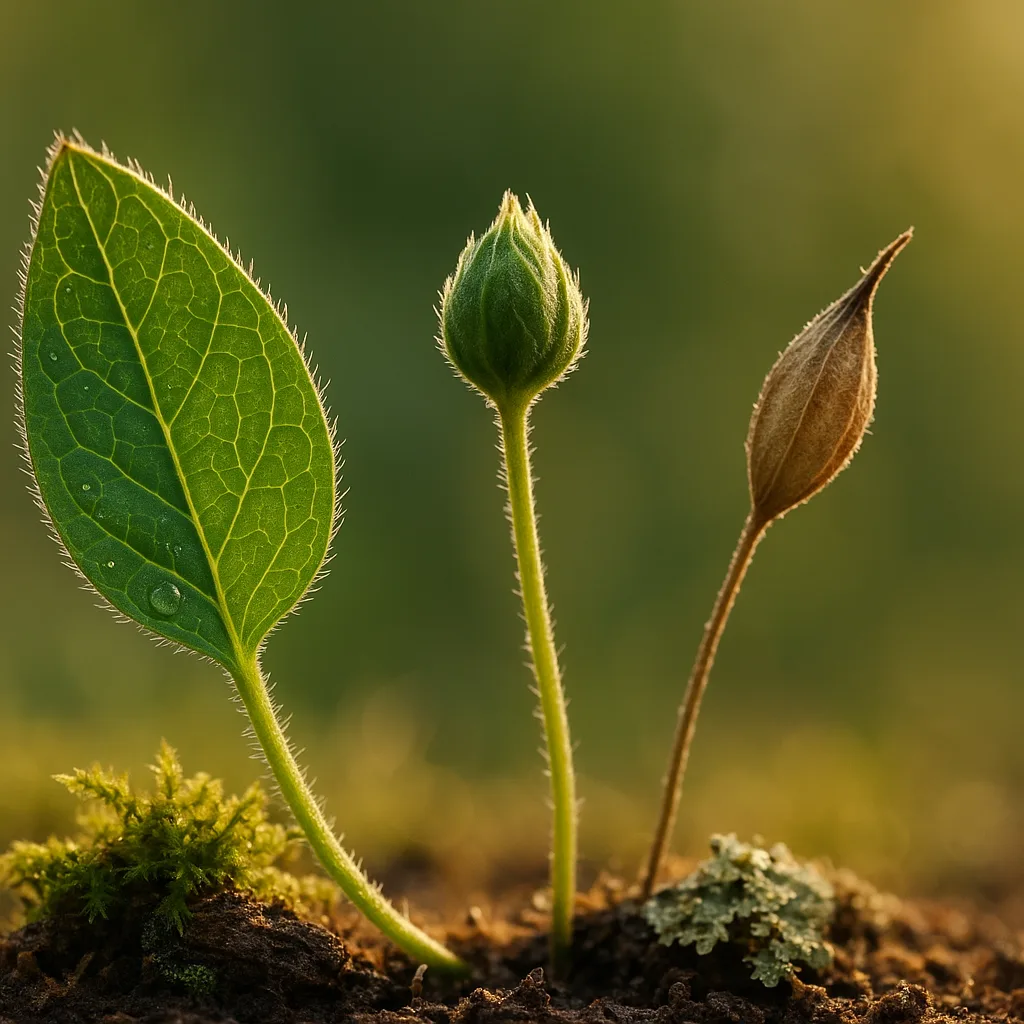
- Immediate ID from a photo (leaf, flower, bark, or whole plant)
- Care instructions and seasonal tips (watering, pruning, fertilizing)
- Safety and toxicity alerts (e.g., Nerium oleander is highly toxic)
- Distribution and habitat context (native range, invasive risk)
How plant identification apps work: the technology behind the name
Most apps combine computer vision models (convolutional neural networks) with botanical databases and optionally human validation. Understanding the pipeline helps you interpret confidence scores and avoid misidentifications.
Visual recognition and models
- Convolutional neural networks (CNNs) trained on millions of images recognize shapes, colors and textures.
- Top models output a ranked list of probable species with confidence percentages (e.g., 87% Quercus rubra).
- Models perform best with clear, well-lit photos of diagnostic parts: leaves, flowers, fruit, bark or entire habit.
Metadata and context
- Location, elevation and date narrow possibilities—some species only occur in particular ecoregions or seasons.
- Habitat tags (wetland, meadow, forest edge) improve accuracy by filtering unlikely species.
- Multiple photos of different parts increase certainty; many systems accept up to 5–10 images per observation.
Human verification and community
- User feedback and expert confirmations refine automated suggestions and build trust over time.
- Some apps combine AI with a community of botanists and naturalists to reach verified IDs.
Choosing the right plant identification app for your needs
Not all plant recognition app free options are equal. Decide first what you need: quick casual IDs, rigorous scientific verification, plant identification and care app features, or a grass identification app specialized for turf management.
Key features to compare
- Accuracy and database size (species coverage in your region)
- Care and cultivation guidance (watering, light, soil pH recommendations)
- Offline functionality for fieldwork without cell signal
- Privacy and data use (location sharing, image ownership)
- Platform availability: plant identification app android and plant identification app for iphone support
Free vs paid
- Free plans often provide ID suggestions and basic info but limit monthly searches and offline use.
- Paid tiers unlock advanced features: higher accuracy, curated plant care plans, disease diagnosis and integration with plant care reminders.
- For many casual users, a plant recognition app free tier is sufficient—professionals may prefer paid models.
Orvik is an example of an AI-powered visual identification app that balances fast photo IDs with practical care advice, available on both Android and iPhone platforms.
For more on this topic, see our guide on Identify Plants Fast: In-Depth PlantSnap Review.
Practical identification tips: what to photograph and what to look for
Photograph the plant parts that are most diagnostic. A single snapshot of a whole plant might give a general family; diagnostic features give species-level IDs.
Leaves
- Arrangement: opposite, alternate, or whorled (e.g., Acer saccharum—opposite; Quercus rubra—alternate).
- Shape: ovate, lanceolate, cordate—measure length and width when possible (e.g., leaves 5–12 cm long help distinguish similar species).
- Margin: entire, serrate, lobed—oak species have characteristic lobing patterns.
- Venation: pinnate, palmate, parallel (grasses have parallel venation).
- Texture and hair: pubescent (hairy) vs glabrous (smooth) surfaces can be decisive.
Flowers and inflorescences
- Color, size and number of petals (e.g., Taraxacum officinale has a yellow composite head ~2–5 cm across).
- Symmetry: radial (actinomorphic) vs bilateral (zygomorphic).
- Inflorescence type: raceme, panicle, umbel (Daucus carota—umbel), or spike.
- Bloom time: month range (spring, summer, autumn) narrows candidates.
Fruits, seeds and bark
- Fruit type: capsule, berry, drupe or samara (Acer spp. samaras, ~2–4 cm long).
- Seed/fruit color and persistent calyx aid ID (e.g., many Prunus fruits are drupes).
- Bark texture and color (mature Quercus rubra: shallow ridged bark) are useful for trees outside leaf season.
Grasses and sedges (grass identification app tips)
- Check ligule type (membranous, hairy) and auricles; Poa pratensis has a short membrane ligule ~1–2 mm.
- Leaf blade width and cross-section: Festuca arundinacea blades are 2–6 mm wide, coarse and folded or flat.
- Inflorescence structure: panicle vs spike helps separate species (Cynodon dactylon typically has digitate spikes).
Plant identification and care: translating an ID into practical action
Knowing a plant’s species lets you tailor care: water needs, light exposure, soil type, fertilization regimen and pruning schedule. A plant identification and care app should give you these specifics.
You may also find our article on Identify Plants Fast: Expert Guide to Free Apps helpful.
Care basics linked to identification
- Water: species-specific ranges (e.g., Salix spp. favor moist to wet soils; Sedum spp. prefer dry conditions).
- Light: full sun (6+ hours), partial shade (3–6 hours), deep shade (<3 hours).
- Soil: pH preferences (acidic, neutral, alkaline) and texture (sandy, loam, clay) matter for nutrient availability.
- Nutrients and fertilization: heavy feeders (Brassica, Solanaceae) vs light feeders (many native perennials).
Seasonal care and phenology
- Pruning timing: spring-flowering shrubs (Prunus, Philadelphus) prune after bloom; summer-flowering shrubs can be pruned in late winter.
- Dormancy and winter protection: bulbs (Tulipa, Narcissus) need dry dormancy; tender perennials may need mulch.
- Pest and disease cycles: fungal diseases peak with humidity; insect life cycles often align with host flowering times.
Safety and toxicity warnings
- Always check toxicity for pets and children. Examples: Nerium oleander, Aconitum napellus (aconite), and Digitalis purpurea contain cardiotoxins.
- Contact allergens: Toxicodendron radicans (poison ivy) causes allergic contact dermatitis from urushiol.
- When in doubt, treat unknown berries and leaves as potentially toxic; do not ingest and wash hands after handling.
Common lookalikes: X vs Y — how to tell them apart
Many field misidentifications arise from lookalikes. Below are practical comparisons with visual cues you can use in the field.
Poison hemlock (Conium maculatum) vs Queen Anne's lace (Daucus carota)
- Stem: Conium has smooth, hollow stems with purple blotches; Daucus stems are hairy and green.
- Leaves: Hemlock leaves are more finely divided, with a lacy fern-like appearance; carrot leaves are thicker, pinnately divided.
- Smell: Crush a leaf—Daucus smells like carrot; Conium has a musty unpleasant odor.
- Safety: Conium is highly toxic—do not ingest or taste.
Poison ivy (Toxicodendron radicans) vs Virginia creeper (Parthenocissus quinquefolia)
- Leaflet count: Poison ivy typically has three leaflets; Virginia creeper has five (occasionally three).
- Attachment: Poison ivy leaflets attach to a single petiole; Virginia creeper leaflets radiate from a central point.
- Seasonal color: Both can show red fall color, but vine architecture and leaflet number are decisive.
Red oak (Quercus rubra) vs Black oak (Quercus velutina)
- Lobes: Q. rubra has 7–11 shallow, U-shaped lobes with pointed bristles; Q. velutina lobes are deeper with rounded sinuses.
- Bark: Young Q. rubra bark is smooth then becomes scaly; Q. velutina has dark, blocky bark.
- Acorns: Size and cupule coverings differ—measure acorns if present (commonly 1–2.5 cm).
Using Orvik effectively: field techniques and best practices
Orvik’s AI-driven visual recognition is built for field use. Use the app to accelerate learning and confirm identifications, but pair its suggestions with basic botanical checks.
Looking beyond this category? Check out Sweetest Blueberries: Varieties, ID & Tips.
Related reading: Identify Plants Fast: Expert Guide to Flora Apps.
- Take multiple photos: one of the whole plant, one close-up of a leaf (include a ruler or coin for scale), one of the flower and one of the bark or fruit if available.
- Include habitat context: wide-angle shots showing streamside, meadow, or forest edge help the app filter species by likely habitat.
- Use the app’s care module after ID: get watering frequency, light needs and seasonal maintenance tips tailored to the species.
- Use offline mode on iPhone or Android when working in remote areas—Orvik supports cached recognition models for common species lists.
Orvik is particularly useful for gardeners and land managers who want both a reliable identification and actionable care advice in one place. Its platform supports plant identification app android users and plant identification app for iphone users alike.
Conclusion
When someone searches for a plant identification application they want fast, accurate species names, safety information and care guidance. By combining photographic best practices (clear diagnostic shots, scale, habitat context) with an app like Orvik, you can get high-confidence IDs and immediately translate them into plant care routines. Whether you need a plant and flower id app for casual curiosity, a grass identification app for turf management, or a professional-grade tool for restoration work, choose an app that matches accuracy, regional coverage and the care features you need.
Frequently Asked Questions
- Are plant identification apps free to use?
- Many apps offer a free tier with basic ID features; premium plans add more identifications, offline use and extended care guides.
- Which is better: a plant identification app for Android or iPhone?
- Both platforms support high-quality apps; choose based on specific app availability, camera quality and offline support. Orvik supports both platforms.
- Can apps identify grasses and sedges accurately?
- Grasses are harder; identification accuracy improves with clear ligule/inflorescence photos and region-specific models. A dedicated grass identification app or features helps.
- How accurate are AI identifications?
- Many apps achieve 80–95% accuracy at the genus level and lower for species-level IDs in complex genera; multiple photos and community verification improve results.
- Will an app tell me if a plant is poisonous?
- Good apps flag toxic species and give handling warnings, but always treat unknown plants with caution and consult local poison control for ingestion incidents.
- Can I use plant ID apps offline?
- Some apps provide offline recognition through cached models or downloadable region packs; check the app’s feature list before heading into the field.
- How should I photograph plants for best results?
- Take multiple photos: whole plant, leaf (with scale), flower, fruit and habitat. Avoid heavy backlighting and motion blur.