
Red plants catch the eye—from blazing maples in autumn to scarlet stems in an aquarium. If you typed "red plants names" into a search bar, you probably want two things: a reliable list of likely species and practical tips to identify them in the field or tank. This guide, written by a field-experienced botanist and horticulturist, lists terrestrial and aquatic red plants, explains how to tell similar species apart, and gives measurable identification cues (leaf size, habit, color tones, and habitat). Use Orvik or a field guide to confirm tricky IDs with photos.
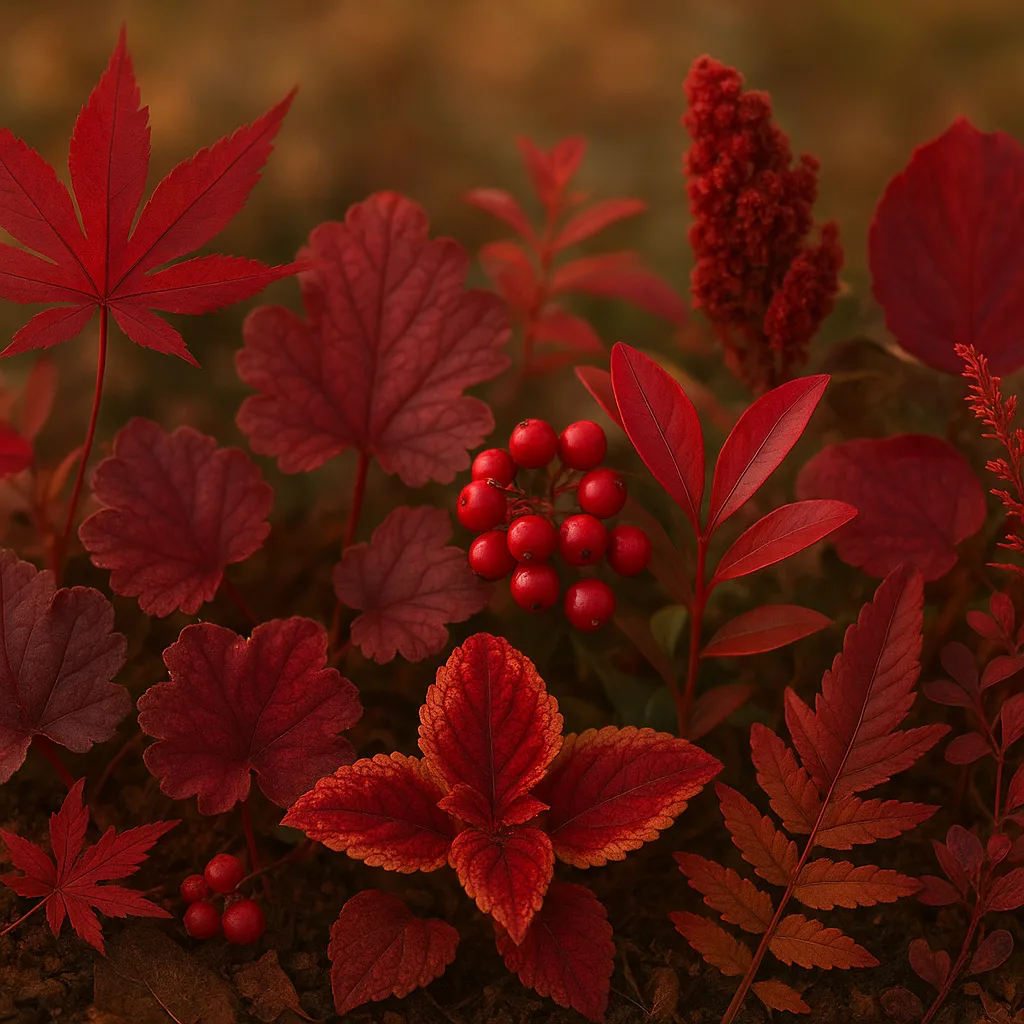
What people mean by "red plants names" (search intent)
When someone searches for "red plants names" they usually want one or more of the following:
- A list of common red-leaved or red-stemmed plants (ornamental or wild)
- Names of aquatic or underwater red plants for aquariums and ponds
- Visual identification tips to distinguish species with similar color
- Information on toxicity and habitat so they can safely plant, handle, or remove species
This article addresses all of those. If you prefer quick ID on the go, photograph the leaf or whole plant and try Orvik — it will suggest likely names and highlight key visual features you can check in the field.
Red trees and shrubs: common species and how to spot them
Red foliage in woody plants often appears in spring (new growth), autumn (senescence), or year-round in cultivars. Below are widely encountered trees and shrubs with distinctive red color.
For more on this topic, see our guide on Identify Plants Fast: In-Depth PlantSnap Review.
- Acer rubrum (Red Maple) — Leaves 6–12 cm across, usually 3–5 lobes; young leaves and fall foliage vivid red to scarlet. Tree height 10–30 m. Native to eastern North America; common in wetlands and uplands.
- Acer palmatum (Japanese maple) — Many cultivars with red or purple leaves (e.g., ‘Atropurpureum’). Leaf size 4–12 cm, deeply lobed; mature tree 2–8 m. Grown in temperate gardens worldwide.
- Cornus sericea / C. stolonifera (Red osier dogwood) — Red stems especially visible in winter; leaves 5–10 cm, elliptical; shrub 1–3 m tall. Native to North America, often in riparian zones.
- Photinia × fraseri (Red Tip Photinia) — New leaves bright red, older leaves green; leaf 5–10 cm, leathery. Common hedge shrub in warm temperate zones.
- Nandina domestica (Heavenly bamboo) — New foliage red, berries bright red; leaves pinnate 30–60 cm long. Evergreen shrub in mild climates; berries toxic to birds and livestock.
Identification tips for woody red plants
- Leaf arrangement: opposite leaves suggest maples (Acer) or dogwoods (Cornus); alternate leaves suggest Photinia or Nandina.
- Stem color persistence: Photinia red is new growth (spring–summer); Cornus red stems are most noticeable in winter.
- Seasonality: Acer rubrum shows red in spring and autumn; Japanese maples may hold purple-red all season.
Red perennials, groundcovers, and succulents
Perennials and groundcovers provide rich red tones in borders and containers. Succulents and sedums often show red under sun stress or cool nights.
- Heuchera spp. (Coral bells) — Leaf 2–8 cm across, many cultivars with bronzy-red to ruby foliage (e.g., ‘Palace Purple’). Height 20–45 cm. Hardy in USDA zones 4–9.
- Plectranthus scutellarioides (Coleus) — Leaves 4–20 cm, bold variegation with deep reds and purples. Tender perennial or annual; height 15–90 cm depending on cultivar.
- Sedum spurium ‘Dragon’s Blood’ — Low mat-forming succulent, 2–5 cm leaves that turn deep red in full sun and cool weather. Height 2–5 cm; spreads 20–30 cm.
- Aeonium arboreum ‘Zwartkop’ — Rosettes up to 30 cm wide, nearly black to dark purple-red in strong sun. Height 30–70 cm.
- Echeveria ‘Perle von Nürnberg’ — Rosette succulent with pink-red margins; rosette diam. 8–12 cm.
Practical care and behavior
- Many red-leaved perennials intensify color with higher light and cooler nights (e.g., coleus and sedum).
- Succulents exposed to full sun often develop stronger red pigments (anthocyanins) as stress response.
- Heuchera colors vary by soil pH and fertility—high nitrogen can dull red tones.
Red aquatic and underwater plants (names and ID tips)
There’s a strong interest in aquatic red plants for aquascaping and ponds. Below are popular red aquatic species used in freshwater aquaria and shallow ponds. This section answers queries like "aquatic plant name," "name of water plants," "name three aquatic plants," and "5 aquatic plants name."
- Alternanthera reineckii — A classic red aquarium plant. Leaves 1–4 cm long, often elliptic; overall height 10–40 cm depending on lighting and CO2. Color ranges from coppery-red to deep wine-red. Native to South America; grown emersed or submerged.
- Ludwigia repens — Stem plant with alternate leaves 2–5 cm; stems 20–40 cm. Under intense light leaves turn orange-red to red. Native to Americas; versatile in ponds and aquariums.
- Rotala rotundifolia — Fine-stemmed, with small round leaves 3–8 mm, forms red-pink tips under high light and CO2. Height 15–50 cm. Native to Southeast Asia.
- Ludwigia inclinata — Shows intense red/orange when grown emersed and under strong light; leaf size 1–3 cm; height 15–40 cm.
- Hygrophila polysperma 'Rosanervig' — Pale-pink/red veins on green leaves; leaf length 3–6 cm; height 20–50 cm.
Top 5 aquatic plants names (quick list)
- Alternanthera reineckii
- Ludwigia repens
- Rotala rotundifolia
- Ludwigia inclinata
- Hygrophila polysperma 'Rosanervig'
Identification and aquarium care
- Color: Red shades intensify with high light (≥ 0.5–1.0 W/L or modern LED equivalents) and increased CO2 (20–30 ppm).
- Leaf size & shape: Alternanthera has broader elliptic leaves (1–4 cm); Rotala develops tiny round leaves (3–8 mm).
- Placement: Use Alternanthera as a midground or background plant; Rotala and Ludwigia make dense background masses.
- Water depth & habit: Many red aquatic plants grow emersed in shallow water and transition to submerged forms—expect differences in leaf shape and color.
If you need a quick name for a red aquarium plant, photograph a stem with leaves and run it through Orvik; it can narrow down to likely species and suggest distinguishing traits to verify.
You may also find our article on Identify Plants Fast: Expert Guide to Free Apps helpful.
How to identify red plants in the field: measurable visual cues
Identification should combine color with objective characters. Anthocyanin pigments produce red tones but are not diagnostic alone. Rely on leaf shape, venation, arrangement, stem characteristics, and habitat.
- Leaf arrangement: Opposite (pairs) vs alternate (staggered) vs pinnate or compound—opposite leaves suggest maples, dogwoods; alternate suggests many shrubs like Photinia.
- Leaf size and shape: Measure leaf length and width in cm. Maples: lobed, 6–12 cm. Heuchera: rounded 2–8 cm. Alternanthera: elliptic 1–4 cm.
- Venation: Palmate venation (many main veins from one point) is typical of maples; pinnate venation (one central midrib) is common in many shrubs.
- Stem & bark: Red osier dogwood has smooth red stems that remain vivid in winter; Photinia stems are not persistently red.
- Texture & sheen: Waxy leaves often belong to evergreen shrubs; matte, finely hairy leaves may belong to perennials (heuchera).
Field checklist for confident ID
- Photograph whole plant and close-ups of leaves and stems.
- Measure leaf length, width, and note arrangement (opposite/alternate).
- Note habitat (wetland, upland, shade, sun) and geographic region.
- Observe seasonality: fresh red growth vs fall color vs persistent pigment.
- Use Orvik or a dichotomous key with the collected details to confirm the name.
Comparisons: How to tell similar red plants apart
Color alone causes misidentification. Here are practical comparisons you will encounter frequently.
Red Maple (Acer rubrum) vs Japanese Maple (Acer palmatum)
- Acer rubrum: leaves usually 3–5 lobes, coarse serration, petiole 2–5 cm; tree 10–30 m tall; native to eastern North America; red often appears in spring and autumn.
- Acer palmatum: more deeply divided lobes (5–9), more delicate texture, smaller overall leaf (4–12 cm), tree usually under 8 m; many cultivars with stable purple-red foliage year-round in mild climates.
- Key check: lobing pattern and overall habit (height and branching). Take a 10–20 cm sample to compare lobes and serration under magnification if needed.
Alternanthera reineckii vs Ludwigia repens (in aquaria)
- Alternanthera: broader leaves 1–4 cm, more compact rosette or bushy habit; deep, uniform red under strong light. Stems usually shorter (10–30 cm).
- Ludwigia: alternate leaves 2–5 cm, stems often longer and more spaced; leaves may show green with red margins or tints. Stems 20–40+ cm.
- Key check: leaf width and spacing on stem; Alternanthera leaves are broader and more closely spaced.
Safety, invasiveness, and toxicity
Not all red plants are safe to handle or introduce to ecosystems. This section highlights common hazards.
You might also be interested in Inside the Acai Berry: Nature’s Amazonian Purple Fruit.
- Nandina domestica — Berries contain cyanogenic glycosides and are toxic to birds (especially cedar waxwings) and some livestock if eaten in quantity; keep away from bird feeders and remove berries if planting near wildlife zones.
- Photinia — Mildly toxic to humans and pets if ingested; may cause stomach upset. Pruning can release sap that irritates skin in sensitive people.
- Euphorbia spp. (some red cultivars) — Sap is caustic and can cause dermatitis and eye injuries; wear gloves when pruning.
- Aquatic plants — Decaying plant mass can cause ammonia/nitrate spikes in closed aquaria; remove dead material promptly. Some non-native red aquatic plants can become invasive if released to waterways—never dump aquarium plants into the wild.
When in doubt, consult local extension services or use Orvik to identify the species and then check its local invasive status and toxicity profile.
Related reading: Identify Plants Fast: Expert Guide to Flora Apps.
Cultivation notes and seasonal behavior
Red coloration often responds to light, temperature, and nutrients. Below are cultivation tips by plant type.
- Trees and shrubs: Many red cultivars require full sun to maintain color (6+ hours/day), though some like certain Japanese maples prefer filtered sun. Fall color intensity for maples depends on warm days and cool nights—temperatures 10–15 °C at night enhance anthocyanin production.
- Perennials and groundcovers: Sun increases red pigmentation, but excessive heat can bleach colors. Provide 4–8 hours of morning sun for best color in many heucheras and coleus.
- Aquatic plants: Aim for strong lighting (PAR 50–150 µmol·m−2·s−1 at substrate level for red coloration) and stable CO2 (15–30 ppm) for intense red tones. Moderate fertilization with balanced micro- and macronutrients prevents chlorosis which can mask red pigments.
Using Orvik and other resources for identification
Orvik and similar AI-powered visual ID tools speed up identification: photograph the leaf, stem, flower, or whole plant and the algorithm will propose probable names with confidence scores. Orvik also highlights diagnostic features to check (leaf venation, margin, arrangement), making it easy to verify suggestions in situ.
- Best practice: take multiple photos — whole plant, close-up of leaf (include scale like a coin), stem detail, and habitat context.
- Cross-check: use Orvik suggestions as a starting point, then consult floras (e.g., USDA PLANTS database for North America, or regional keys) to confirm.
- Recordkeeping: store geotagged photos and brief notes (date, habitat, substrate) to build a local reference library useful for seasonal observation.
Frequently Asked Questions
- What are common red aquatic plants?
- Common red aquatic plants include Alternanthera reineckii, Ludwigia repens, Rotala rotundifolia, Ludwigia inclinata, and Hygrophila polysperma 'Rosanervig'. They develop red tones under high light and stable CO2.
- How can I tell a red maple from a Japanese maple?
- Check leaf lobing and size: Acer rubrum has fewer, coarser lobes (3–5) and larger leaves; Acer palmatum has more delicate, deeply divided lobes (5–9) and a finer texture. Tree habit and height also differ.
- Are red plants more toxic than green ones?
- No—color is not an indicator of toxicity. Toxicity is species-specific. For example, Nandina domestica has toxic berries, while many red-leaved perennials are non-toxic.
- Why do aquarium plants turn red sometimes?
- Red coloration is usually due to anthocyanin pigments produced in response to high light, CO2 availability, and nutrient balance. Increasing light and CO2 often intensifies red hues.
- Can I use red aquatic plants in outdoor ponds?
- Yes, but exercise caution: some aquatic plants can be invasive. Do not release aquarium plants into natural waterways and check your local invasive species lists before planting.
- What's the best way to identify a red plant from a photo?
- Take multiple photos showing whole plant, leaf close-up (include a scale), stem, and habitat. Use an ID tool like Orvik to get likely names and diagnostic features, then confirm with regional floras.
- How many red plant species exist?
- There isn't a fixed number—red pigmentation occurs across many genera and species due to anthocyanins. This guide highlights commonly encountered red species in gardens, landscapes, and aquaria.