
What are red spider lilies?
Red spider lilies are showy, late-summer-blooming bulbs best known for their scarlet, spidery flowers that appear on naked stems. The most commonly encountered species called the red spider lily is Lycoris radiata (family Amaryllidaceae). These bulbs produce umbels of 4–12 strap-like, reflexed tepals and very long, filamentous stamens that give the flower a ‘‘spidery’’ silhouette.
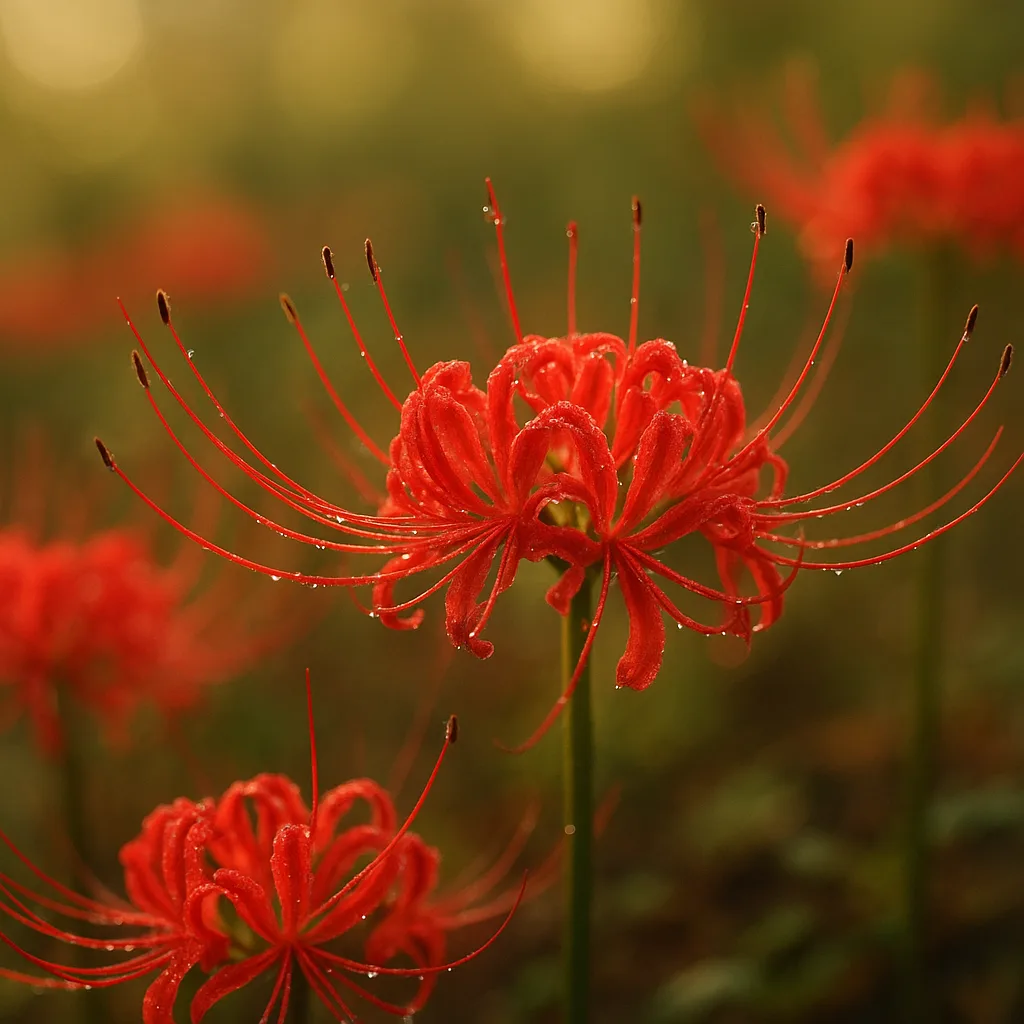
- Scientific name: Lycoris radiata
- Flower size: individual tepals ~2–4 cm long; umbels typically 8–15 cm across
- Scape (flower stalk) height: typically 30–70 cm (12–28 in)
- Bulb size: bulbs 3–6 cm in diameter
- Bloom time: late summer to early autumn; flowers usually emerge before leaves
Meaning & cultural symbolism
When people search "red spider lilies meaning" they are usually looking for the cultural and symbolic associations of this arresting flower. Across East Asia, especially Japan and China, the red spider lily carries strong funerary and liminal associations, but modern interpretations are varied.
- Japan: Known as Higanbana (彼岸花), often associated with death, the afterlife, and the equinox (Higan). Traditionally planted near graves and rice paddies to ward off rodents; symbol of final goodbyes, separation, and reincarnation.
- China: Called 曼珠沙華 (mànzhūshāhuá) or similar names; connected to lost souls, the path between life and death, and legends about reunion after separation.
- Modern/Western interpretations: Often interpreted as symbols of passion, abandonment, or ephemeral beauty. Gardeners prize them for bold late-season color.
Meanings vary by color (see the comparisons section), and cultural context matters: in some places the flower is a reminder of impermanence; in others it’s simply admired for its dramatic beauty.
Scientific identity & related species
"Spider lily" is a common name applied to several genera with spidery flowers. It’s important to separate the botanical identities:
- Lycoris (Amaryllidaceae) — includes Lycoris radiata (red spider lily), L. squamigera (pink surprise lily), L. sprengeri (pink), L. aurea (yellow), and more. Many are native to East Asia.
- Hymenocallis (Amaryllidaceae) — often called Peruvian daffodil or white spider lily; large, white, frilly-cupped flowers, different structure from Lycoris.
- Nerine (Amaryllidaceae) — sometimes called spider lilies in horticulture; often pink or magenta, South African origin.
- Pancratium, Ismene, Scadoxus — other genera sometimes referred to as spider lilies due to similar flower morphology.
When someone asks "spider lily scientific name" they need context: for the red spider lily the accurate scientific name is Lycoris radiata. If you encounter a white, frilly, seaside lily called a spider lily, that is probably Hymenocallis littoralis or a related species.
For more on this topic, see our guide on Identifying Jasmine: Name, Meaning, and Botany.
Identification: visual cues, measurements & comparisons
Accurate field identification combines several visual cues. Below are practical tips to distinguish Lycoris radiata from lookalikes.
- Flower form: Lycoris radiata produces an umbel of 4–12 flowers with narrow, recurved tepals and long protruding stamens often twice the length of the tepals.
- Color: brilliant red to crimson; some cultivated clones are deep scarlet or slightly orange-red.
- Leaves: usually absent at flowering time (leafless scape). Leaves emerge after flowering or in spring, are strap-like, 20–40 cm long.
- Bloom timing: late summer to early autumn (August–October in temperate Northern Hemisphere), often triggered by first cool spells and heavy rains.
- Bulb & corm: bulbous, with tunics; bulbs are offset-producing and can naturalize into clumps.
Practical measurements to note in the field
- Scape height: 30–70 cm.
- Umbel diameter: 8–15 cm.
- Tepal length: 2–4 cm; very narrow and reflexed.
- Stamen length: often 4–8 cm, protruding conspicuously.
Red vs other colors: How to tell them apart
Color variants lead to different common names and perceived meanings. Below are quick ID and meaning notes for the most-searched colors.
- Pink spider lily (Lycoris squamigera / L. sprengeri): flowers are soft pink to rose; tepals broader and less reflexed than L. radiata. Common name: Pink Surprise Lily. Meaning: gentler romance, nostalgia.
- Purple spider lily: rarer in Lycoris; some Nerine and Nerine hybrids show magenta/purple colors. Meaning: mystery, royalty, enchantment.
- Black spider lily: true black flowers are extremely rare; often described for deep maroon or very dark red cultivars. Cultural meaning: mourning, finality, gothic symbolism.
- Blue spider lily: a true blue spider lily is essentially non-existent in Lycoris. References to a "blue spider lily" usually mean a different genus or are symbolic/metaphorical. Meaning (symbolic): rarity, melancholy, unattainable love.
Note: color meanings are culturally derived and not botanical facts. Always pair color clues with flower structure (tepal shape, stamen length) and phenology.
Habitat, geographic distribution & seasonal behavior
Understanding where and when red spider lilies grow helps identification and interpreting cultural contexts.
You may also find our article on Daisy Names: Identification, Meanings & Baby Name Ideas helpful.
- Native range: Lycoris radiata is native to China and Korea and is widely naturalized in Japan.
- Introductions: commonly naturalized in the southeastern United States (USDA zones 6–10) and other temperate regions with mild winters.
- Typical habitats: edges of rice paddies, riverbanks, temple grounds, cemeteries, roadsides, and cultivated garden beds. They tolerate a range of soils but prefer well-drained, moderately fertile sites.
- Seasonal behavior: unique “leafless flowering” habit — flowers appear on scapes in late summer/early autumn while leaves are absent. Leaves appear in autumn or following spring and persist through late spring before dying back in early summer.
Toxicity & safety
Red spider lilies are not edible. Bulbs and other plant parts contain toxic alkaloids (notably lycorine). Be mindful around children, pets, and livestock.
- Toxic compounds: lycorine and other Amaryllidaceae alkaloids.
- Symptoms of ingestion: nausea, vomiting, abdominal pain, diarrhea; in higher doses, hypotension, tremors, and central nervous system depression may occur.
- Handling precautions: wear gloves when handling bulbs to avoid skin irritation; wash hands after contact.
- First aid: if ingestion occurs, do not induce vomiting unless instructed by a medical professional; contact poison control or seek medical attention promptly.
Cultivation & garden uses
Despite morbid symbolism in some cultures, Lycoris radiata is a popular ornamental for its stunning late-season display. Here are practical gardening notes.
- Hardiness: commonly grown in USDA zones 6–10; some microclimate protection helps in colder zones.
- Planting depth & spacing: plant bulbs with the neck 3–5 cm below soil surface; space 15–25 cm apart to allow offsets to form clumps.
- Light: full sun to partial shade. In hotter climates afternoon shade preserves bulb vigor.
- Soil & drainage: prefers well-drained soil; bulbs may rot in heavy, waterlogged clays unless raised beds or grit is added.
- Watering: drought-tolerant once established; water during leaf growth in spring; allow to dry back during summer dormancy.
- Propagation: by offsets (bulb division) in dormant season; seed-grown plants can take several years to flower.
Gardeners should be aware that Lycoris can naturalize and form large drifts. If you prefer distinct clumps, lift and divide bulbs every 4–6 years.
Looking beyond this category? Check out Dolphin Diets: What They Eat and Why.
Identification in the field: using Orvik and practical tips
For many people the immediate need when searching "red spider lilies meaning" is to confirm whether a flower they’ve seen is indeed the famed Higanbana. Modern image-ID tools like Orvik speed this up and provide supporting information.
Related reading: Photo-Based Plant ID: Field-Proven Techniques.
- Photographing for ID: take clear shots of the whole plant, umbels close-up, the base/bulb if possible, and any leaves. Include a ruler or common object for scale.
- Key features to capture: tepals (shape and reflex), stamen length relative to tepals, presence/absence of leaves at flowering, scape height, and habitat context (cemetery, rice paddy, roadside).
- How Orvik helps: Orvik can analyze your photo and compare structural features against a large database to suggest Lycoris radiata or close relatives, flagging distinguishing characters (e.g., reflexed tepals, extended stamens). Use Orvik to collect location and time data for more accurate ID.
- Manual checks after app ID: verify the scape is leafless at bloom time and check local flowering calendar (August–October) to confirm seasonality.
Orvik is useful for quick field confirmations and can point you toward authoritative resources on symbolism and toxicity. Use the app to build a personal reference set of images if you frequently encounter Lycoris or similar spiders in your area.
FAQ
- Q: What is the scientific name of the red spider lily?
A: The common red spider lily is Lycoris radiata. - Q: Why do red spider lilies bloom without leaves?
A: Lycoris species exhibit hysteranthy — flowers emerge on leafless scapes, with leaves appearing later. This reduces shading of developing leaves and times flowering to late summer. - Q: Are red spider lilies poisonous?
A: Yes. Bulbs and plant tissues contain lycorine and related alkaloids that can cause gastrointestinal and neurological symptoms if ingested. - Q: What does a blue spider lily mean?
A: True blue spider lilies are essentially non-existent in Lycoris. References to blue often point to other genera or are metaphorical; symbolically, blue suggests rarity, longing, or melancholy. - Q: Are red spider lilies native to Japan?
A: Lycoris radiata is native to China and Korea and was widely naturalized in Japan centuries ago; it has become culturally important there. - Q: How do I tell a Lycoris from a Hymenocallis (white spider lily)?
A: Lycoris has narrow, reflexed tepals and long stamens; Hymenocallis has broad, white tepals and a prominent cup (corona) at the center with a frilly margin.
Conclusion
When people search "red spider lilies meaning" they often want both the botanical facts (scientific name, identification, habitat, toxicity) and the cultural symbolism attached to these dramatic flowers. Lycoris radiata is easy to recognize by its leafless scarlet umbels, narrow reflexed tepals, and long stamens. Its cultural resonance — especially in Japan and China — ties it to themes of death, parting, and the border between worlds, though gardeners and florists may emphasize passion and striking late-season color instead.
- For field ID, photograph flower structure, scape, leaves (if present), and habitat.
- Use tools like Orvik to cross-check photos and get quick, evidence-based identifications.
- Handle bulbs carefully — they are attractive but toxic.
Whether you encounter these lilies along a country lane or in a temple garden, knowing their botanical identity and cultural meanings will deepen your appreciation of their bold, fleeting beauty.
Frequently Asked Questions
- What is the scientific name of the red spider lily?
- The red spider lily most commonly referred to is Lycoris radiata, a member of the Amaryllidaceae family.
- Why are red spider lilies associated with death?
- In Japan and parts of East Asia the flower (Higanbana) is traditionally planted near graves and rice paddies and appears around the autumnal equinox; folklore links it to final goodbyes, the afterlife, and separation, hence the association with death.
- Are red spider lilies poisonous to pets or people?
- Yes. Bulbs and plant parts contain toxic alkaloids such as lycorine. Ingestion can cause nausea, vomiting, diarrhea, and more serious symptoms—seek medical attention if ingestion is suspected.
- How can I tell a red spider lily from a white spider lily?
- Lycoris (red spider lily) has narrow, reflexed tepals and long protruding stamens; Hymenocallis (white spider lily) has broad white tepals and a frilly central cup (corona). Flower structure is the clearest distinguishing feature.
- Do true blue spider lilies exist?
- True blue spider lilies are essentially non-existent in the Lycoris genus. References to blue spider lilies often mean a different genus or are symbolic; blue-toned lilies are rare and not typical of Lycoris radiata.
- When do red spider lilies bloom?
- They typically bloom in late summer to early autumn (August–October in temperate Northern Hemisphere). Flowers commonly appear before leaves (a phenomenon called hysteranthy).