
Why tree leaf identification matters
When someone types "identify this tree leaf" into a search bar they usually want three things: a reliable name, quick visual cues to confirm it, and practical context (habitat, season, and whether it's safe). Tree leaf identification helps with landscaping, foraging, ecological monitoring, pest management, and simple curiosity. A confident ID can mean the difference between pruning the right tree, diagnosing a disease like fire blight on a pear, or avoiding a toxic plant.
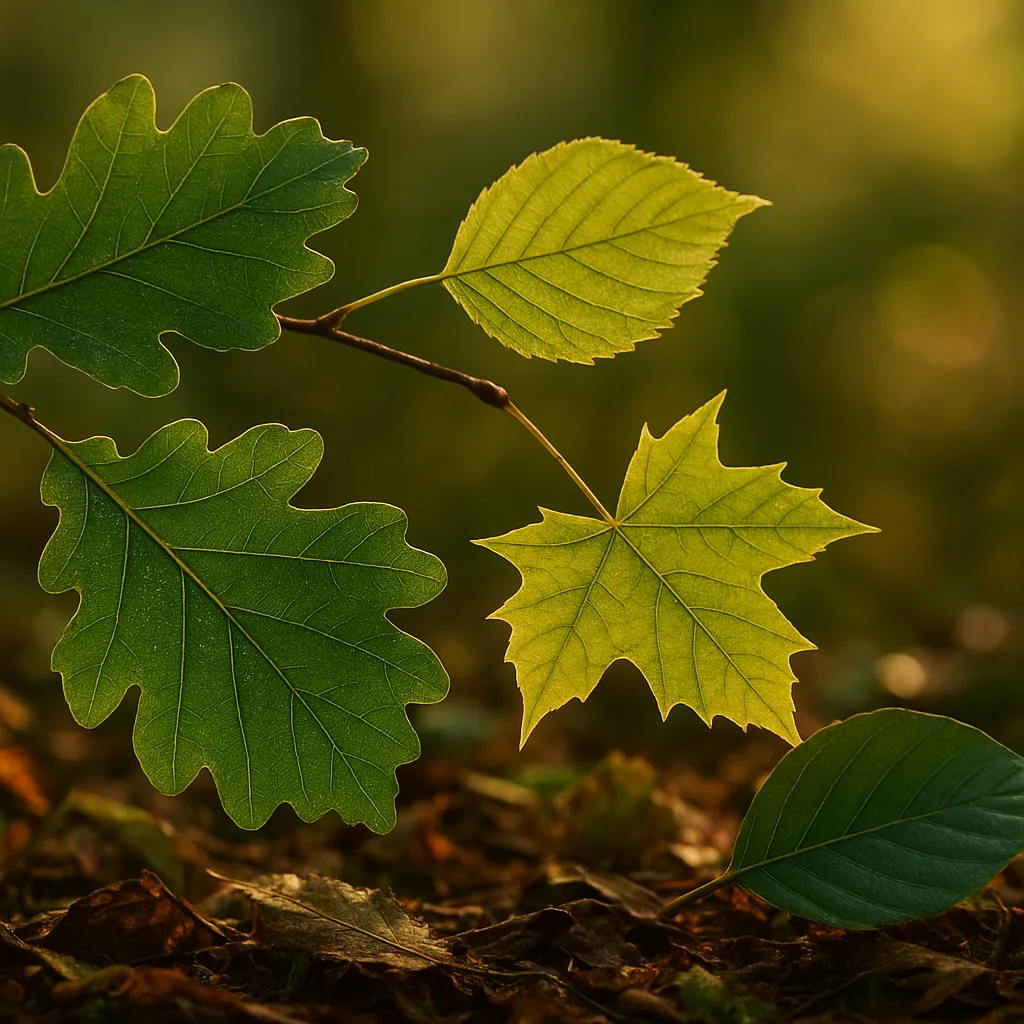
- Practical uses: landscaping choices, fruit tree care, forestry and conservation.
- Safety: identify toxic species or allergenic trees (e.g., poison oak, certain oleanders).
- Scientific / recreational: bird habitat mapping, citizen science, nature study.
Basic leaf traits to examine
Start by observing a few measurable, repeatable features. The combination of these traits usually narrows possibilities to a genus or species.
Arrangement (how leaves attach)
- Alternate — single leaves staggered along a stem (e.g., oak, birch).
- Opposite — pairs of leaves at each node (e.g., maples Acer spp., ashes Fraxinus spp.).
- Whorled — three or more leaves at a node (rare in trees).
Type and shape
- Simple — single blade per petiole (e.g., Quercus alba, Betula papyrifera).
- Compound — multiple leaflets per petiole; pinnate (ash, 5–11 leaflets) or palmate (buckeye, 5–7 leaflets).
- Shapes: ovate, lanceolate, elliptical, cordate (heart-shaped), palmately lobed (maples), pinnately lobed (oaks).
Margins and venation
- Margins: entire (smooth), serrated (teeth), crenate (rounded teeth), lobed (deep indentations).
- Venation: pinnate (one main midrib, side veins), palmate (several main veins from one point), parallel (common in monocots).
Size, texture, and color
- Measure length: leaves often fall into ranges (e.g., maple leaves 6–15 cm across; oak leaves 7–25 cm long).
- Texture: leathery (evergreens like live oak), papery (birch), hairy (undersides of some apples).
- Color/patterns: variegation or seasonal color (maple autumn reds, yellow poplar bright yellow).
Common tree types and how to ID their leaves
Below are practical identification notes for common North American and European trees, with measurements, scientific names, and habitat notes.
Maples (Acer spp.)
- Leaf: palmately lobed 3–9 lobes; 6–15 cm across depending on species (Acer saccharum sugar maple vs Acer platanoides Norway maple).
- Arrangement: opposite.
- Key cues: sap exudes when cut, opposite leaf arrangement, samara fruits (paired winged seeds).
- Habitat: temperate forests; sugar maple prefers well-drained soils, Norway maple tolerates urban conditions.
Oaks (Quercus spp.)
- Leaf: lobed (rounded lobes in white oaks like Quercus alba; pointed lobes with bristles in red oaks like Quercus rubra); 7–25 cm long.
- Arrangement: alternate.
- Key cues: persistent acorns, thick leathery leaves in some species, winter-bare branches.
Birches and alders (Betula, Alnus)
- Leaf: simple, ovate to triangular, serrated margins; 3–8 cm long for Betula papyrifera (paper birch).
- Bark: papery white bark is a strong ID for B. papyrifera.
- Habitat: cool, moist soils; riparian zones for alder.
Poplars and aspens (Populus spp.)
- Leaf: broadly ovate, finely serrated; trembling aspen (Populus tremuloides) leaves 3–7 cm with flattened petiole causing quiver in wind.
- Key cue: flattened petiole and trembling behavior.
Ash (Fraxinus spp.)
- Leaf: pinnately compound, 5–11 leaflets, each leaflet 6–12 cm long; opposite leaf base on twig.
- Key cue: opposite, compound leaves — similar look to walnut but opposite (walnut has alternate leaf arrangement).
Willows (Salix spp.)
- Leaf: narrow lanceolate, 3–12 cm long, finely serrated; often on wet soils along streams.
- Key cue: flexibility of twigs, presence in riparian habitats.
Fruit trees — apple (Malus domestica) and pear (Pyrus communis)
- Apple leaves: simple, alternate, oval to obovate, 4–9 cm long, usually finely serrated; underside often pubescent (hairy).
- Pear leaves: simple, more glossy and leathery than apple, 4–7 cm long, more tapered toward base and tip; margins often finely serrated.
- Fruit tree ID tip: compare leaf underside pubescence (apple often fuzzier) and leaf sheen (pear glossier).
For fruit tree enthusiasts searching "apple tree identification by leaf" or "fruit tree identification by leaf," these surface and margin details are often decisive. When diagnosing problems, photograph both upper and lower leaf surfaces and any fruit or bloom.
For more on this topic, see our guide on Master Tree ID: Leaves, Bark & Wood.
Bush identification by leaf: how shrubs differ from trees
Shrubs (bushes) and trees sometimes share species — e.g., some willow species can be shrubby. Focus on growth form plus leaf traits.
- Growth form: shrubs are multi-stemmed and usually under 5–6 m tall; trees have a single trunk and a clear canopy above 6 m.
- Leaf size and clusters: shrubs often have smaller leaves or dense clusters (e.g., Rubus raspberries have pinnate leaves with 3–5 leaflets).
- Bud and node spacing: shrubs have closer node spacing, younger shoots, more flexible branches.
Practical quick-list to separate bush vs tree by leaf:
- Is the plant multi-stemmed and under 5 m? Likely a shrub.
- Are the leaves smaller than 5 cm and densely clustered? Many shrubs fit this pattern.
- Are the leaves compound with many small leaflets (e.g., 7–15)? Could be a shrub or small tree; check overall height.
Tree leaf identification chart: quick field key
Use this condensed field key like a flowchart to get a rapid ID in the field. Measure and observe carefully.
You may also find our article on Mastering Oak Leaves: Identify Trees in the Field helpful.
- Are the leaves needle-like or scale-like? If yes — conifer (pine, spruce, fir). If no — go to 2.
- Are leaves opposite on the twig? If yes — check maples (palmate), ashes (compound), dogwoods (simple). If no — go to 3.
- Are leaves compound (multiple leaflets)? If yes — look at number and leaflet shape: pinnate 5–11 (ash), many small leaflets (black locust). If no — go to 4.
- Are leaves lobed deeply (deep sinuses)? If yes — likely oak or sweetgum; check for acorns vs star-like fruit. If no — go to 5.
- Are margins serrated? If yes — birch, poplar, willow, apple. Look for additional cues: bark type, petiole form, hairiness.
- If still uncertain, photograph the leaf and surrounding twig/fruit and use an AI visual tool like Orvik for a rapid second opinion.
- Tip: always include a scale in photographs (a coin or ruler) and photograph the leaf's upper and lower surfaces.
Common look-alikes: How to tell them apart
Many beginner ID errors come from confusing species with similar leaves. These comparison pairs are frequent search queries.
Maple (Acer) vs Sycamore (Platanus)
- Maple: true palmate lobes, opposite leaves, samara fruits. Leaves 6–15 cm across.
- Sycamore: palmate-like lobes but a rougher, irregular margin and large flaking bark; fruit a hanging ball of achenes.
Oak (Quercus) vs Chestnut (Castanea)
- Oak: lobed leaves, acorns present; lobes either bristle-tipped (red oak group) or rounded (white oak group).
- Chestnut: finely serrated, long, lanceolate leaves (10–30 cm), shiny and long-pointed with many sharp teeth.
Apple (Malus) vs Pear (Pyrus)
- Apple: leaves 4–9 cm, often fuzzy underside, broader and rounder.
- Pear: leaves 4–7 cm, glossier, more leathery, tapered base; look for pear-shaped fruit if present.
Poplar (Populus) vs Willow (Salix)
- Poplar: flattened petiole makes leaves tremble; leaves often broader with a rounded base.
- Willow: narrow, lanceolate leaves, flexible, usually along wet areas.
Practical tips for photographing leaves and using Orvik (and safety)
Good photos and notes make identification far more reliable. AI tools like Orvik accelerate the process — capture clear, scaled images and include habitat notes.
Looking beyond this category? Check out Mastering Visual ID: Your Photo Identifier Guide.
- Take photos from multiple angles: upper leaf surface, underside, petiole, twig, bark, and whole-tree silhouette.
- Include a scale (ruler or coin) and a color reference if possible; note approximate leaf length in cm.
- Photograph seasonal details: flowers in spring, fruit in summer/fall, and any fall color.
- Use Orvik to compare your images against a large database — it can suggest species and confidence levels, but cross-check with the field traits above.
Orvik is especially useful when you have a single photo and need a fast provisional ID. Use Orvik alongside this guide to confirm or refine identifications: the human-eye cues above complement an AI's image-matching strengths.
Related reading: Identify Leaves Faster: Expert Guide.
Safety and toxicity warnings
- Never assume a plant is edible without positive identification. Some ornamental trees and shrubs contain toxic compounds (e.g., Nerium oleander — highly toxic leaves; Taxus baccata yew — all parts except arils are poisonous).
- Be cautious with racks of seeds or green foliage for livestock — black cherry (Prunus serotina) leaves and wilted branches contain cyanogenic glycosides toxic to horses and cattle.
- Allergy caution: pollen-heavy trees (birch, oak) can trigger hay fever; contact dermatitis can result from touching poison ivy (Toxicodendron radicans) leaves — the classic “leaves of three” pattern.
- If a leaf appears to have blackened edges, sticky ooze, or wilting with bacterial exudate on pear or apple leaves, isolate fruit trees and consult a specialist — these can be signs of fire blight (Erwinia amylovora) or fungal diseases.
When you suspect toxicity or disease in a plant that could affect pets or livestock, photograph and contact local extension services or use Orvik to prioritize likely species and then consult local authorities for treatment steps.
Conclusion
Tree leaf identification is a systematic process: observe arrangement, shape, margin, venation, size, texture, and context (habitat and season). Use quick field keys and comparisons to rule out common look-alikes. For rapid visual matches, tools like Orvik complement hands-on traits by offering AI-driven suggestions — always confirm with tactile and botanical clues. With practice and the tips above you'll move from asking "what tree is this?" to naming species confidently and understanding its ecology, uses, and risks.
Frequently Asked Questions
- How do I identify a tree from a single leaf photo?
- Photograph the leaf upper and lower surfaces, include a scale (ruler/coin), capture the petiole and twig, note leaf arrangement on the stem (opposite/alternate), and use an ID tool like Orvik plus this field-key to compare key traits.
- What are the fastest traits to check for tree leaf identification?
- Check arrangement (opposite vs alternate), whether the leaf is simple or compound, margin type (serrated, lobed, entire), and venation (pinnate vs palmate). These four traits narrow most IDs quickly.
- How can I tell an apple tree leaf from a pear tree leaf?
- Apple leaves (Malus domestica) are usually 4–9 cm, broader, and often have a fuzzy underside; pear leaves (Pyrus communis) are glossier, more leathery, 4–7 cm, and more tapered toward the base and tip.
- What does pear tree leaf disease look like?
- Common signs: dark brown/black blotches (pear scab), curled and blackened shoots (fire blight), and yellowing with lesions. Bacterial fire blight often causes a scorched, shepherd's crook appearance and sometimes sticky ooze.
- Can you identify shrubs by leaves alone?
- Often yes, if you combine leaf traits with growth form (multi-stemmed, under ~5 m), bud spacing, and habitat. Shrubs tend to have smaller leaves and denser branching; photographs of flowers or fruit help.
- What are common look-alikes beginners should watch for?
- Common confusions include maple vs sycamore, oak vs chestnut, poplar vs willow, and apple vs pear. Focus on lobing, margin teeth, petiole form, and bark to tell them apart.
- How reliable are AI apps like Orvik for leaf identification?
- AI apps can be highly reliable for common species when provided clear photos and context. Orvik offers fast image-based suggestions; always verify with morphological traits and local distribution data for accuracy.