
What people really mean by "types of cactus with names"
When someone searches for types of cactus with names, they usually want three things: a visual match (what does it look like?), a formal name (common and scientific), and quick tips to be confident in identification. Gardeners want care instructions; hikers want distribution and habitat; collectors want cultivar-level distinctions. This guide addresses all of those needs with field-tested visual cues, scientific names, habitat notes, and practical safety warnings.
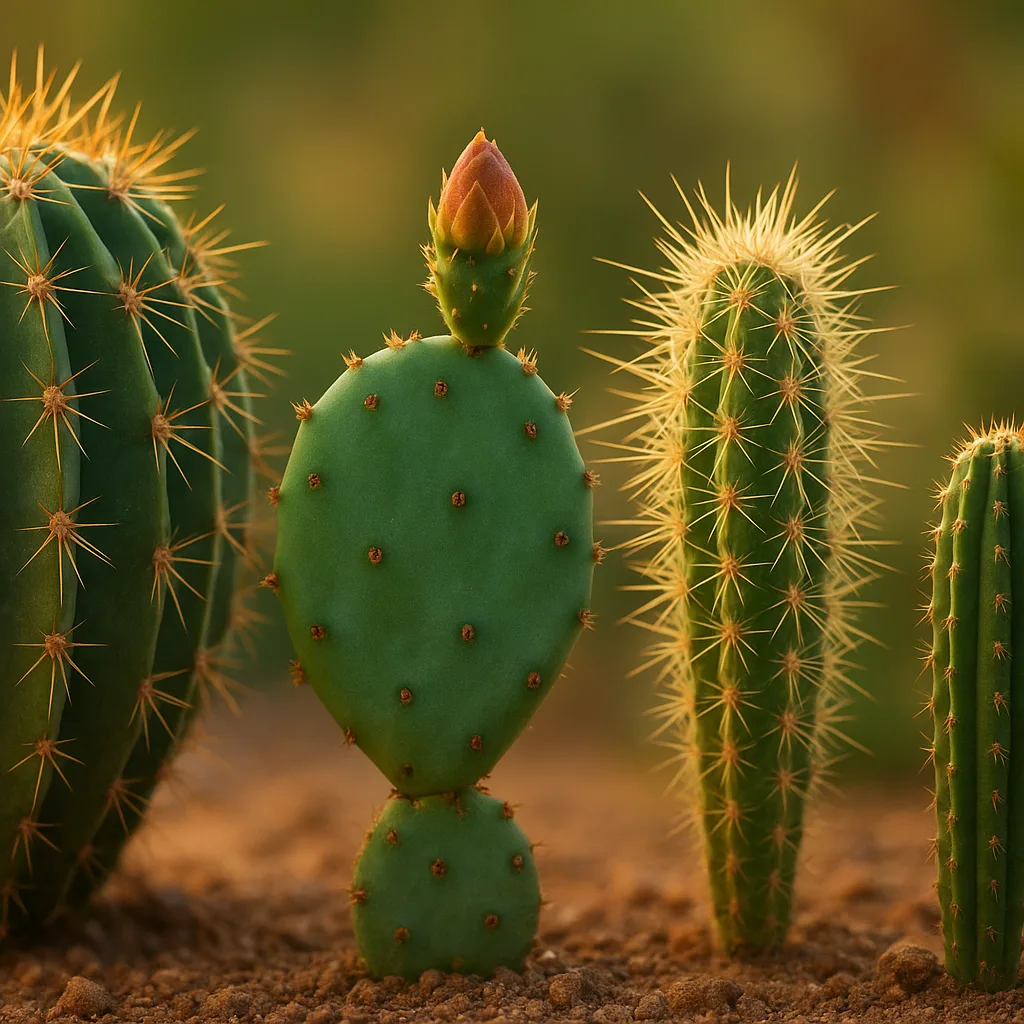
- Visual ID: color, shape, spines, areoles, flowers
- Names: common & scientific (binomial)
- Context: habitat, distribution, seasonal behavior
- Practical care or safety notes
For rapid image-based ID in the field, try using Orvik to scan plants and compare images against verified specimens. Orvik helps confirm visual matches and suggests likely species and cultivar names.
Quick visual identification guide: the features to look for
Before diving into species lists, learn the core visual cues experts use to separate cactus types:
Key features at a glance
- Areoles: Small round pads that produce spines, flowers or pads; unique to cacti. Presence = cactus.
- Stem form: Columnar (tall & cylindrical), globose (ball-shaped), clumping/ribbed, flattened pads (Opuntia-style).
- Spines: Straight vs. hooked, long vs. hair-like (glochids), arranged singly or in clusters.
- Ribs vs. tubercles: Ribs are vertical ridges (Carnegiea, Echinocactus); tubercles are nipple-like projections (Mammillaria).
- Flowers: Size (1 cm to 30+ cm), color range, time of day opened (diurnal vs. nocturnal).
Practical measurement tips
- Use a tape measure: note height (cm or in) and stem diameter.
- Count ribs or tubercles per stem section — many species have characteristic numbers (e.g., Ferocactus often 13–21 ribs).
- Observe spines: measure length (mm to cm), note color changes with age (e.g., white turning brown).
These metrics let you quickly narrow possibilities before consulting field keys or using an app like Orvik for image-assisted ID.
For more on this topic, see our guide on Field Guide to Flower Names.
Major cactus groups and representative species
Cacti fall into recognizable morphological groups. Below are common groups with representative genera and typical ID cues.
Columnar cacti
- Examples: Carnegiea gigantea (Saguaro), Pachycereus pringlei, Stenocereus thurberi
- Visual cues: tall, cylindrical stems, vertical ribs, large nocturnal flowers in some species
- Typical size: 2–18 m tall (6.5–59 ft)
Globose and barrel cacti
- Examples: Echinocactus grusonii (Golden Barrel), Ferocactus wislizeni
- Visual cues: rounded bodies, prominent ribs, stout spines, solitary or slowly clustering
- Typical size: 5–100 cm diameter (2–40 in)
Mammillaria and tuberculate cacti
- Examples: Mammillaria prolifera, Mammillaria hahniana
- Visual cues: nipple-like tubercles, often dense radial spination, small funnel-shaped flowers forming wreaths
- Typical size: 1–15 cm tall (0.4–6 in)
Opuntioideae (prickly pears and chollas)
- Examples: Opuntia ficus-indica (prickly pear), Cylindropuntia fulgida (jumping cholla)
- Visual cues: flattened pads (Opuntia) or segmented cylindrical joints (Cylindropuntia), presence of glochids (tiny barbed hairs)
- Distribution: widespread in North and South America
Echinopsis and hedgehog-type cacti
- Examples: Echinopsis oxygona, Echinocereus reichenbachii
- Visual cues: globose to short columnar bodies, large showy flowers (often funnel-shaped), thin spines
Detailed species profiles: common types of cactus with names
Below are profiles of 12 commonly encountered cacti. Each includes identification cues, habitat, distribution, seasonal behavior, and a safety note when relevant.
You may also find our article on Identify Any Plant: Field Guide & Expert Tips helpful.
1. Saguaro — Carnegiea gigantea
- Identification: columnar, single trunk with upward arms, pale green stem with 12–25 vertical ribs; areoles produce clusters of 2–6 stout spines (1–5 cm).
- Size: up to 12–18 m (40–59 ft) tall.
- Habitat & range: Sonoran Desert (Arizona, Mexico). Prefers rocky desert slopes and bajadas.
- Seasonal: flowers in late spring to early summer (white nocturnal flowers open at night and early morning).
- Safety: spines sharp but not poisonous; large dead tissue can harbor pests.
2. Golden Barrel — Echinocactus grusonii
- Identification: globose to slightly cylindrical, bright golden-yellow spines densely arranged, 20–30 ribs.
- Size: typically 30–100 cm diameter (12–40 in).
- Habitat & range: native to central Mexico, common in cultivation worldwide.
- Seasonal: summer yellow flowers at crown; tolerates drought.
3. Prickly Pear — Opuntia spp. (notably Opuntia ficus-indica)
- Identification: flattened pads (cladodes) that are oval, with clusters of spines and glochids at areoles; fruits (tunas) are typically red or purple.
- Size: pads 10–40 cm (4–16 in) long; plants can sprawl to several meters.
- Habitat & range: widespread across the Americas and naturalized globally; tolerates varied soils.
- Safety: glochids are barbed and irritating; handle with gloves and tweezers.
4. Cholla (Jumping Cholla) — Cylindropuntia fulgida
- Identification: segmented cylindrical joints 2–6 cm diameter, dense barbed spines that detach easily (giving the "jumping" trait).
- Size: 0.5–2.5 m tall (1.6–8 ft).
- Distribution: Sonoran and Mojave deserts.
- Safety: spines and segments readily embed in skin — remove carefully with pliers.
5. Mammillaria spp. (e.g., Mammillaria hahniana)
- Identification: small globose clusters, tubercles instead of ribs, often soft radial spines producing a felted appearance; flowers form a ring near the crown.
- Size: usually 1–20 cm (0.4–8 in).
- Habitat: many species from Mexico to the southern US; commonly found on rocky slopes.
6. Echinopsis (e.g., Echinopsis oxygona)
- Identification: globose to short columnar, often with large funnel-shaped flowers 6–30 cm across; spines relatively short.
- Distribution: South America (Argentina, Bolivia, Paraguay).
- Behavior: flowers often open at night and last a day.
7. Barrel Cactus — Ferocactus wislizeni
- Identification: stout barrel with pronounced ribs (10–25), heavy hooked central spines 2–10 cm long, often leaning toward the south (phototropic)
- Size: 30–150 cm tall (12–60 in)
- Distribution: deserts of southwestern USA and northern Mexico
8. Hedgehog Cactus — Echinocereus spp.
- Identification: short columnar or clumping stems 5–50 cm tall, numerous flowers often bright magenta to red, spines variable
- Habitat: rocky outcrops and grasslands across the southwestern U.S. and Mexico
9. Old Lady Cactus — Mammillaria hahniana
- Identification: densely white-haired tubercles with radial white spines and occasional hooked central spines; pink crowned flowers
- Size: 5–12 cm diameter
10. Pilosocereus/Blue Column Cacti (e.g., Pilosocereus pachycladus)
- Identification: blue-green columnar stems, 6–12 ribs, sparse spination, nocturnal flowers; stems often glaucous (waxy blue)
- Distribution: Brazil and Caribbean origins; popular in cultivation
11. Notocactus/Parodia spp.
- Identification: ribbed globose bodies, often with woolly areoles and bright yellow flowers; small (5–30 cm)
- Habitat: native to South American grasslands and rocky terrains
12. Stapelia-like succulents vs. cacti (for ID contrast)
- Note: stem-succulents such as Stapelia or Euphorbia tithymaloides can resemble cacti but lack areoles and have different sap (milky in Euphorbia).
- Tip: presence of areoles confirms a cactus; milky sap indicates Euphorbia (toxic/irritant).
Comparison section: How to tell lookalikes apart
Identification often means distinguishing similar-looking plants. Below are direct comparisons people commonly ask about.
Echinopsis vs Mammillaria: Flower and body cues
- Body: Echinopsis are generally larger, with fewer pronounced tubercles and more ribs; Mammillaria shows distinct tubercles arranged in spiral patterns.
- Flowers: Echinopsis flowers are very large (6–30 cm) and funnel-shaped; Mammillaria flowers are smaller (1–3 cm) and often form a crown around the apex.
- Tip: measure flower diameter and inspect whether blooms form a ring — small ring = Mammillaria.
Opuntia vs Cylindropuntia
- Pad shape: Opuntia has flattened pads (cladodes); Cylindropuntia has cylindrical segmented joints.
- Glochids: both have glochids, but Cylindropuntia segments detach more easily and cling to skin.
- Habitat: Opuntia often forms dense low thickets; chollas (Cylindropuntia) may form loose shrubs.
Cactus vs other succulents (Euphorbia, Stapelia)
- Areoles?: present in cacti, absent in Euphorbia and Stapelia.
- Sap: Euphorbia has a white, milky sap that is caustic; cacti have watery sap that is not milky.
- Flowers: Euphorbia flowers (cyathia) are structurally different; Stapelia flowers are star-shaped and often malodorous.
Care, propagation, and safety considerations
Identification often leads to care decisions. Here are practical guidelines and safety notes.
Looking beyond this category? Check out Inside Igneous Rock: Formation, Types & Field ID.
General care rules
- Light: most cacti need 6+ hours of bright light; many tolerate full sun once acclimated.
- Soil: fast-draining mix with grit; avoid standard potting soil without amendment.
- Watering: water deeply but infrequently; allow soil to dry to the touch between waterings. Winter rest for many species means watering every 4–8 weeks.
Propagation tips
- Offsets/pups: many Mammillaria, Echinocereus and Opuntia produce pups easily removed and rooted in 2–6 weeks.
- Cuttings: allow cuts to callus (3–14 days) depending on diameter before planting to prevent rot.
- Seeds: germination time varies widely; stratification sometimes improves results for high-altitude species.
Safety and toxicity
- Mechanical injury: spines and glochids can cause puncture wounds, infections or embedded barbs — use pliers & thick gloves.
- Toxic species: most cacti are non-toxic if touched, but some Euphorbia lookalikes have caustic sap; ingesting certain cactus fruits (except known edible types like Opuntia) is not advised.
- Pets: avoid letting pets chew on cacti — both mechanical injury and potential mild stomach upset can occur.
How to identify succulents vs. cacti — and how Orvik helps
Succulent plants include many families; cacti are one family (Cactaceae) with distinctive features. Accurate ID is a mix of visual cues and contextual data (location, bloom time). Here are steps for confident ID:
Related reading: Mastering Plant ID with AI: A Field Guide.
- Look for areoles — if present, you have a cactus.
- Note stem form — pads, columns, globes, or tubercles narrow possibilities.
- Observe flowers when possible — color, size, diurnal/nocturnal timing.
- Check sap and leaf presence — succulents like Aloe/Euphorbia have leaves or milky sap.
For field confirmation, photograph multiple angles (close-up of areoles/spines, whole plant, flowers, fruit) and run them through an image-ID tool. Orvik excels at this: it compares visual patterns to a curated dataset and provides likely species names, distribution maps, and confidence scores. Use Orvik results as a starting point and cross-check with morphological cues above.
Conclusion
Knowing the types of cactus with names requires both visual literacy and contextual knowledge: areoles, stem shape, spination, flowers, and habitat are the primary keys. This guide provides field-ready cues, profiles of common species, and clear comparisons to tell lookalikes apart. For rapid confirmation in the field, Orvik is a practical tool to pair with these identification skills. With practice and careful observation—measuring ribs, noting flower size, and watching for glochids—you can move from guesswork to confident identification.
Frequently Asked Questions
- How can I tell a cactus from other succulents?
- Check for areoles — small cushion-like pads that bear spines or flowers. Areoles are unique to cacti. Also note the absence of milky sap (common in Euphorbia).
- What are the telltale features of Opuntia (prickly pear)?
- Flattened pads (cladodes), clusters of spines and glochids at areoles, and red or purple fruit (tunas). Glochids are tiny barbed hairs that irritate skin.
- When do most cacti bloom?
- Many bloom in spring to early summer. Some species (e.g., Echinopsis) open at night and may last a day; Saguaro flowers open at night and early morning.
- Is it safe to touch cholla or prickly pear?
- No. Cholla segments detach easily and stick to skin; prickly pear glochids are tiny and irritating. Wear thick gloves and use tools when handling.
- Can Orvik identify cactus species from a photo?
- Yes—Orvik can suggest likely species by comparing your photos to a curated database, providing confidence scores and similar reference images to aid verification.
- Do all cacti need full sun?
- Most cacti prefer bright light and many tolerate full sun, but some, especially high-altitude or woodland species, can scorch in intense midday sun; acclimate plants gradually.
- Are cactus spines poisonous?
- Spines are mechanical hazards (puncture wounds), not poisonous in most cacti. However, contact injuries can become infected. Some lookalike plants (Euphorbia) have caustic sap.