
Why people ask "what kinda tree is this"
When someone types or asks "what kinda tree is this" they are trying to resolve an immediate question: what is that tree in front of me or in my photo? The answer matters for practical reasons — safety, landscaping, ecology, foraging, or curiosity. Good identification requires looking beyond a single feature and combining visual cues, habitat, and time of year.
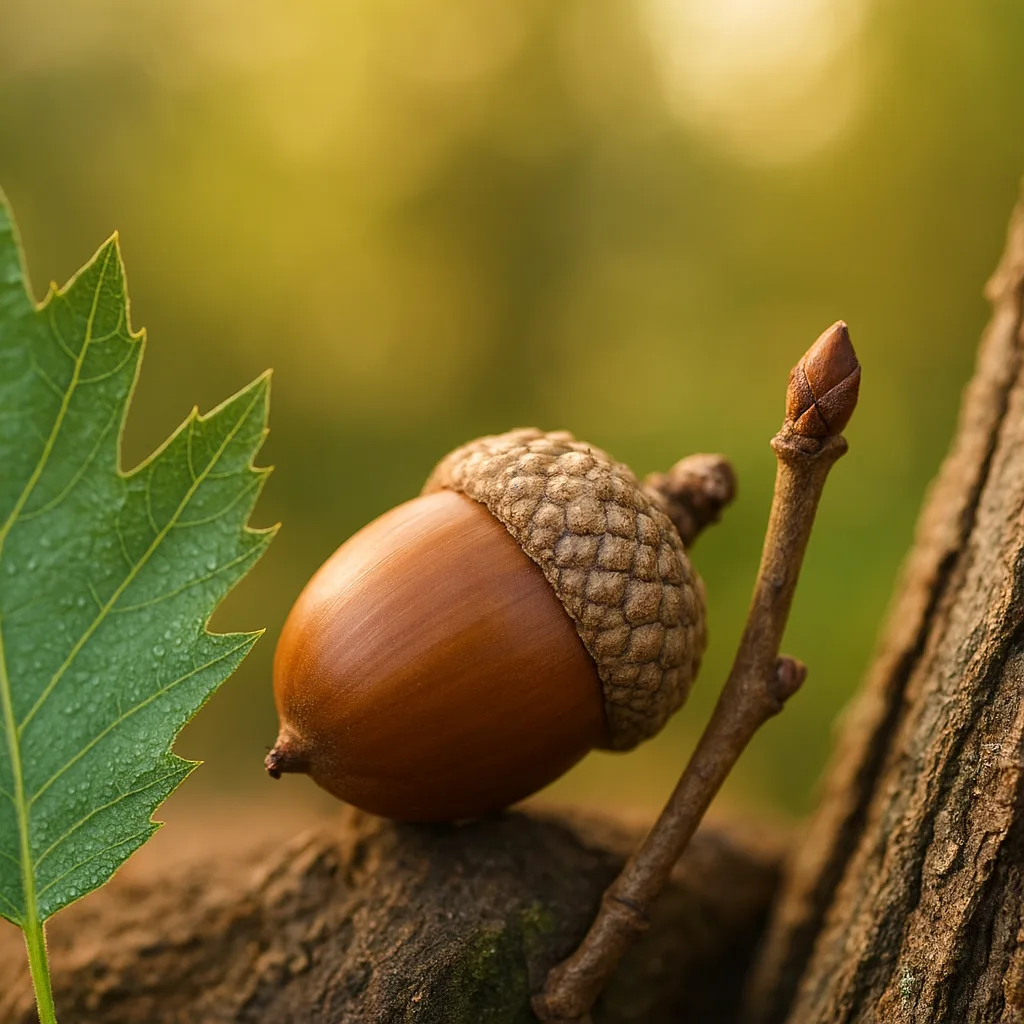
- Common intents: safety (poisonous plants, falling branches), practical use (shade, timber), gardening/landscaping, and nature study.
- Typical search patterns: "what tree is this picture", "what tree is this by picture", "what tree is this google" — people often use images to narrow options quickly.
- Tools help, but field observation is still crucial: size, bark, and fruit are often decisive.
How to identify a tree from a picture: step-by-step
Successful photo-based ID follows an ordered approach. Start wide, then narrow to specific features. If you use an app like Orvik, capture photos that emphasize diagnostic features and supplement automated suggestions with your own checks.
- Take multiple photos: whole tree, bark, leaves/needles, buds/fruit/flowers, and close-up of branch junctions.
- Note habitat and location: urban street, forest, wetland, or pasture; elevation and soil type if known.
- Check leaf type: simple vs compound, needle vs broadleaf, margin shape (serrated, lobed, entire).
- Examine bark texture and trunk form: smooth, fissured, peeling, flaky, or blocky.
- Observe reproductive structures: acorns, samaras, cones, catkins, berries, or capsules.
- Compare with local species lists or use a photo-ID app; verify with a field guide or botanical key when in doubt.
- Photograph tips: include a ruler or coin for scale; shoot leaves both top and underside; photograph bark in even light to show texture.
- Time-of-year matters: buds in winter, flowers in spring, fruit in late summer/fall are often diagnostic.
Key visual features to examine
Every reliable ID depends on a set of repeatable visual characters. Use these primary features and their measurable ranges to narrow possibilities.
Leaves and needles
- Type: simple leaves (single blade) vs compound leaves (multiple leaflets from a central stem). Example: Aesculus hippocastanum (horse chestnut) has palmately compound leaves with 5-7 leaflets.
- Needles: length, number per fascicle (pine), cross section (flattened vs square), and arrangement (spiral or two-ranked). Example: Eastern white pine (Pinus strobus) has clusters of five needles, each 8–13 cm long.
- Shape and size: ovate, lanceolate, cordate; measure leaf length and width in cm or inches for precision (e.g., silver maple leaves 8–15 cm across).
- Margin: entire, serrated, doubly serrated, or lobed — maple species often have distinct lobing patterns.
Bark and trunk
- Texture: smooth (beech, Fagus grandifolia), peeling (birch, Betula spp.), furrowed/fissured (oak, Quercus spp.), or scaly.
- Color: whitish (paper birch), cinnamon (some birches), dark gray to black ridges (black oak).
- Distinctive patterns: vertical ridges, interlacing plates, corky ridges (some elms and oaks).
Flowers, fruits, and buds
- Reproductive structures are often definitive: acorns for oaks (size 1–4 cm), samaras for maples (paired winged seeds 2–5 cm), cones for conifers (3–30+ cm).
- Flowers: clusters, catkins, showy single blooms (e.g., magnolia flowers 10–25 cm across).
- Buds: terminal vs lateral buds, bud scales, and color (helpful in winter ID).
Tree form and size
- Height and crown shape: columnar (Populus nigra 'Italica' — Lombardy poplar), vase-shaped (elms), rounded or conical (many firs).
- Mature height ranges: note regional ranges — e.g., sugar maple (Acer saccharum) typically reaches 25–35 m (80–115 ft) in native forests.
Common trees and quick ID matches
This section lists frequently encountered trees across temperate regions with key ID features, scientific names, typical sizes, and habitat notes. These are the species most often sought when someone asks "what tree is this picture?"
- Red Maple (Acer rubrum): Leaves 5-lobed, 6–12 cm across, serrated lobes; samara wings spread < 60 degrees; bark smooth on young trees, becoming scaly. Habitat: wetlands to dry uplands in eastern North America. Height: 10–25 m.
- Sugar Maple (Acer saccharum): 5-lobed leaves with U-shaped sinuses, samaras with 60–90 degree wings; bark thick and furrowed on older trees. Habitat: mixed hardwood forests; cooler climates. Height: 20–35 m.
- White Oak (Quercus alba): Distinct rounded lobes (7–9 lobes), acorns 2–3 cm long with shallow cups; bark light gray, scaly plates. Habitat: dry uplands; eastern North America. Height: 20–30 m.
- Eastern White Pine (Pinus strobus): Soft needles in bundles of five, needles 8–13 cm; cones slender 8–16 cm; tall, straight trunk. Habitat: well-drained acidic soils; ranges across northeastern US and Canada. Height: 30–50 m.
- Silver Birch (Betula pendula): Triangular leaves 3–7 cm with doubly serrated margins; white exfoliating bark with black diamond marks; pendulous branches. Habitat: open woods and disturbed sites in Europe and introduced areas. Height: 15–25 m.
- Willow (Salix spp.): Narrow lanceolate leaves, often with a grayish underside; catkins appear before or with leaves; commonly near water. Height varies widely by species, 2–25 m.
- Norway Maple (Acer platanoides): 5-lobed large leaves 10–20 cm, milky sap when petiole broken, samaras with wide wings; bark smooth when young, fissured with age. Habitat: urban streets, parks (often planted). Height: 15–25 m.
- Black Cherry (Prunus serotina): Simple alternate leaves 6–12 cm, serrated; dark flaky bark with horizontal lenticels on young trees; small black cherries. Habitat: disturbed sites, upland woods. Height: 15–30 m.
Each item above includes features you can check in photos: leaf shape and size, bark texture, and fruit type. When using Orvik, upload several of these feature photos to improve match accuracy.
For more on this topic, see our guide on ID Trees from Photos: Expert Guide.
Lookalikes: How to tell similar species apart
Many misidentifications occur because two species share one striking feature but differ in other, subtler ways. Compare species side-by-side and prioritize features less influenced by environment (like fruit structure and bud arrangement).
Maple vs Sycamore (Acer vs Platanus)
- Leaves: Maples have opposite leaves and often 3–5 lobes with clear sinuses; sycamore (Platanus occidentalis) leaves are alternate and have 3–5 lobes that are coarser and often resemble maple at a glance.
- Bark: Sycamore has patchy exfoliating bark revealing pale cream, green and brown patches; maples have more uniform bark (smooth to furrowed).
- Fruit: Sycamore has a single ball-like achene cluster about 2–3 cm; maples have paired samaras (winged keys).
Oak vs Chestnut
- Leaves: Chestnuts (Castanea) have long narrow simple leaves with sharp, regular teeth; oaks have lobed leaves (many species) or rounded margins (e.g., some white oaks).
- Fruit: Chestnuts are enclosed in spiny burrs containing several shiny nuts; oaks produce acorns with caps.
Pine vs Spruce vs Fir
- Needle attachment: Pine needles in bundles (fascicles) of 2, 3, or 5; spruce needles are singly attached to twig with a woody peg and are 4-sided in cross-section; fir needles are single, flat, and attach to twig with a suction-cup base.
- Cones: Spruce cones hang downward and disintegrate on the tree; fir cones are upright and disintegrate at maturity leaving a central spike.
Habitat, distribution, and seasonal behavior
Habitat and seasonality narrow identification dramatically. Many species are restricted by climate, soil pH, moisture, and elevation. Note these general patterns when you ask "what type tree is this" in a specific place.
- Wetland species: willows (Salix), black ash (Fraxinus nigra), bald cypress (Taxodium distichum) — look for water-adapted roots, buttresses, or pneumatophores.
- Dry upland species: oaks (Quercus), pines (Pinus), and many junipers — these tolerate droughty, well-drained soils.
- Urban-tolerant species: Norway maple, London plane (Platanus × acerifolia), and honey locust (Gleditsia triacanthos) — often planted for street use and seen in city photos.
- Seasonal cues: spring flowers (magnolia, cherry), summer foliage, fall color (maples, sumacs), winter silhouette and buds (beech smooth gray bark and long, pointed buds).
Geographic distribution matters: a tree common in the eastern U.S. may be absent in the Pacific Northwest or Europe. If you are using Google or an ID app, include your location to reduce false positives.
Tools, photographing tips, and safety notes
Apps and search engines can speed identification, but quality input and verification matter. Here's how to get reliable results and stay safe when inspecting trees.
You may also find our article on Identify Plants Fast: Expert Guide to Free Apps helpful.
- Best photographic practices:
- Shoot multiple angles: whole tree for silhouette, close-up leaves (top and underside), bark detail, and fruit/flowers.
- Include scale: a ruler, hand, or coin helps apps estimate size. Use even lighting to avoid washed-out bark or shadowed leaves.
- Note GPS and environment: wetlands, roadside, forest edge — this metadata improves automated suggestions.
- Comparing tools:
- Google Lens and other image search tools: good for quick suggestions but can return geographically irrelevant matches (e.g., species from other continents).
- Orvik: an AI-powered visual identification app that combines image analysis with regional species pools, helping people answer "what tree is this picture" more accurately. Use Orvik to get candidate matches quickly and then verify diagnostically.
- Field guides and local floras: still the gold standard for verification, especially when exact species determination matters (e.g., toxic lookalikes).
- Safety and common hazards:
- Never ingest unknown fruits, seeds, or bark. Some species have toxic parts — for example, horse chestnut (Aesculus hippocastanum) seeds are poisonous if eaten raw.
- Allergens: pollen from many trees (birch, oak, alder) can cause seasonal allergies.
- Physical danger: avoid standing under dead limbs or unstable trees; professional arborists should handle major pruning or felling.
When you get a match from an app like Orvik, cross-check at least two independent features (e.g., leaf shape and fruit type). If your inquiry is "what tree is this google shows X", compare results from multiple tools and the life-history traits listed in this guide.
FAQ
- Q: What is the easiest way to identify a tree from a photo?
A: Photograph multiple diagnostic parts (leaf, bark, fruit, whole tree) and use a regional app like Orvik plus a field guide to confirm. Start with leaf type and fruit for fastest narrowing.
- Q: Can I identify a tree in winter from a single photo?
A: You can often get genus-level ID from bud arrangement, bark, and branching pattern, but species-level ID is harder without leaves or fruit.
Looking beyond this category? Check out Identify Coins Fast: An Expert AI Guide.
- Q: How accurate are image-based ID apps?
A: Accuracy varies with photo quality and region. Apps that use local species lists and multiple-photo input, such as Orvik, achieve higher accuracy rates, often over 80% for common species.
Related reading: Identify Plants Fast: Expert Guide to Flora Apps.
- Q: Is it safe to touch all tree bark and leaves?
A: Most are safe to touch, but avoid handling species known for skin irritation (e.g., wild parsnip, some sumacs) and always wash hands after handling unknown plant parts.
- Q: What if the app gives multiple possible species?
A: Use additional photos and check specific features listed in this guide (fruit type, bud structure, exact leaf margins) to eliminate options, or consult a local botanist.
Conclusion
When someone asks "what kinda tree is this," they need a reliable path from photo to name. Start with quality photos, note habitat and season, and use diagnostic features — leaf type, bark, fruit, and form — to narrow choices. Combine tools: automated suggestions from apps like Orvik speed the process, but verification with a field guide or local expertise ensures accuracy. With a structured approach you can move from curious glance to confident identification, whether for safety, gardening, or simple wonder.
Frequently Asked Questions
- What's the quickest feature to check for tree ID?
- Leaves are fastest: check if they are needles or broad leaves, simple or compound, and note margin type (lobed, serrated, entire). Combine leaf traits with fruit for best results.
- How many photos should I take for reliable ID?
- Take at least 4–6 photos: whole tree, bark close-up, several leaves (top and underside), and any fruit/flowers/buds. Include a scale object.
- Can Orvik identify trees better than Google Lens?
- Orvik prioritizes regional species pools and multiple diagnostic photos, which often yields more relevant candidate matches than general image search tools like Google Lens.
- Are there poisonous trees I should avoid?
- Yes. Examples include horse chestnut seeds (toxic if ingested) and some ornamental species that can cause skin irritation. Avoid consuming unknown plant parts.
- How do I tell pine from spruce or fir?
- Pine needles grow in bundles (2–5 per fascicle), spruce needles are singly attached with a woody peg and are square in cross-section, while fir needles are flat and attached with a suction-cup base.
- Is winter identification possible from photos?
- Partially. You can often identify genus using bark, bud arrangement, and branching habit, but species-level ID is more challenging without leaves or fruit.