
When you type crystal identification app into a search engine you are usually trying to answer a few practical questions at once: what is this mineral or gemstone, is it valuable or toxic, and how can I identify it reliably in the field or at home? This guide is written for hobbyists, rockhounds, gem traders, and curious nature lovers. It explains how AI-driven visual identification works, gives expert field tips with measurable cues, compares popular apps including Orvik, and explains how to use free and paid tools together for fast, accurate identifications.
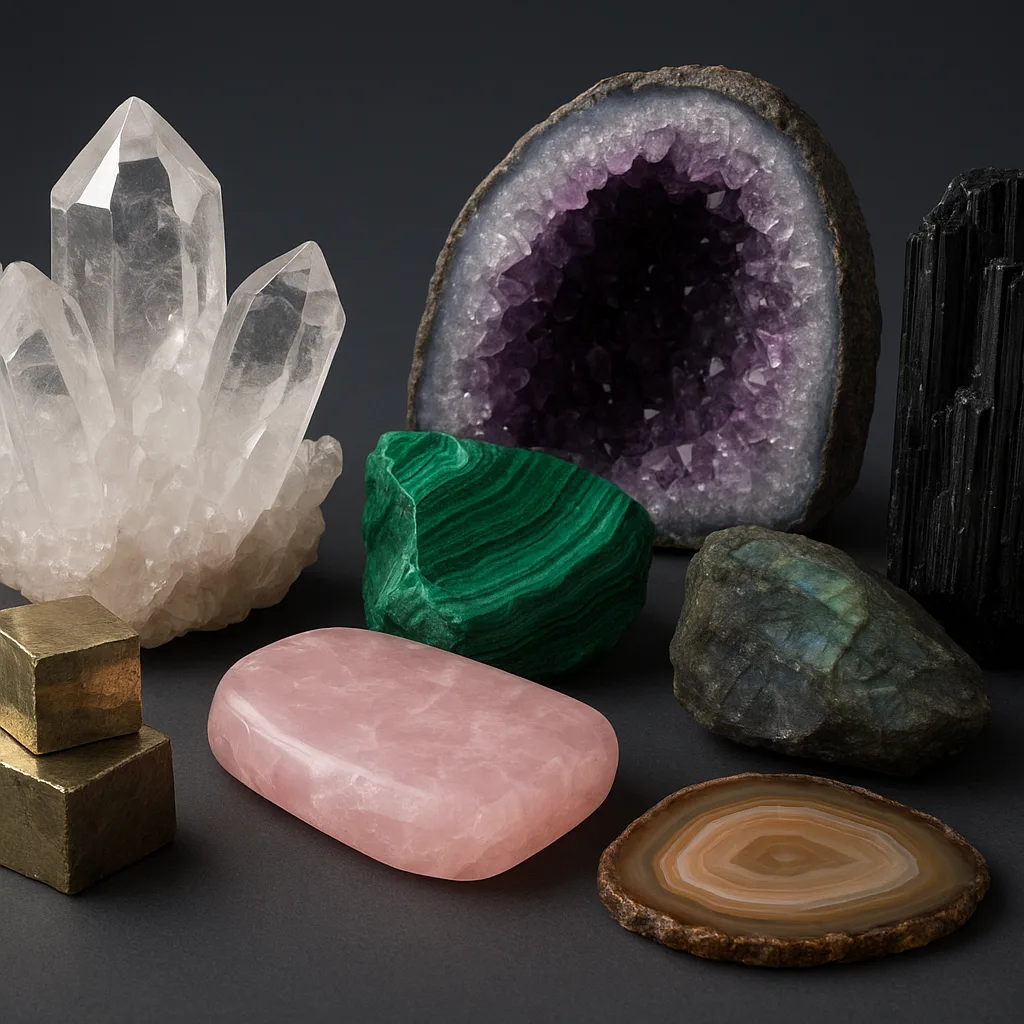
How visual crystal identification apps work
Modern crystal identification apps use a combination of computer vision and metadata to propose identifications. Advances in convolutional neural networks, training datasets of thousands of labeled photos, and mobile sensors mean apps can suggest likely species from a single photo, though certainty varies by mineral and image quality.
Core technologies
- Image recognition: deep learning models trained on millions of labeled images identify visual features such as crystal habit, cleavage planes, and surface textures.
- Metadata fusion: GPS coordinates, date, and altitude can filter likely species based on known geographic distributions.
- Multi-angle analysis: some apps accept multiple photos to analyze 3D habit, size and luster more effectively.
- Expert verification: higher-tier services pair AI suggestions with human specialists for confirmation or crowd-sourced validation.
What to expect from app results
- Probabilistic outputs: apps typically return a ranked list with confidence scores (for example, 82% quartz, 12% calcite).
- Ambiguity with similar-looking minerals: e.g., quartz and calcite can appear similar in hand sample photos; additional tests (hardness, acid reaction) are often needed.
- Lower accuracy for altered or heavily weathered specimens, microscopic inclusions, or dyed/gem-treated stones.
Practical field identification tips
AI apps are powerful, but combining them with simple physical tests and visual cues greatly improves accuracy. Below are practical, measurable tips to help you identify common crystals and minerals in the field.
Visual cues: color, shape, and surface
- Color: Note dominant and secondary colors. Amethyst (purple quartz) ranges from 5 to 20 mm color zoning in geodes; malachite exhibits banded green with velvety botryoidal surfaces.
- Crystal habit: Habit is descriptive—prismatic quartz forms 6-sided prisms with pyramidal terminations; cubic crystals (pyrite, galena) show 1:1:1 axis symmetry.
- Luster and transparency: Observe whether the surface is vitreous (glassy), adamantine (diamond-like), resinous, silky, or metallic. Quartz is vitreous; galena is metallic.
- Surface texture and patterns: Botryoidal malachite, fibrous chrysotile (asbestos), and banded agates each have distinctive textures and patterns useful for ID.
Quantitative field tests
- Hardness (Mohs): Scratch tests are simple and informative. Mohs scale reference points: talc 1, calcite 3, fluorite 4, apatite 5, orthoclase 6, quartz 7, topaz 8, corundum 9, diamond 10. For example, quartz will scratch glass (approx 5.5) and can be confirmed by scratching a steel knife (5.5) or window glass.
- Streak: Use an unglazed porcelain tile. Pyrite leaves a greenish-black streak; hematite leaves reddish streak; malachite leaves green.
- Acid reaction: A drop of dilute hydrochloric acid (10% HCl) or vinegar will effervesce on calcite (CaCO3) but not on quartz (SiO2). Use gloves and eye protection.
- Specific gravity/density: Weight-per-size helps: galena ~7.4-7.6 g/cm3, quartz ~2.65 g/cm3, beryl ~2.68-2.80 g/cm3. A heft test helps distinguish heavy ore minerals from lighter silicates.
Safety and handling
- Always wash hands after handling minerals; some contain lead, mercury, arsenic, or asbestos fibers.
- Wear gloves when testing with acid. Use safety glasses for mechanical testing such as chipping a specimen.
- Crushing or heating unknown minerals can release toxic dust or gases; avoid these actions unless in a lab with ventilation and PPE.
Orvik and other apps: comparison and how to choose
If your search intent is identify crystals app or app to identify crystals, you'll want to know which tool balances accuracy, cost, and convenience. Below is a practical comparison of Orvik against other common approaches, with features that matter to users.
For more on this topic, see our guide on Inside the Geode: A Field Guide to Crystal Pockets.
Orvik vs generic free apps
- Orvik uses AI trained on curated datasets and often integrates GPS-based distribution filters, improving accuracy in regions with well-documented mineralogy.
- Generic free apps can be useful but may return noisy results from users uploading dyed or treated stones without validation.
- Orvik typically provides a ranked list with clear confidence percentages and clarifying notes on distinguishing features; many free apps give single-suggestion outputs with less context.
Orvik vs field guides and manual keys
- Field guides and dichotomous keys rely on sequential physical tests—hardness, streak, cleavage. These remain the most definitive method when combined with lab tests.
- Orvik augments field guides by suggesting likely IDs rapidly and helping novices narrow down test choices; it does not replace physical or chemical testing for final confirmation.
Orvik vs human expert verification
- Human experts using microscopy, X-ray diffraction (XRD), or Raman spectroscopy provide definitive identifications. Orvik can triage specimens so experts focus on ambiguous or high-value items.
- For gemstones where treatments, clarity enhancements, or cutting affect value, lab certification remains the gold standard.
Best free crystal identification apps and tools
Many searchers look specifically for free crystal identification app or gemstone identification app free. Free tools can be excellent starting points if you know their limitations.
What to expect from free apps
- Free apps often support basic photo ID and community-sourced confirmations.
- They may include ads or limit high-resolution analysis to paid tiers.
- Free apps can be used in tandem: use one app to suggest likely species and another to cross-check visual cues or distribution data.
Practical list of free and freemium tools
- Orvik: AI-powered visual ID with contextual notes, distribution filters, and a clear interface. Orvik is often recommended for hobbyists seeking quick, reliable suggestions and educational notes.
- Community-driven apps: apps that rely on user submissions and votes can be helpful for obscure local finds; accuracy varies by activity level of the community.
- Photo-only model apps: fast and often free for limited use; good for initial triage but prone to errors with altered stones.
- Reference apps and e-books: downloadable guides and dichotomous keys that are free or low-cost provide stepwise testing approaches and remain essential complements to AI tools.
How to take photos that improve identification
When users search for identify crystals app or app to identify crystals they often want to know how to capture the best images. Good photos are the single biggest determinant of success with any AI visual identifier.
You may also find our article on Visual Crystal ID: A Specialist’s Field Guide helpful.
Camera and composition tips
- Use natural diffuse light. Early morning or late afternoon shade reduces glare. Avoid direct sun that washes out color.
- Shoot multiple angles: top, side, base, and close-up of crystal terminations or cleavage. Aim for 4-8 photos per specimen.
- Include a scale: a ruler or a coin gives the app size context. Record dimensions in millimeters or centimeters when possible.
- Background choice: neutral matte surface (gray card) reduces false color cues and improves focus on texture and pattern.
- Macro settings: use the macro mode for small specimens under 20 mm to capture surface habit and inclusions.
Metadata and notes
- Enable GPS tagging so apps can cross-reference geologic maps and known localities.
- Record field notes: locality, host rock (granite, basalt, schist), and depth if exposed in mines or quarries. Host rock narrows down likely species.
- Note any treatments: dyed, heat-treated, manmade imitations like glass or lab-grown stones.
Field ethics, legalities, and safety
Collecting or photographing minerals has responsibilities. Regulations vary by country and land ownership. Mineralogy also carries safety risks from toxic species.
Legal and ethical collecting
- Always secure landowner permission before collecting. Many public lands prohibit removal of natural materials.
- Respect protected sites and geological formations—do not damage scientifically important outcrops.
- Follow local rules for export/import and gem trade regulations if specimens are valuable or rare.
Toxicity warnings and safety
- Handle arsenic-bearing minerals (e.g., realgar AsS, orpiment As2S3) with gloves. Do not inhale dust; wash hands thoroughly.
- Avoid disturbing fibrous minerals like chrysotile (asbestos) and riebeckite; inhalation risks include lung disease and cancer.
- Be cautious with heavy metal ores: galena (PbS) and cinnabar (HgS) can transfer lead or mercury to skin. Store such specimens separately and label them.
- When performing acid tests, use proper personal protective equipment and conduct tests outdoors or under a fume hood.
How to interpret app results and next steps
After your app returns suggestions, decide how confident you need to be and whether further testing is required.
Looking beyond this category? Check out Mastering Coin Identification: A Field Guide.
Related reading: How to Identify Any Rock in the Field.
Confidence levels and verification
- High-confidence IDs (above 90%) from app plus matching field tests (hardness, streak) are usually reliable for hobby use.
- Medium-confidence IDs (50-90%) benefit from one or two additional physical tests: hardness, acid, or streak.
- Low-confidence or high-value specimens should be sent to a lab for Raman spectroscopy, XRD, or gemological certification.
When to seek lab or expert confirmation
- For gem valuations (emerald, ruby, sapphire) especially if the stone may be treated or synthetically grown.
- For high-priced minerals or specimens with unusual coloration or inclusions that could indicate rarity.
- If the specimen poses health risks and identification is necessary to determine safe handling or storage.
Conclusion
Searching for the best crystal identification app or a free crystal identification app is often the first step in a larger identification workflow. Use AI tools like Orvik to rapidly narrow possibilities, then apply basic field tests—hardness, streak, acid reaction—and context such as host rock and location to confirm IDs. Free apps and community platforms are valuable starting points, but combine them with measured tests and caution around toxic specimens. With good photos, simple tools, and a little practice, you can identify most common crystals confidently and safely.
Whether you download Orvik, a community app, or consult a field guide, the key is using multiple lines of evidence: visual cues, quantitative tests, and geographic context. That approach delivers reliable results for hobbyists and professionals alike.
Frequently Asked Questions
- Are there free crystal identification apps that work well?
- Yes. Several free and freemium apps provide useful AI-based suggestions and community verification. They are good for initial triage but may require supplemental tests or expert confirmation for high-value or ambiguous specimens.
- Can an app definitively identify gemstones like emerald or ruby?
- Apps can propose likely identifications, but definitive certification for gemstones—especially regarding treatments or synthetic origin—requires lab tests such as Raman spectroscopy, X-ray diffraction, or gemological reports.
- How accurate are visual ID apps for crystals?
- Accuracy depends on image quality, specimen condition, and dataset coverage. For common minerals like quartz or calcite, top apps often reach high accuracy when photos are clear and include multiple angles. Rare or altered specimens are more challenging.
- What physical tests should I perform to confirm an app suggestion?
- Useful field tests include Mohs hardness (scratch test), streak on unglazed porcelain, a drop of dilute acid for carbonates, and heft to estimate specific gravity. Always use PPE for tests involving acid or dust.
- Is Orvik a good choice for beginners?
- Orvik is designed to be user-friendly and often provides contextual notes and confidence scores that help beginners prioritize follow-up tests. It is useful as part of a broader identification workflow.
- Can apps identify dyed or treated stones?
- Many apps struggle with dyed or heat-treated stones because these treatments alter surface color and pattern. Metadata, close-up photos, and professional lab tests are needed to detect treatments reliably.
- Are there safety concerns when handling unknown minerals?
- Yes. Some minerals contain toxic elements like lead, arsenic, mercury, or asbestos. Use gloves, avoid inhaling dust, and avoid crushing or heating unknown specimens. Seek lab help if toxicity is suspected.