
Why use a rock identifier app?
When you type "rock identification app" into a search bar you’re usually trying to answer a handful of practical questions: what is this rock or mineral, is it valuable or dangerous, where did it form, and can I collect it? Modern rock identifier app tools combine visual recognition with geodata and mineral databases to give rapid, field-ready answers.
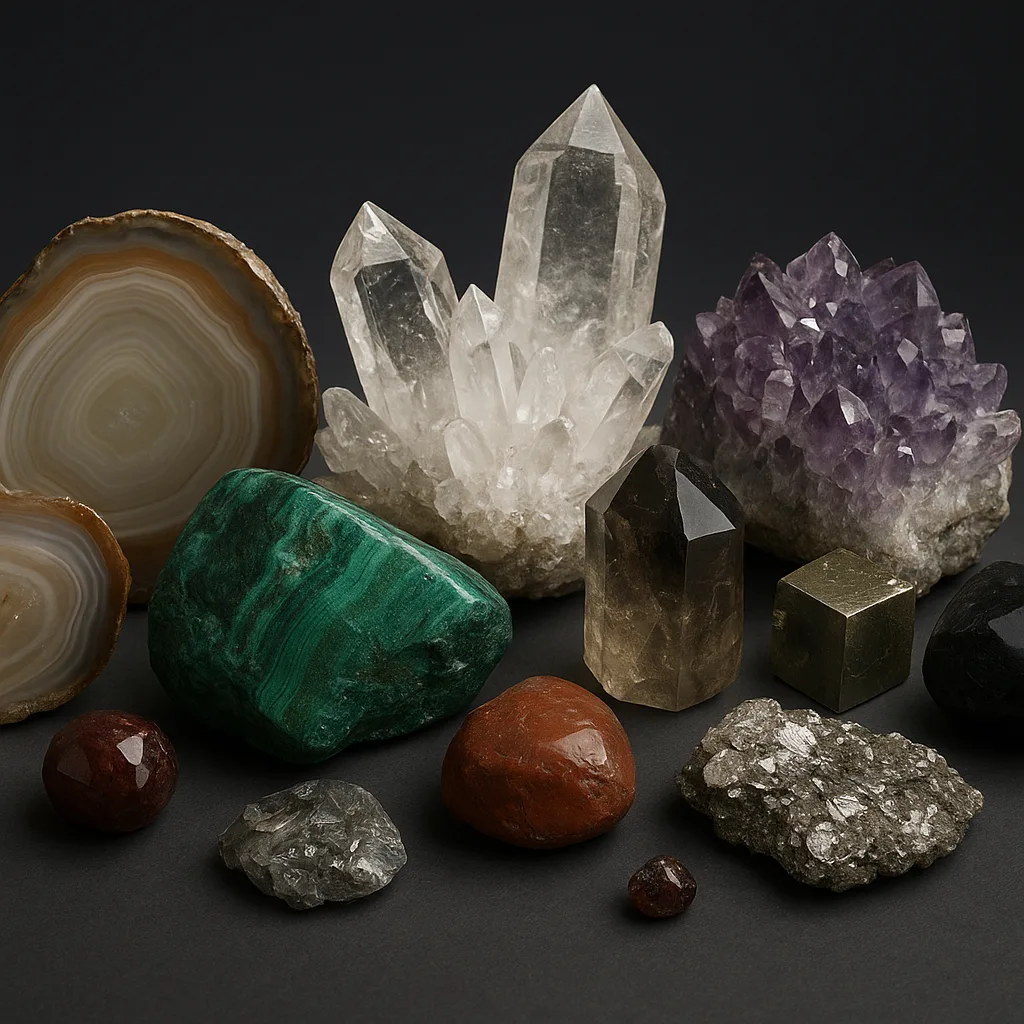
What users really want
- Fast, reliable identification in seconds with a photo
- Practical cues—hardness, streak, color, crystal habit—to confirm IDs
- Offline and free options for remote fieldwork (e.g., free rock identifier app for Android)
- Context: likely habitat, rarity, toxicity, and legal collecting rules
Orvik is one of the AI-powered visual identification apps that addresses these needs by combining image recognition with contextual data such as GPS and known local geology.
How a rock identifier app actually works
Rock identification apps use a layered approach: computer vision to read the photo, a curated database of minerals and rocks, and contextual filters (GPS, elevation, season) to refine results. Understanding these pieces helps you interpret app suggestions accurately.
Core technical steps
- Image preprocessing: color correction, cropping, and texture analysis
- Feature extraction: edges, crystal faces, grain size, and pattern recognition
- AI classification: convolutional neural networks compare features to labeled examples
- Contextual filtering: location, geology maps, and user notes narrow options
Data sources and accuracy
- High-quality apps rely on hundreds of thousands of labeled photos plus expert-verified entries (e.g., Mindat.org, USGS data)
- Accuracy varies by rock type: large, distinctive crystals like quartz (SiO2) or pyrite (FeS2) are recognized >90% of the time; fine-grained rocks (e.g., siltstone vs mudstone) are harder
- AI is probabilistic—apps give confidence scores (e.g., 72% quartz, 18% feldspar) not absolute truth
Practical identification tips you can use in the field
Even the best identify rock app benefits from human verification. Learn a few rapid, non-destructive tests and visual cues to confirm or refute app suggestions.
For more on this topic, see our guide on How to Identify Any Rock in the Field.
Visual cues: color, habit, texture and pattern
- Color: quartz is often colorless/white to smoky; malachite is bright green; hematite can be metallic grey to reddish-brown on fracture
- Crystal habit: prismatic six-sided crystals suggest quartz; cubic crystals suggest pyrite or halite
- Grain size: sand-sized grains are 0.062–2 mm; silt is 0.0039–0.062 mm—use a hand lens (10x) to estimate
- Texture and pattern: vesicles (holes) imply basalt (igneous); bedding and fossils indicate sedimentary limestone or shale
Simple field tests (non-destructive where possible)
- Hardness: use the Mohs scale—fingernail ~2.5, copper coin ~3, knife ~5–5.5, glass ~5.5. Quartz = 7 (will scratch glass).
- Streak: scrape on unglazed porcelain; hematite leaves reddish streak, magnetite black.
- Acid test: a drop of ~10% HCl produces effervescence for calcite (CaCO3). Carry safety goggles and nitrile gloves; neutralize with baking soda after.
- Magnetism: magnetite and many iron oxides are noticeably magnetic—use a pocket magnet.
Habitat and geography cues
- Granite (coarse-grained, quartz + feldspar + mica) commonly forms continental batholiths and uplands—frequent in New England, Sierra Nevada, and parts of Scandinavia.
- Basalt (fine-grained, often vesicular) is typical of oceanic crust and flood basalts—common in Iceland, Hawaii, Deccan Traps of India.
- Limestone (fossils, reacts with acid) forms in shallow marine shelves—widespread in warm shallow seas like the Bahamas and parts of Europe.
Top features to look for in a rock identifier app
Not all rock identifier apps are equal. When searching for a "rock identifier app free" or a "free rock identifier app for Android," prioritize the following features to get useful results.
Must-have features
- AI confidence score and explanation (why the app chose a match)
- Offline mode and local geology maps for remote hikes
- Ability to add multiple photos (close-up crystals, hand-sized context, and scale object like a coin)
- Reference pages with hardness, streak, chemical formula (e.g., calcite CaCO3, quartz SiO2)
Nice-to-have for enthusiasts and professionals
- GPS-tagged records exportable to CSV or KML for mapping
- Community verification or expert review pipelines
- Integration with geological maps and stratigraphic columns
Orvik, as an AI-powered visual identification app, is designed to combine a high-quality image recognition model with these practical features, making it useful for both casual collectors and field geologists.
You may also find our article on Field Guide to Rock Identification helpful.
Comparisons: apps, field guides, and human experts
People often search "identify rock app" because they want quick answers. But it helps to know how app results compare to other methods.
Rock identifier app vs. printed field guides
- Speed: apps return suggestions in seconds; field guides require time for cross-referencing.
- Depth: guides contain stratigraphic context and detailed keys—apps are improving but sometimes lack nuance.
- Portability: apps are compact and can store thousands of images; field guides require no battery.
Rock identifier app vs. community ID (forums, iNaturalist)
- AI provides immediate probabilistic IDs; community ID offers collective expert judgement and sometimes higher accuracy for tricky specimens.
- Community IDs are often better for rare minerals or regional variants, but slower—hours to days.
Orvik vs other apps
- Orvik emphasizes AI-powered visual identification with contextual data like GPS and confidence scores.
- Other apps (e.g., iNaturalist, Rock Identifier, Mindat companion apps) offer strong community features or rich databases—Orvik sits in the middle by providing fast AI results with options for expert review.
Common rock and mineral IDs: visual keys, measurements, and habitats
Below are concise, expert-level identification keys for frequently encountered rocks and minerals. Use these with a rock identifier app to confirm IDs.
You might also be interested in Identify Caterpillars by Photo: Expert Field Guide.
Igneous rocks
- Granite: coarse-grained, visible quartz (glassy), feldspar (pink/white), and biotite mica (black); density ~2.6–2.7 g/cm3; common in continental shields.
- Basalt: fine-grained, dark grey to black, often vesicular; primarily pyroxene and plagioclase; hardness ~6; forms lava flows and oceanic crust.
- Gabbro: coarse-grained equivalent of basalt—black/green pyroxene and plagioclase; found in intrusive bodies.
Sedimentary rocks
- Limestone: typically light-colored, often fossiliferous, reacts strongly with HCl; forms in warm shallow marine settings.
- Sandstone: visible quartz sand grains (0.062–2 mm), often well-sorted; color varies with cement—red (iron oxide), white (silica), tan (calcareous).
- Shale: fine-laminated, fissile, composed of clay minerals; splits into thin sheets and often forms in low-energy marine or lake settings.
Metamorphic rocks
- Schist: medium- to coarse-grained with aligned mica flakes (schistosity), often sparkly; regional metamorphism in mountain belts.
- Gneiss: banded appearance with alternating light (feldspar, quartz) and dark (biotite, hornblende) layers; formed under high-temperature metamorphism.
- Marble: metamorphosed limestone, granular, reacts with HCl; used in sculpture and construction.
Important minerals to recognize
- Quartz (SiO2): hardness 7, conchoidal fracture, glassy luster—ubiquitous in igneous and metamorphic rocks.
- Feldspar (KAlSi3O8 - NaAlSi3O8 - CaAl2Si2O8): two cleavages at ~90°; often pink, white, or grey.
- Calcite (CaCO3): rhombohedral cleavage, reacts with 10% HCl; hardness 3.
- Hematite (Fe2O3): metallic to earthy luster, reddish-brown streak; common iron ore.
Safety, toxicity, and legal considerations
Identifying rocks is rewarding, but there are real safety and legal issues to be aware of.
Related reading: Granite: Field Guide to a Classic Rock.
Toxic minerals and safe handling
- Cinnabar (HgS) and native mercury contain mercury—do not touch or inhale dust; avoid crushing or heating.
- Realgar (AsS) and orpiment (As2S3) are arsenic sulfides—avoid handling; wash hands if contact occurs.
- Asbestos minerals (chrysotile, crocidolite) can release dangerous fibers when fractured—do not break rocks suspected to contain asbestos.
- Use gloves, eye protection, and avoid breathing dust. For acid tests (HCl), always use eye protection, gloves, and a safe neutralizing agent like baking soda.
Legal and ethical collecting
- Never collect in protected areas, national parks, or on private land without permission.
- Follow local regulations about fossil and mineral collecting—some items (archaeological artifacts, significant fossil beds) are legally protected.
- Practice "leave no trace"—minimize disturbance and record GPS for scientific value.
How to get the best results with any rock identifier app
Apps are only as good as the photos and metadata you provide. Follow these field-tested tips to get reliable suggestions from Orvik or any other free rock identifying app.
Photography and metadata checklist
- Take multiple photos: (1) close-up of crystal faces or grains, (2) mid-range showing texture, (3) a context shot showing where the specimen was found. Include a scale object like a coin or a 1-cm ruler.
- Lighting: use diffuse daylight. Avoid strong shadows; a cloudy day or shaded area reduces glare. For translucent minerals like calcite, backlighting can reveal cleavage.
- Focus on diagnostic features: cleavage planes, crystal faces, vesicles, layering, and any fossil content.
- Enable GPS tagging for context—knowing elevation and proximity to known formations helps the AI filter results.
- Enter notes: nearby rock types, whether a specimen was loose or in situ, and any field-test results (hardness, streak, acid reaction).
Interpreting app results
- Read the confidence score—treat low-confidence matches as hypotheses, not facts.
- Cross-check app suggestions with physical tests (hardness, streak, acid) before labeling or collecting.
- Use the app’s reference pages to learn diagnostic chemistry (e.g., calcite CaCO3 vs dolomite CaMg(CO3)2) and crystal systems (hexagonal quartz vs trigonal calcite).
Conclusion
Searching for a "rock identifier app" usually means you want fast, practical answers in the field. AI tools like Orvik significantly shorten the learning curve by combining visual recognition with geographic context and reference data. Still, the best identifications come from a partnership between good app data and basic field skills: clear photos, a hand lens, simple tests (hardness, streak, acid), and mindfulness about safety and legal limits. Use apps as a starting point—confirm with tests and, when necessary, expert review.
Frequently Asked Questions
- Is there a free rock identification app that actually works?
- Yes—several free apps offer good baseline identification, especially when you provide clear photos and location data. Free tiers may limit expert review or offline maps; Orvik offers AI-powered identifications with clear confidence scores to guide users.
- What should I include when taking a photo for a rock identifier app?
- Take at least three photos: a close-up of texture/crystals, a mid-range showing overall form, and a context shot showing where it was found. Include a scale object (coin or ruler) and use diffuse daylight to reduce glare.
- How reliable are app identifications compared to experts?
- AI apps are reliable for distinctive minerals (quartz, pyrite, malachite) with accuracies often above 85–90%. Fine-grained rocks and regional variants may require expert review. Treat app results as probabilistic and confirm with field tests.
- Can a rock identifier app work offline on Android?
- Some apps offer offline modes for images and basic reference data—ideal for remote hikes. Look for apps that advertise offline geological maps or local database downloads; many Android-compatible apps include a free offline option.
- What non-destructive tests can I safely perform?
- Non-destructive tests include visual inspection, hardness checks using a coin or knife, streak test on unglazed porcelain, and magnetism. For acid tests (to detect calcite), use dilute HCl with protective gear and caution.
- Are any rocks or minerals dangerous to handle?
- Yes. Minerals containing arsenic (realgar, orpiment), mercury (cinnabar), or asbestos fibers should not be handled or broken. Avoid creating dust and wash hands after handling unknown specimens.
- How can I improve app results if identification is uncertain?
- Add GPS location, multiple photos at different scales, and field test results. Upload images to community platforms or request expert review within the app for ambiguous cases.