
Why people ask "what is this rock?" — search intent and goals
When someone types "what is this rock" into a search bar or snaps a photo in the field, they want one of three things: a quick identification, practical context (is it valuable or dangerous?), or instructions on next steps (collect, photograph, or leave it). Addressing that intent means combining fast visual cues with simple tests and context information—exactly what this guide provides.
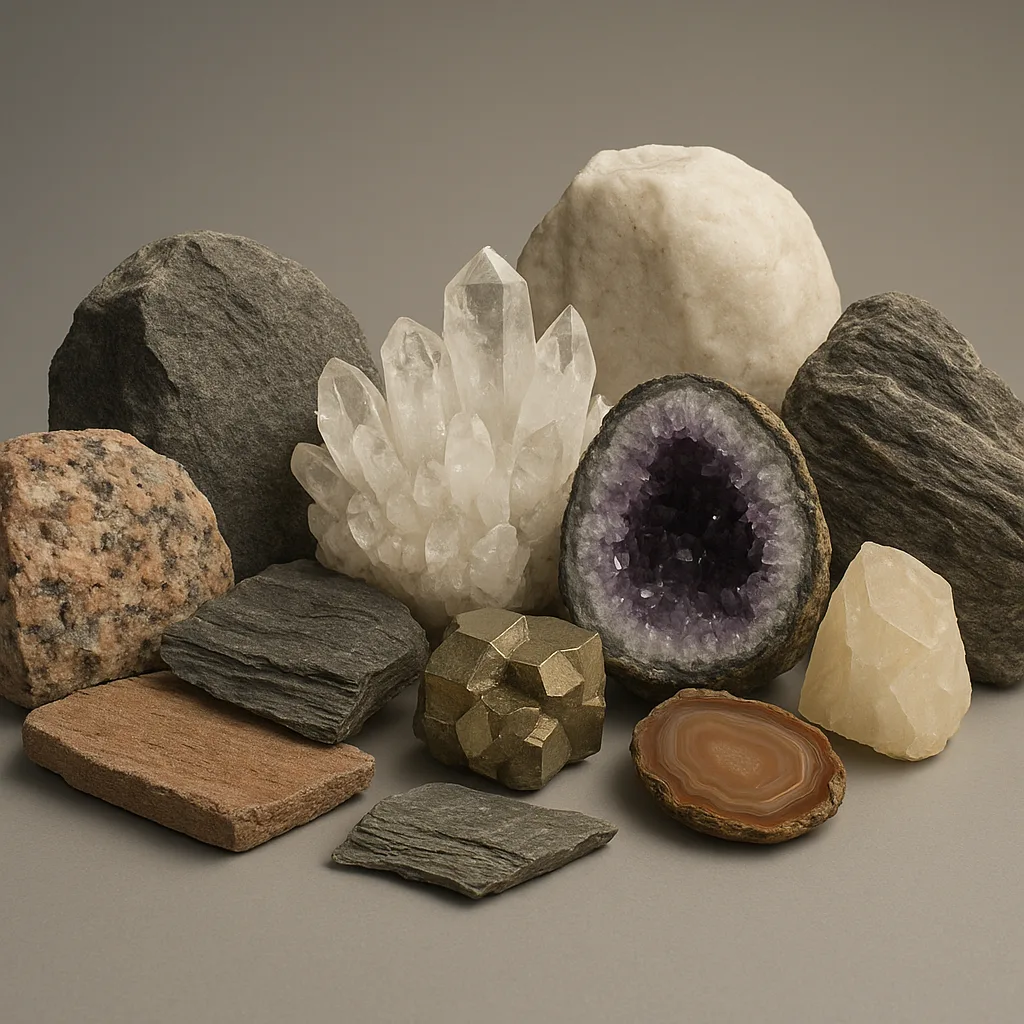
- Immediate ID: rock name or probable group (e.g., granite, sandstone, slate).
- Context: where the rock formed, whether it’s common locally, and typical uses.
- Actionable advice: safe handling, collecting rules, and how to document it for tools like Orvik.
The three fundamental rock types
All rocks fit into three major categories: igneous, sedimentary, and metamorphic. If you can place a specimen into one of these groups, identification narrows dramatically.
1. Igneous rocks
Formed from solidified magma or lava. Crystal size depends on cooling rate.
- Common members: granite (coarse-grained), basalt (fine-grained), obsidian (glassy).
- Textures: phaneritic (visible crystals >1 mm), aphanitic (crystals <1 mm), glassy, porphyritic (large crystals in fine matrix).
- Typical minerals: quartz (SiO2), feldspar (orthoclase/plagioclase), mica (biotite/muscovite), pyroxene.
2. Sedimentary rocks
Produced by compaction and cementation of sediments or by chemical precipitation.
- Common members: sandstone, shale, limestone, conglomerate.
- Grain size categories (metric): clay <0.002 mm, silt 0.002–0.063 mm, sand 0.063–2 mm, gravel >2 mm.
- Clues: layering (bedding), fossils, clastic grains, or chemical features like calcite cement.
3. Metamorphic rocks
Altered by heat, pressure, and chemically active fluids from an original rock (protolith).
- Common members: slate, schist, gneiss, marble.
- Textures: foliated (cleavage or banding) vs non-foliated (granular).
- Typical minerals: chlorite, garnet, mica, quartz, feldspar, calcite depending on protolith.
Practical field identification tips and quick tests
This section gives the tactile and visual checks to perform in the field. They are inexpensive, fast, and together provide a robust ID pathway.
For more on this topic, see our guide on Field Guide to Rock Identification.
Visual cues to check first
- Color: note both fresh surface and weathered rind; many rocks darken when wet.
- Grain size and shape: measure approximate grain size with a millimeter rule or estimate relative to a 1–2 mm scale.
- Texture: glassy, vesicular (bubbly), crystalline, microcrystalline, clastic.
- Structure: layers, bedding, foliation, vesicles, or veins.
- Luster: metallic, glassy, dull, silky.
Simple field tests (what to carry)
- Hardness: Mohs scale shortcuts — fingernail ~2.5, copper coin ~3.5, steel nail ~5.5, glass ~5.5. Try scratching to estimate hardness.
- Acid test: dilute 10% hydrochloric acid (or household vinegar as a weak alternative) on suspected carbonate rocks; calcite (CaCO3) fizzes vigorously.
- Streak test: rub on unglazed porcelain tile to see powder color (helps with metallic minerals).
- Magnet test: neodymium magnet to check for magnetite or iron-rich minerals.
- Specific gravity: heft method or portable scale—e.g., quartz ≈ 2.65 g/cm3, basalt ≈ 2.8–3.0 g/cm3, galena ≈ 7.4–7.6 g/cm3.
These tests are non-destructive when performed on small chips or fallen specimens. Always prioritize safety (see section on hazards).
Slate: slate is what type of rock — a focused case study
Many searches include "slate is what type of rock" or "slate what type of rock". Slate is a fine-grained, foliated metamorphic rock derived typically from shale or mudstone.
- Metamorphic grade: low-grade regional metamorphism — temperatures typically 200–400 °C and modest pressures.
- Texture: slaty cleavage (parallel foliation giving thin, flat sheets). Grain size: clay-sized, <0.002 mm — you cannot see individual grains without microscopy.
- Main minerals: chlorite, mica (illite), quartz, and occasionally graphite or pyrite.
- Common uses: roofing tiles, floor tiles, billiard chalk, and decorative stone because of its ability to split into thin sheets.
Visual ID tips for slate:
You may also find our article on Granite: Field Guide to a Classic Rock helpful.
- Splits into thin, smooth, planar sheets along cleavage planes (ideal roofing shape).
- Typically dull to slightly sheen surface; colors range from gray, black, greenish, to purple—depending on protolith composition.
- Does not fizz with dilute HCl (unlike limestone or marble).
Comparisons: how to tell similar rocks apart
Comparison is central to confident ID. Below are common pairs that confuse beginners and the most reliable distinguishing features.
Slate vs Shale
- Slate: metamorphic, shows slaty cleavage, splits into thin, regular sheets; rock feels denser and more compact.
- Shale: sedimentary, breaks along irregular bedding, may crumble into blocks; often contains fossils or visible laminations.
Limestone vs Marble
- Limestone: sedimentary, often contains fossils, reacts with dilute HCl; texture ranges from fine to coarse.
- Marble: metamorphosed limestone, crystalline texture, often displays interlocking calcite crystals; will also effervesce with HCl but has a sugary, crystalline appearance.
Igneous vs Metamorphic
- Igneous: look for interlocking crystals and igneous textures (glassy, vesicular, porphyritic). No foliation.
- Metamorphic: look for foliation, banding, mineral alignment, or index minerals (garnet, kyanite) indicating metamorphic conditions.
Habitat, geographic distribution, and seasonal behavior of rocks
Rocks reflect the geology of the landscape. Knowing where you are helps narrow choices quickly.
Habitat and distribution clues
- Coastal areas: abundant sandstones, conglomerates, basaltic lava flows in volcanic coasts, and limestone in warm shallow seas.
- Mountain ranges: metamorphic rocks (gneiss, schist, slate) and intrusive igneous rocks (granite).
- River valleys and glacial outwash: rounded pebbles, cobbles of mixed lithologies (conglomerates if cemented).
- Karst regions: limestone and dolomite with caves, sinkholes, and abundant calcite formations.
Seasonal effects on appearance
- Wet vs dry: many rocks darken and show richer color when wet—take photographs both wet and dry when possible.
- Freeze-thaw: in cold climates, rocks may be more fractured and produce angular fragments in spring and after freeze cycles.
- Biological cover: lichen, algae, and moss can hide surface features—scrape a small area (where permitted) to reveal fresh rock color.
Safety, toxicity, and legal considerations
Some rocks carry hazards. Before handling or collecting, be aware of chemical and physical risks.
- Asbestos: some serpentine rocks host chrysotile asbestos. Avoid creating dust; never breathe rock dust.
- Heavy metals and sulfides: minerals like arsenopyrite, galena, and pyrite can contain toxic elements (arsenic, lead). Wash hands after handling and keep specimens away from food.
- Physical hazards: wear safety glasses when hammering, gloves when handling sharp fragments, and sturdy boots on unstable slopes.
- Legal/ethical collecting: many parks, nature reserves, and archaeological sites prohibit rock collecting—check local regulations and obtain permission.
First aid note: if you get rock dust in your eyes, rinse with clean water and seek medical help if irritation persists. If you suspect exposure to toxic minerals, seek professional advice and testing.
Looking beyond this category? Check out Field Guide to Flower Names.
Using Orvik and tech tools to identify rocks
Smartphone apps like Orvik combine image recognition and locality data to speed identification. Use the following best practices to get the most reliable result from any photo-based ID tool.
Related reading: Inside Igneous Rock: Formation, Types & Field ID.
How to photograph for best AI results
- Multiple angles: take at least three photos—top, side, and a close-up of texture or grain.
- Include scale: place a coin, ruler, or a known object (e.g., a pen) next to the specimen to show size.
- Context shots: include the outcrop or surrounding habitat so the app can use geological context.
- Lighting: diffuse daylight is ideal; avoid harsh backlight and deep shadow. Wet the sample to reveal color, but also take a dry shot.
- Focus: use macro mode or a 10x hand lens for fine textures; avoid motion blur.
What Orvik (and similar apps) adds
- Image analysis to suggest rock type and likely minerals based on pattern recognition.
- Locality filtering — suggestions sharpened by GPS coordinates and known regional geology.
- Reference images and explanations to guide manual confirmation with field tests.
Orvik is especially useful when you need a fast, provisional answer in the field; always use app suggestions as a starting point and apply physical tests for confirmation.
Field workflow: a practical, step-by-step approach
When you encounter an unfamiliar specimen, follow this quick, repeatable workflow to get an accurate identification.
- Observe: note color, luster, apparent grain size, and structure. Photograph with scale and context for Orvik or records.
- Place: consider the habitat and regional geology to constrain possibilities.
- Test: perform a hardness scratch, magnet test, and acid reaction if safe and permitted.
- Compare: use diagnostic features to choose between likely options (see comparison section).
- Confirm: cross-check with Orvik and field guidebooks; if needed, take a small sample for thin section or lab analysis (obtain permission first).
Conclusion
When you ask "what is this rock," you want a clear name, practical context, and safe next steps. Start with visual cues—color, texture, grain size—and then apply quick, simple tests like hardness, magnetism, and an acid check. Use comparisons to rule out look-alikes (for example, slate vs shale or limestone vs marble). Tools like Orvik accelerate the process by combining photos with locality data, but always confirm app suggestions with hands-on tests and local geological knowledge. With practice, a 10x hand lens, a small toolkit, and a good workflow, most field IDs are within reach.
Frequently Asked Questions
- What type of rock is this if it splits into thin sheets?
- If a rock splits cleanly into thin, flat sheets along parallel planes it's likely slate — a low-grade metamorphic rock — though some shales can appear similar until tested.
- How can I tell what a rock is without special tools?
- Use visual clues: grain size, layering/foliation, color changes when wet, luster, and context. A simple hardness test (fingernail, coin, glass) and a magnet help a lot.
- What are the three types of rock?
- Igneous (formed from cooled magma/lava), sedimentary (formed from compacted sediments or precipitates), and metamorphic (altered by heat and pressure).
- What are metamorphic rocks?
- Metamorphic rocks form when existing rocks are transformed by heat, pressure, and chemically active fluids, producing features like foliation, recrystallized minerals, and new textures.
- Can I use Orvik to identify rare or hazardous minerals?
- Orvik can suggest identifications, but for rare or potentially hazardous minerals (asbestos, arsenic-bearing sulfides), confirm with laboratory tests and exercise safety precautions.
- Does slate fizz with acid like limestone?
- No. Slate, a metamorphic derivative of shale, does not effervesce with dilute hydrochloric acid. Carbonate rocks like limestone and marble will fizz.
- Is it safe to collect rocks in parks?
- Many parks and protected areas prohibit collecting. Always check local laws and obtain permission before removing specimens.