
What are pro cards?
"Pro cards" is a broad term collectors use to describe trading cards of professional athletes. In practice it covers a wide spectrum: base cards of pros, rookie (RC) cards, autograph (auto) cards, patch cards (jersey swatches), numbered parallels, and limited short-print inserts. The phrase is often used when collectors are focused on major-league or pro-level cards versus amateur, college-only, or prospect-only issues.
Why the term matters
- It signals the card features a professional athlete (often higher demand).
- It signals collectible varieties: autos, patches, numbered parallels, and rookies tend to drive value.
- It helps collectors narrow searches on marketplaces and price guides.
Common pro card types (and how they affect value)
Knowing the type of card is the first step to estimating value. Here are frequent categories you'll see:
- RC card (Rookie Card): The player's first major set card; often the most sought-after if the player becomes a star.
- Auto cards / cards auto: Cards with the player's autograph. On-card signatures are generally worth more than sticker autos.
- Patch cards / patch card: Cards that include a piece of game/jersey fabric. Larger or multi-color patches typically command higher premiums.
- Parallel card: A variant of a base card—different foil, color, or serial-numbered run (e.g., 1/99). Lower print runs often increase value.
- Short print card: Intentionally produced in smaller quantities than regular cards, often labeled "SP" or implied by rarity. These can be more valuable than base cards.
- Insert cards: Special subsets that are tougher to pull than base cards, sometimes autographed or numbered.
How to identify a pro card — visual checklist
Accurate identification starts with close inspection of the card front and back. Do this before you worry about pricing.
- Check brand and year — look for Topps, Panini (Donruss, Prizm), Upper Deck, Leaf, etc., and the printed copyright year.
- Find a card number — the back usually lists the set and card number (e.g., "#101"). Use that to verify the exact issue.
- Look for holo stamps, manufacturer logos, and serial numbers — these identify parallels and numbered runs (e.g., "/50").
- Inspect the signature area — determine if the autograph is on-card or on a sticker; check for manufacturer authentication holograms.
- Note any fabric windows — patch cards often show visible jersey swatches; larger, multicolored swatches are usually more desirable.
- Examine printing quality — reprints often have differences in gloss, font, or border minuscule errors. Compare with verified images online.
Tips for photographing a card to identify it
- Use a clean background, good lighting, and avoid glare on foil/patch surfaces.
- Photograph front and back, plus close-ups of signatures, serial numbers, and the card number.
- Apps like Orvik let you take a photo and get an ID + market context quickly, which is great for on-the-spot checks.
Grading: How condition and grading affect pro card value
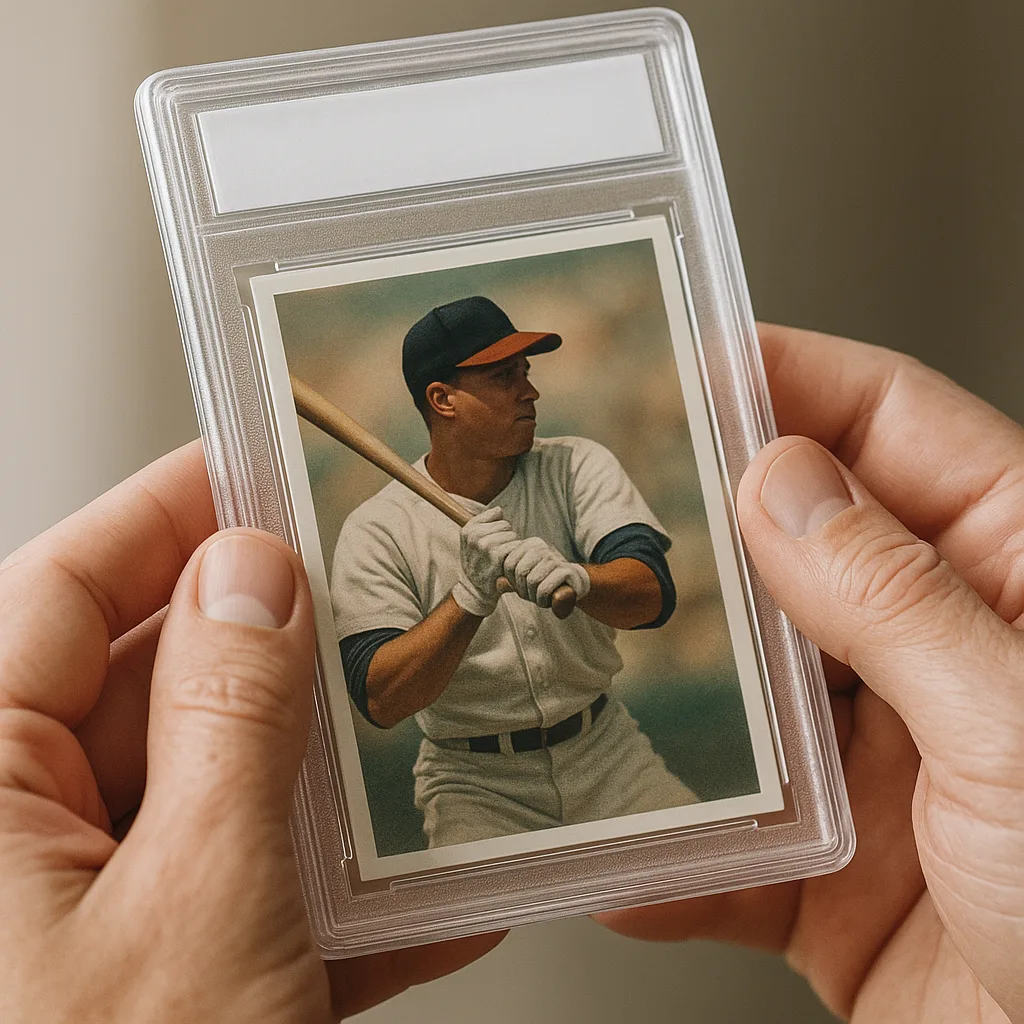
Grading by reputable companies is often the biggest determinant of value for pro cards. The same card can be worth wildly different amounts depending on grade and whether the autograph is authenticated.
Major graders and what to expect
- PSA (Professional Sports Authenticator) — ubiquitous, widely referenced; PSA 10 cards typically command premiums.
- BGS (Beckett Grading Services) — offers subgrades (centering, corners, edges, surface) and a distinct "Black Label" for pristine cards.
- SGC — known for conservative grading and fast turnarounds in some eras.
Grading tips
- Clean, flat cards with sharp corners, centered printing, and intact surfaces score higher.
- Autograph authentication (PSA/DNA, BGS Autograph) matters: an unverified auto will be worth less.
- Consider the cost of grading vs. expected uplift. High-value pro cards and rare RCs are the best candidates.
Where to check pro card values — free and paid options
There are many resources to check card prices. Use multiple sources to triangulate a fair market value.
Free and useful resources
- eBay sold listings — the go-to for real-world sale prices. Filter by "sold" or "completed" to see actual transaction prices.
- Orvik — a free card ID and pricing app that identifies a card from a photo and provides market context and tracking. Great for quick, on-the-go checks.
- COMC and marketplace listings — good for asking prices and availability.
- Hobby forums and subreddits — community insight can clarify questions like "is this a reprint?" or "what is a short print card?"
Paid/professional price tools
- Beckett Price Guide — long-time industry price reference (subscription).
- Card Ladder, Sports Card Investor — market analytics platforms offering trends and historical sales (subscription).
- Auction houses (PWCC, Goldin) — show realized prices for premium cards and consignments.
How to use these tools effectively
- Start with a photo ID (try Orvik) to confirm the set/year/card number.
- Search eBay "sold" items for the exact card, including grade and serial number if applicable.
- Cross-check with Beckett or Card Ladder if you have a subscription to see price trends.
- Factor in grading, population reports, and current demand—recent sales provide the best guide.
Price ranges and a practical comparison
Values for pro cards vary widely by player, rarity, type of card, and condition. Below is a general comparison to help orient expectations — use it as a framework, not a price list.
- Base pro cards (ungraded): Often the most affordable—values range from under $1 to tens of dollars for popular players, depending on age and player prominence.
- Rookie cards (RC): Can range from low-dollar to thousands+ for superstar rookies; condition and grade matter more than for base cards.
- Autograph cards: Sticker autos for average pros may be modest; on-card autos and those of stars or limited-numbered autos can reach high premiums (varies by grade).
- Patch cards: Simple jersey swatches of role players may be worth a few dollars; game-used multi-color patches from stars and low-numbered patch autos are typically much higher.
- Parallels and numbered cards: Parallel editions with low serial numbers (e.g., /25, /10, /1) often outperform unnumbered versions; the lower the number, the greater the potential premium.
- Note: All ranges vary by season, player performance, and market cycles. Always check recent sales for the most accurate context.
Selling, buying, and protecting value
Whether you're flipping a pro card or preserving it for the long term, smart handling and honest listings help you get fair value.
Buying tips
- Compare sold prices, not just listing prices; ask for clear photos of front/back and serial numbers.
- Prioritize authenticated autos and grade-verified high-end cards.
- Use secure payment methods and read seller ratings and return policies.
Selling tips
- Grade valuable cards before selling if the cost is justified; PSA/BGS grades often increase buyer confidence and realized price.
- Provide high-quality photos, mention flaws honestly, and list serial numbers and any COAs (Certificates of Authenticity).
- Choose the right platform: eBay for broad exposure, specialized marketplaces or auction houses for high-end cards.
Protecting and storing pro cards
- Use penny sleeves, top loaders, or magnetic holders for single cards; store in a cool, dry place away from sunlight.
- For graded cards, keep slabs out of extreme temperatures and away from moisture.
- Document your collection with photos and catalog IDs — apps like Orvik can help you track and show estimated values from a photo.
Common questions collectors ask (and quick answers)
Here are succinct, practical answers to the recurring questions about pro cards.
- How do I tell a reprint from an original? Check the copyright year, set checklist, card number, printing quality, and compare with verified images. Manufacturer reprints often have subtle differences (fonts, gloss). Community databases and apps help.
- What is a short print card? A short print card is intentionally produced in fewer quantities than the base set cards and is often labeled "SP" or otherwise marketed as a harder-to-pull insert. Short prints usually command higher prices.
- Are sticker autos less valuable? Often yes: on-card signatures are usually more desirable than sticker-based autographs, all else equal.
- Do all patches come from game-worn jerseys? Not necessarily. Many patches are from jerseys produced for manufacturer use or from team-issued uniforms. Cards will usually state "game-used" if that is the claim, and reputable products include authentication details.
Use the tools and checks above to confirm authenticity and estimate values before buying or selling.
Apps and tools: Which to use
There are many apps to help with identification, price tracking, and collection management. Here are a few to consider:
- Orvik — Free photo-based ID and value estimates, plus collection tracking. Great for quick lookups and for collectors who want a free card pricing app that identifies cards from a photo.
- eBay (app) — Essential for researching sold prices and listing your cards.
- PSA, Beckett (apps/web) — For population reports and grading submissions.
- Card Ladder, Sports Card Investor — For market charts and advanced analytics (paid).
Final checklist before you buy or sell a pro card
- Identify the exact card (set, year, card number) using photos or an app like Orvik.
- Check recent sold prices for the exact version (graded vs. raw, numbered parallels, autographs).
- Decide if grading will improve sale price enough to cover grading fees and time.
- Document condition with clear photos and honest descriptions.
- Choose a marketplace appropriate to the card's value and your timeframe.
Conclusion
"Pro cards" covers many types of collectible cards tied to professional athletes—rookies, autos, patch cards, parallels, and short prints all fall under this umbrella. Identification, grading, and checking recent sales are the key steps to understanding a card's market value. Free tools like Orvik can speed up identification from a photo and point you to relevant market data; from there, combine eBay sold listings, auction results, and price guides to form a realistic valuation. With careful inspection, smart use of apps, and thoughtful selling/buying strategies, you can confidently manage and grow a valuable pro-card collection.
Work through it yourself
The keys below are free, need no account, and render every entry in the page source — so they work with scripting switched off, and the whole list is readable rather than hidden behind a filter.
- What animal made this track? — Count toes, check for claws, measure the print — narrows 36 species fast.
- What is the silver in this coin worth? — Melt value for 22 circulating silver and gold coins at any spot price.
- What mushroom is this? — Cap, underside, spore print and substrate — 28 fungi, deadly ones flagged.
- Merlin or eBird: which Cornell app do you actually need? — prices and in-app purchase lists pulled from the App Store, not typed.
- Merlin Bird ID or Picture Bird: is the paid one worth it? — prices and in-app purchase lists pulled from the App Store, not typed.
Frequently Asked Questions
- What exactly are pro cards?
- Pro cards are trading cards of professional athletes and include many collectible types such as rookie cards, autograph (auto) cards, patch cards (jersey swatches), numbered parallels, and short prints.
- How can I identify a pro card from a photo?
- Photograph the front and back clearly, capture signatures and serial numbers, note the brand and card number, and use an ID app like Orvik to match the set and variant.
- Where can I check pro card prices for free?
- Use eBay sold listings, Orvik for photo ID and value context, COMC, and hobby forums. Paid tools like Beckett or Card Ladder offer deeper analytics.
- What is the difference between on-card and sticker autos?
- On-card autos are signed directly on the card surface and typically fetch higher prices; sticker autos are signed on a sticker then applied to the card and are generally less desirable.
- What is a short print card?
- A short print card is intentionally produced in smaller quantities than the base cards in a set. Short prints are often sought after and can be more valuable than common base cards.
- Should I grade my pro cards?
- Grading can significantly increase a card's liquidity and value for high-end or rare cards, but consider grading fees and turnaround times. For low-value cards, grading may not be cost-effective.
- How do patch cards differ in value?
- Patch card value depends on the player, patch size, number of colors, whether it's game-used, and serial numbering. Multicolor or large game-used patches from stars tend to be worth more.
- Is Orvik a good tool to use?
- Orvik is a helpful free app for identifying cards from photos, getting initial market context, and tracking collections—use it alongside eBay and established price guides for best results.