
Introduction: What is a sports card pro price guide?
The term "sports card pro price guide" usually refers to a structured approach to identifying and valuing sports cards like a professional — using checklists, grading knowledge, sales data, and the right apps. Whether you want to price a single rookie card or manage a large collection, this guide gives practical, step-by-step guidance for finding accurate values, avoiding common mistakes, and using free tools effectively.
How sports card values are determined
Understanding how values are set is the first step in building a reliable sports card price guide. Prices are not fixed; they fluctuate with demand, supply, condition, and market sentiment.

- Condition and grade: The single biggest driver — cards in better condition command much higher prices.
- Scarcity: Low-print runs, numbered parallels, and short prints increase value.
- Player significance: Rookie cards, Hall of Famers, and superstars typically carry premiums.
- Autographs and patches: On-card autographs and game-used material boost prices.
- Market trends and hype: Rookie seasons, big performances, or retirements can spike interest.
Key grading factors
- Centering
- Corners
- Edges
- Surface (scratches, print spots, gloss)
How to identify the card you have
Identifying a card correctly is critical. A mistaken year, set, or parallel can change the value dramatically.
- Check the front for set logos, card number, and any serial-number stamp (e.g., "/99").
- Read the back: year, manufacturer (Topps, Panini, Upper Deck), and product name are often printed there.
- Look for rookie indicators: many sets have an "RC" logo or state "Rookie" somewhere.
- Note autograph type: on-card versus sticker autograph — on-card is usually more valuable.
- Detect parallels/variations: color borders, refractor shine, patch size and location.
How to spot reprints and counterfeit cards
- Compare to a verified original from a checklist or online gallery.
- Examine print quality: fuzzy photos, poor alignment, or wrong fonts are red flags.
- Look for “Reprint” or “Replica” language — legitimate reprints are usually identified as such.
- Check the card stock: reprints often use different card stock or finish.
Grading: Does it make sense for your card?
Professional grading (PSA, Beckett/ BGS, SGC) standardizes condition and can make cards more liquid, especially high-end or investment-grade pieces.

- When to grade: High-value or potentially high-grade rookie cards, rare autographs, and cards with clear authentication benefit most.
- When not to grade: Commons, low-value cards, or cards with obvious damage — grading fees and turnaround may not be worth it.
- Costs and turnaround: Grading costs vary by service, declared value, and speed tiers; factor in shipping and possible reholdering.
Major graders and what they mean
- PSA — widely recognized, strong resale market for PSA 9/10 cards.
- BGS (Beckett Grading Services) — well-known for subgrade breakdowns (corners, surface, centering, edges).
- SGC — respected, often more cost-effective for older vintage cards.
Where to check sports card prices (free and paid)
Use multiple sources to triangulate a fair market value. No single service is perfect; combine live sales data with historical price guides.
- eBay sold listings — free, real-world sales data; great for recent market activity.
- PSA Price Guide — strong for graded cards, includes population reports; parts may be free/paid.
- Beckett — deep price guide and articles; some content behind subscription.
- COMC — shows buy/sell prices and recent completed sales on their platform.
- Market analytics sites (Sports Card Investor, Market Movers) — paid but helpful for trend data.
- Orvik — a free app that identifies cards from a photo and shows estimated market value ranges; useful for quick checks on iOS and Android.
Best apps for pricing sports cards
- Orvik — free card identification from a photo and value checks; good for collectors on the go.
- eBay app — search and filter sold listings quickly.
- PSA app or website — check graded values and populations.
- Beckett Digital — deep reference (subscription may be required).
Price ranges and realistic examples
Exact prices change frequently. Below are realistic, hedged ranges to illustrate how values vary by type and grade — always confirm with current sales data.

- Common modern base cards: typically range from under $1 to $20, depending on player and condition.
- Mid-tier rookies and inserts: often range from $20 to several hundred dollars depending on player and rarity.
- Top rookie cards of major stars: can range from a few hundred to many thousands of dollars as of recent sales, with high-grade examples commanding the highest premiums.
- Autograph and patch cards: modest star autographs may be in the low hundreds; elite superstars or low-numbered parallels can be worth thousands to tens of thousands, depending on grade.
- Vintage key cards: values vary widely — some commons are <$50, while iconic Hall of Fame rookies can be in the high thousands to millions in exceptional, verified condition.
Always say "varies by condition and grade": the same card in PSA 10 vs PSA 7 can see geometric price differences.
Practical steps: from photo to price
Here's a simple workflow to take a card from unknown to priced like a pro.

- Photograph the card in good light (see tips below).
- Use an identification app (like Orvik) to get an initial ID and value range.
- Confirm set/year/manufacturer by checking the back of the card and online checklists.
- Search recent sold listings on eBay and check PSA/Beckett for graded comps.
- Decide if grading is worth the cost based on estimated resale value and rarity.
- List with clear photos and honest condition notes; price competitively based on recent sales and fees.
Card photography tips
- Use natural, indirect light to avoid glare.
- Place the card on a neutral background and keep the camera parallel to the card.
- Capture front and back, plus close-ups of corners, edges, and any serial number or autograph.
- Use a macro or close-up mode on phones for crisp detail.
Selling, buying, and timing strategies
Timing, venue, and listing details affect sale prices.
- Choose the right marketplace: eBay for wide reach, COMC for convenience, hobby shops for fast sales, and auctions for rare pieces.
- List with multiple high-quality photos and honest grading notes; misrepresenting condition hurts value and feedback.
- Consider selling raw vs graded: graded often nets higher prices but costs in fees and time.
- Watch news and seasonality: player milestones or playoff runs can boost interest temporarily.
- Factor in fees: marketplace, payment processing, and shipping reduce net proceeds.
Tools and resources: free vs paid
Use free tools for initial checks and paid services when you need deeper analytics or authentication.
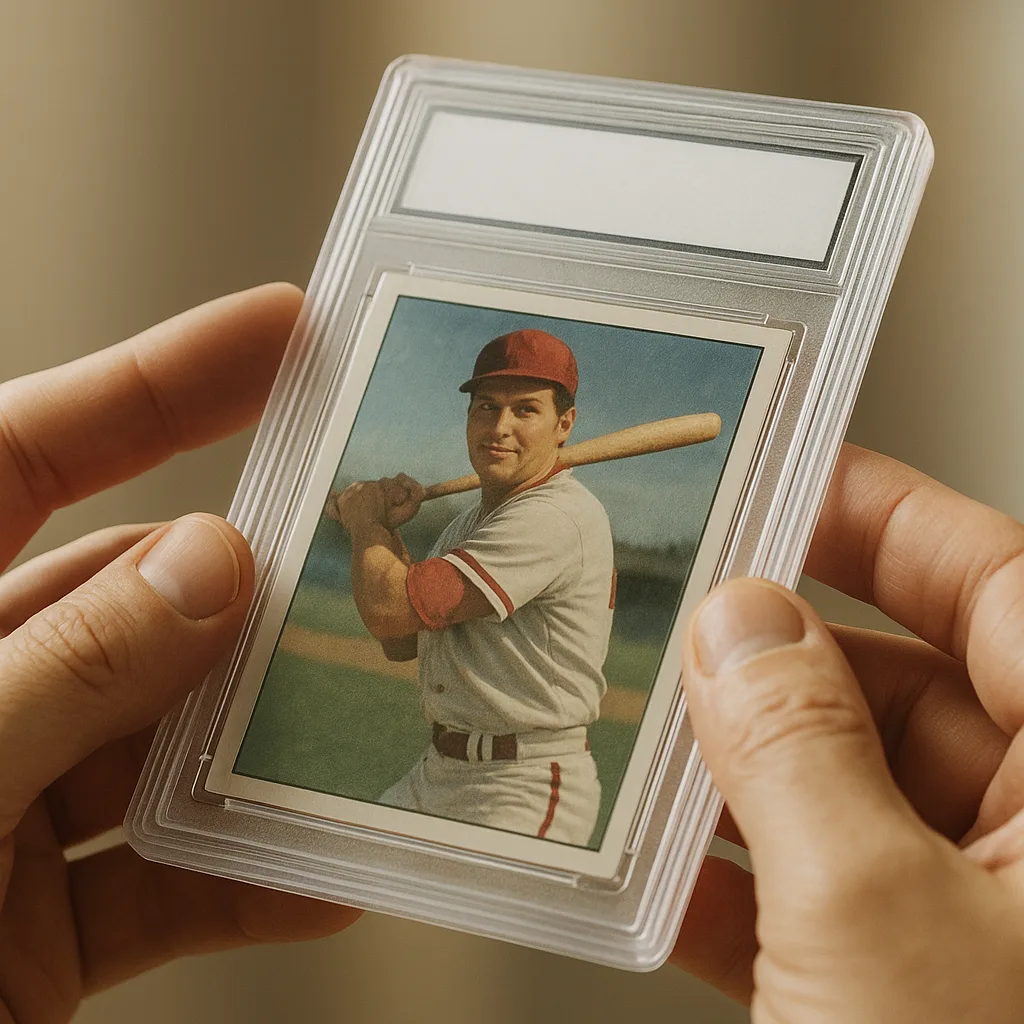
- Free: Orvik for photo ID and quick value ranges, eBay sold listings, community forums, and team/brand checklists.
- Paid: PSA population and price guides, Beckett digital subscription, analytics tools like Sports Card Investor for trend analysis.
Using Orvik as part of your workflow
- Snap a photo and let Orvik identify the card and show a market value range.
- Use the app to keep a running collection and track price changes over time.
- Then validate Orvik’s estimate with sold listings and grader databases before making selling or grading decisions.
Conclusion
Building your own sports card pro price guide means combining correct identification, an understanding of grading and condition, and multiple pricing sources. Start with free tools like Orvik for quick ID and value ranges, verify with sold listings and price guides, and use grading selectively for high-value pieces. With consistent workflows and reliable data, you can price, buy, and sell sports cards confidently.
Work through it yourself
The keys below are free, need no account, and render every entry in the page source — so they work with scripting switched off, and the whole list is readable rather than hidden behind a filter.
- What is the silver in this coin worth? — Melt value for 22 circulating silver and gold coins at any spot price.
- Is this plant poisonous to dogs or cats? — Look up 73 plants and see what each one does to a dog, a cat or a horse.
- What succulent is this? — Growth form, leaf shape and flower narrow 28 succulents.
- CoinSnap alternatives — and why no photo can grade a coin — prices and in-app purchase lists pulled from the App Store, not typed.
- Merlin or eBird: which Cornell app do you actually need? — prices and in-app purchase lists pulled from the App Store, not typed.
Frequently Asked Questions
- What is the most reliable free sports card price guide?
- There isn't a single 'most reliable' free source; combine eBay sold listings with free ID/estimate apps like Orvik and cross-check with PSA/Beckett references to get the best picture.
- How much does grading affect a card's price?
- Grading can dramatically increase price, especially at top grades; the effect varies by card and player — always compare graded vs raw sold comps before deciding.
- Can an app like Orvik give exact prices?
- Apps like Orvik provide identification and estimated value ranges to speed appraisal. Always verify with recent sold listings and official price guides for precise pricing.
- How can I tell if my card is a rookie or a reprint?
- Look for set/year info on the back, an 'RC' logo for rookies, serial numbers, and compare to verified set checklists; reprints often say 'reprint' or have different stock/printing quality.
- Should I grade every valuable card?
- Not necessarily. Grade cards that are rare, have high resale potential, or are likely to receive a top grade. Avoid grading low-value or obviously damaged cards—fees may exceed benefits.
- Where do professionals check sports card prices?
- Professionals use a mix: eBay sold data, PSA and Beckett price guides, analytics services, auction houses, and apps for quick ID like Orvik.
- How do I photograph cards for valuation apps?
- Use even natural light, a neutral background, keep the camera parallel, and capture front/back plus close-ups of corners, edges, serials, and autographs.
- Do price guides cover vintage and modern cards equally?
- Most major guides include both, but coverage and liquidity differ. Vintage values often depend more on condition and rarity, while modern values can be driven by short prints and serial-numbered parallels.